


Article Released: February 13, 2024
Standing on the deck of a research vessel in Monterey Bay, California, Karen Osborn gazes into a container filled with alive sea creatures that were just brought up from 1,500 feet below the surface. Among them is a strikingly red squid known as the strawberry squid, which blends into the darkness of its habitat by changing color. With one large yellow eye looking upward and a smaller blue eye looking downward, these creatures are well-equipped to thrive in their environment. This particular specimen appears to be in pristine condition, a rare find in the deep sea.
Osborn, an expert in invertebrate zoology at the Smithsonian Institution in Washington, D.C., has spent decades studying the twilight zone – a mysterious layer of the ocean between 660 and 3,300 feet deep. This region, also called the mesopelagic, remains largely unexplored due to its challenging accessibility. Despite this, Osborn has made remarkable discoveries about the unique adaptations of the creatures that inhabit this zone.
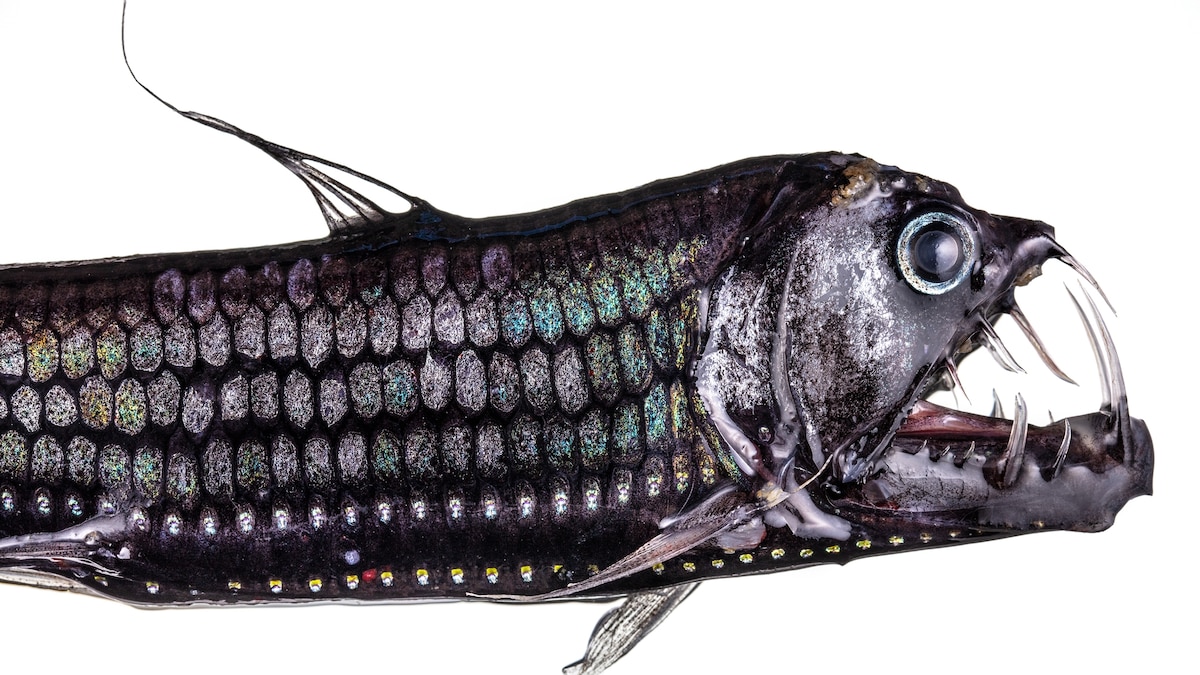
This twilight zone is a realm of darkness where sunlight does not reach, but its inhabitants have evolved various strategies for survival. From transparent animals to those with black skin or bioluminescent features, the creatures here have adapted to navigate the deep sea and avoid predators. Osborn finds the diversity of life in this region fascinating, as each species has found its own way to thrive.
Exploring this enigmatic world is not just about discovering new species, but also understanding how these organisms survive in extreme conditions. Researchers like Osborn have found that despite their alien appearance, the creatures of the twilight zone play crucial roles in maintaining the health of the ocean and influencing the climate of our planet.