


Unveiling the Iconic Mask in Netflix’s “Avatar: The Last Airbender”
Netflix’s adaptation of Avatar: The Last Airbender is receiving praise for its well-hidden surprises and references that will delight fans. In the third episode titled “Omashu,” there is a subtle detail that may escape the casual viewer.
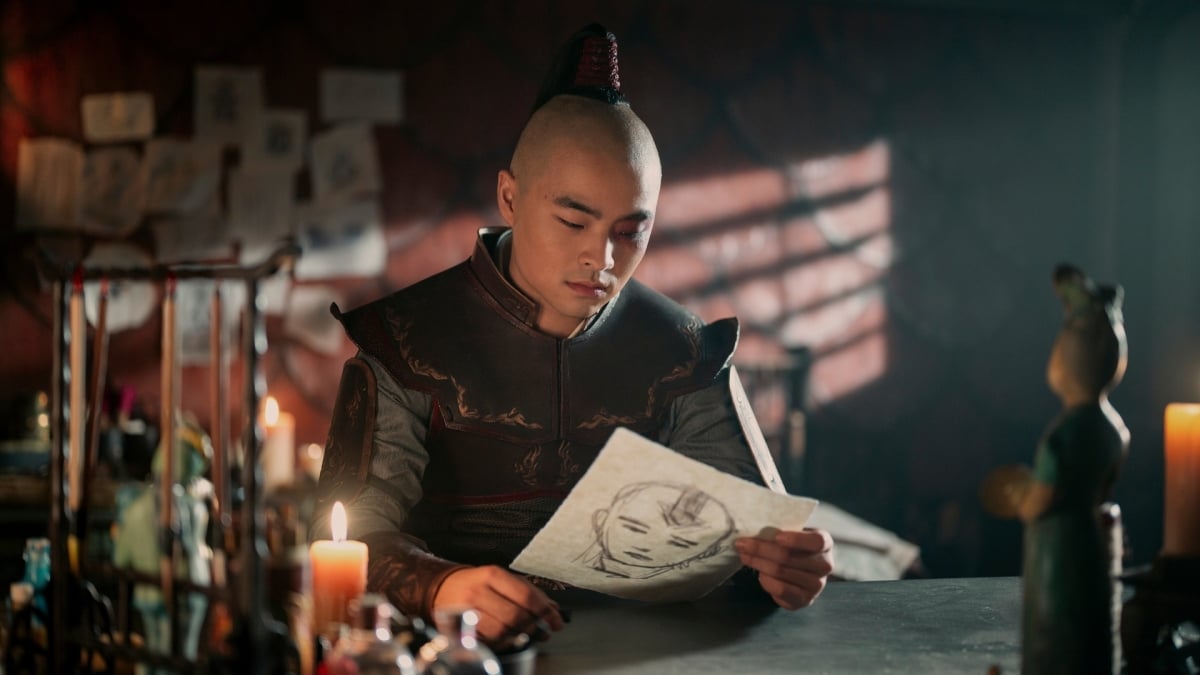
Approximately 45 minutes into the episode, viewers can spot Prince Zuko (Dallas James Liu) and Uncle Iroh (Paul Sun-Hyung Lee) navigating the crowded streets of Omashu. The tension escalates as guards close in on the duo after Zuko’s impulsive actions have revealed a firebender’s presence. In a selfless act, Iroh uses his firebending abilities as a distraction, allowing Zuko to flee to safety.

One interesting detail in this scene is a market kiosk selling various items, including a distinctive blue and white mask. Fans will recognize it as the Blue Spirit mask, a key element from the animated series that has now made its way into the Netflix adaptation.
The significance of the Blue Spirit mask becomes clear in episode 13 of the animated series and episode 6 of the Netflix show. Zuko uses the mask to conceal his identity as he embarks on a perilous mission to rescue Aang from a formidable stronghold. While hesitant to resort to such subterfuge, Zuko understands the necessity of his actions to protect himself and his mission from his ruthless father’s judgment.
The poignant encounter between Zuko and Aang, as revealed through the mask’s role, sheds light on their shared struggles with expectations and familial pressures. This pivotal moment deepens our understanding of Zuko’s character and his internal conflicts.
The presence of Zuko’s distinct mask in an Earth Kingdom marketplace in the live-action adaptation adds an intriguing layer to the storytelling,