

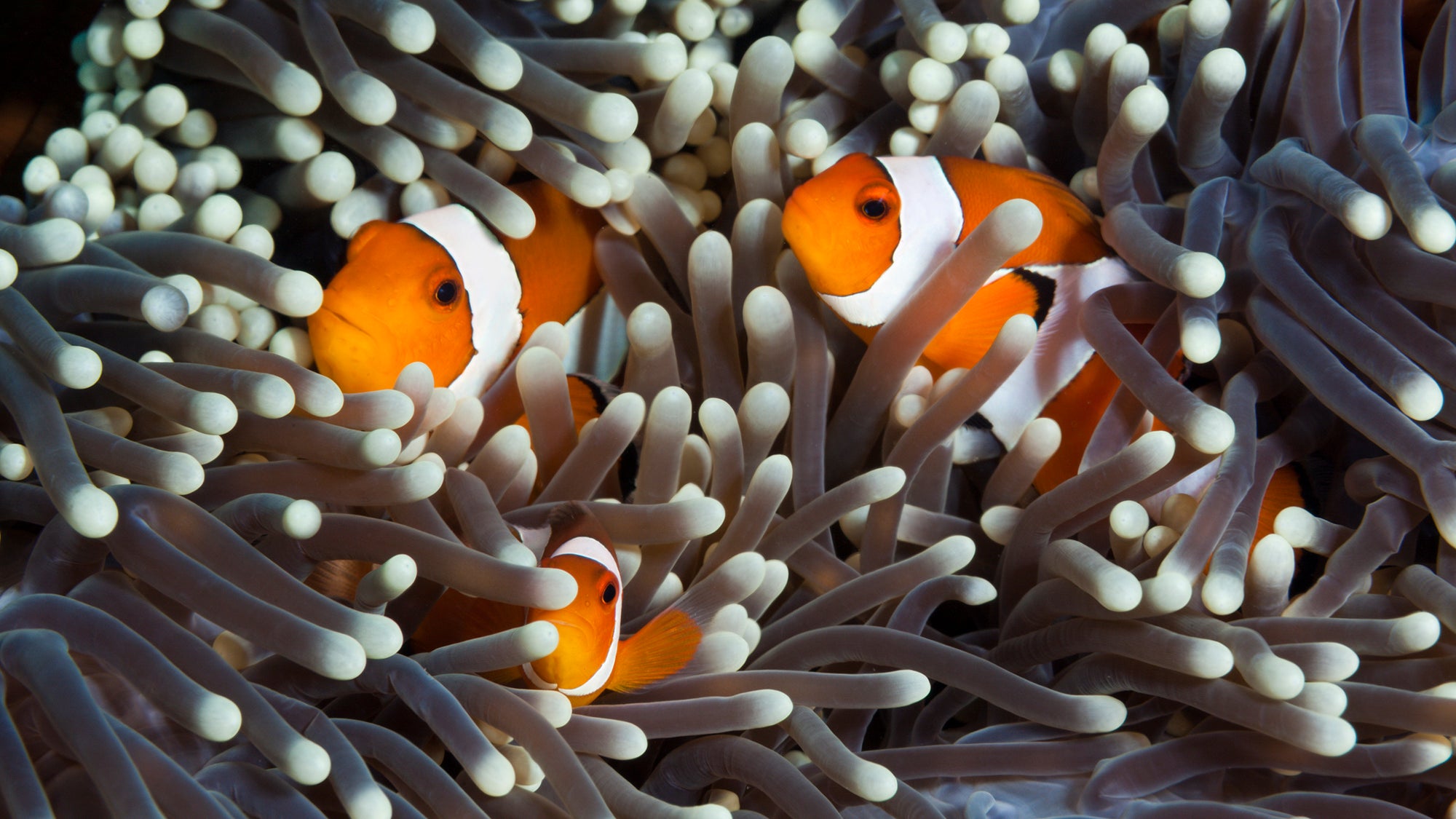

The little anemonefish — also known as clownfish — that reside in coral reefs among carnivorous and stingy anemones are loved by humans for their colorful and carefree nature. However, these creatures are not the adorable characters from a Pixar movie. They are known to be very aggressive when defending their space from other anemonefish species that they see as intruders. Recent research now suggests that they can recognize unwanted guests based on the number of white bars on their bodies. The study outlining these fascinating findings was published on February 1 in the Journal of Experimental Biology.
According to the study, there are 28 different species of anemonefish living in the warmer waters of the Indian and Pacific Oceans. The fish are relatively small, measuring only about four inches in length, and can have anywhere between zero to three white bars on their bodies. Interestingly, these clownfish are observed to allow other anemonefish species to visit their homes. However, they do not tolerate members of their own species that are not part of their colony, particularly the larger or alpha fish, who aggressively chase and bite the intruders.
The instincts of these fish were investigated further with two specific experiments involving a variety of anemonefish species. The first experiment involved recording the clownfish’s reactions to other species based on the number of white bars on their bodies. The results showed that the common clownfish displayed more aggression toward members of their own species that had three white bands, engaging in conflicts across different intensities and durations. Meanwhile, intruders from other species were less confronted, with orange skunk clownfish being barely confronted, and two-barred and three-barred species like Clarke’s and saddleback clownfish being only mildly bullied.
The second experiment involved observing the level of aggression the clownfish displayed towards plastic discs painted with anemonefish coloration.
Ultimately, these findings offer fascinating insight into the social dynamics and behavior of anemonefish, provided by a group of curious and observant researchers. [Related: Baby anemonefish can rapidly change their genes to survive in the sea.] Read more about the study here.