


The Lodge at 58 North is nestled on the Naknek River in King Salmon, Alaska, where millions of Pacific salmon pass through every summer. Chef Jason Brown sources the freshest salmon, starting with sockeyes in June, then kings at the July peak, and coho in August.
Regardless of the salmon species or cooking method, Brown always starts with a wet brine. According to Brown, wet brining improves the texture, making the fish moist and encapsulating the fat, making it worth the extra effort.
Cooking salmon can be tricky, with the risk of drying out or getting crispy skin with albumin oozing out. Wet-brining acts as insurance, ensuring the fish stays succulent. Brown prefers wet-brining over dry-brining, emphasizing that it distributes seasoning more evenly.
Bringing science and poetic notions together, Brown explains that reintroducing the fish to water for seasoning and changing its texture makes sense, just like how it lives in water. Next time you’re cooking salmon, brine them beforehand, as recommended by Chef Brown.
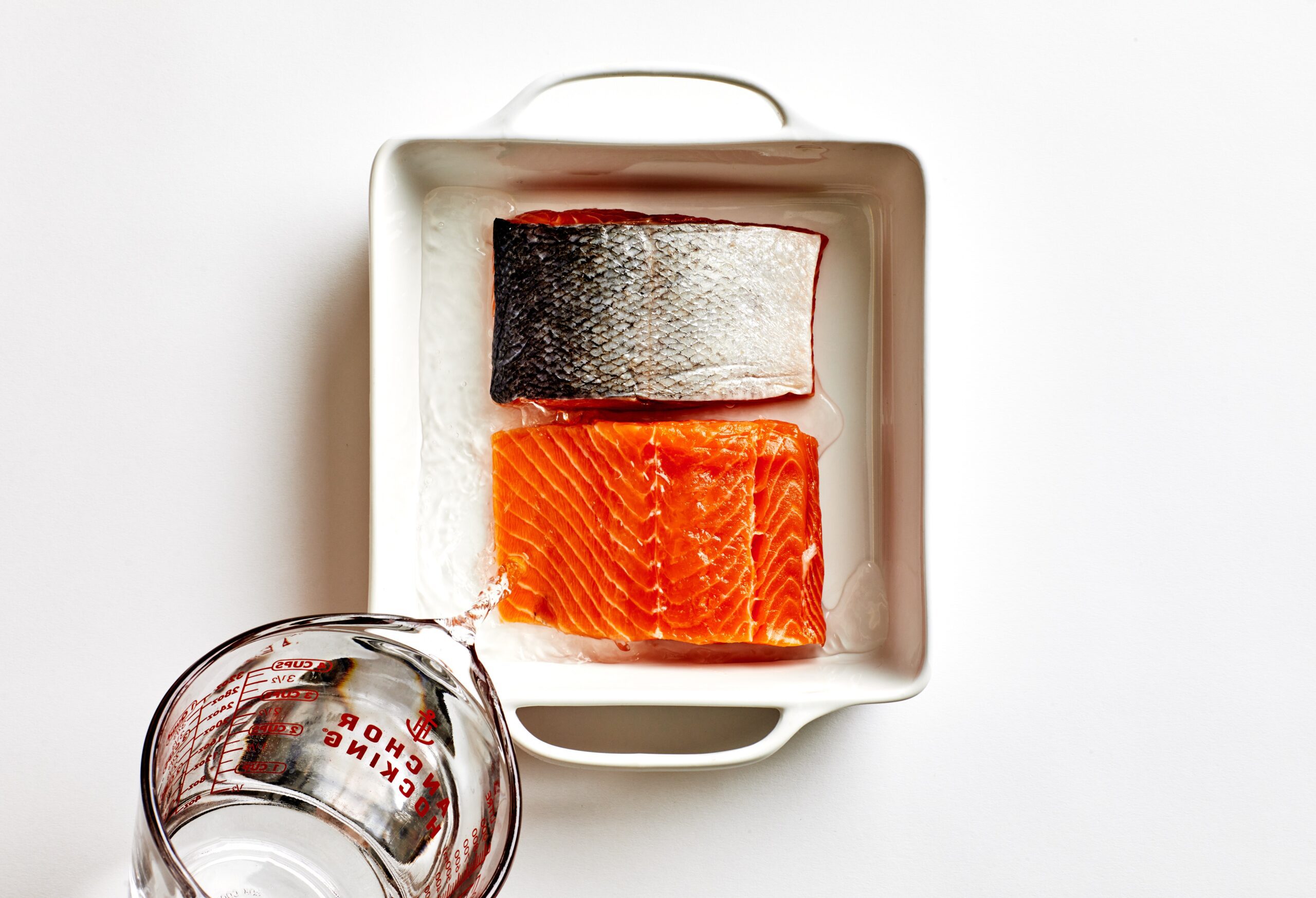
- Make the brine. In a bowl or measuring cup, combine 3 cups cold water and 5 Tbsp. Diamond Crystal kosher salt. Stir to dissolve salt.
- Brine the fish. Add two 6–8-oz. salmon fillets to a bowl or casserole dish. Slowly pour saltwater on top of salmon until it’s covered,