

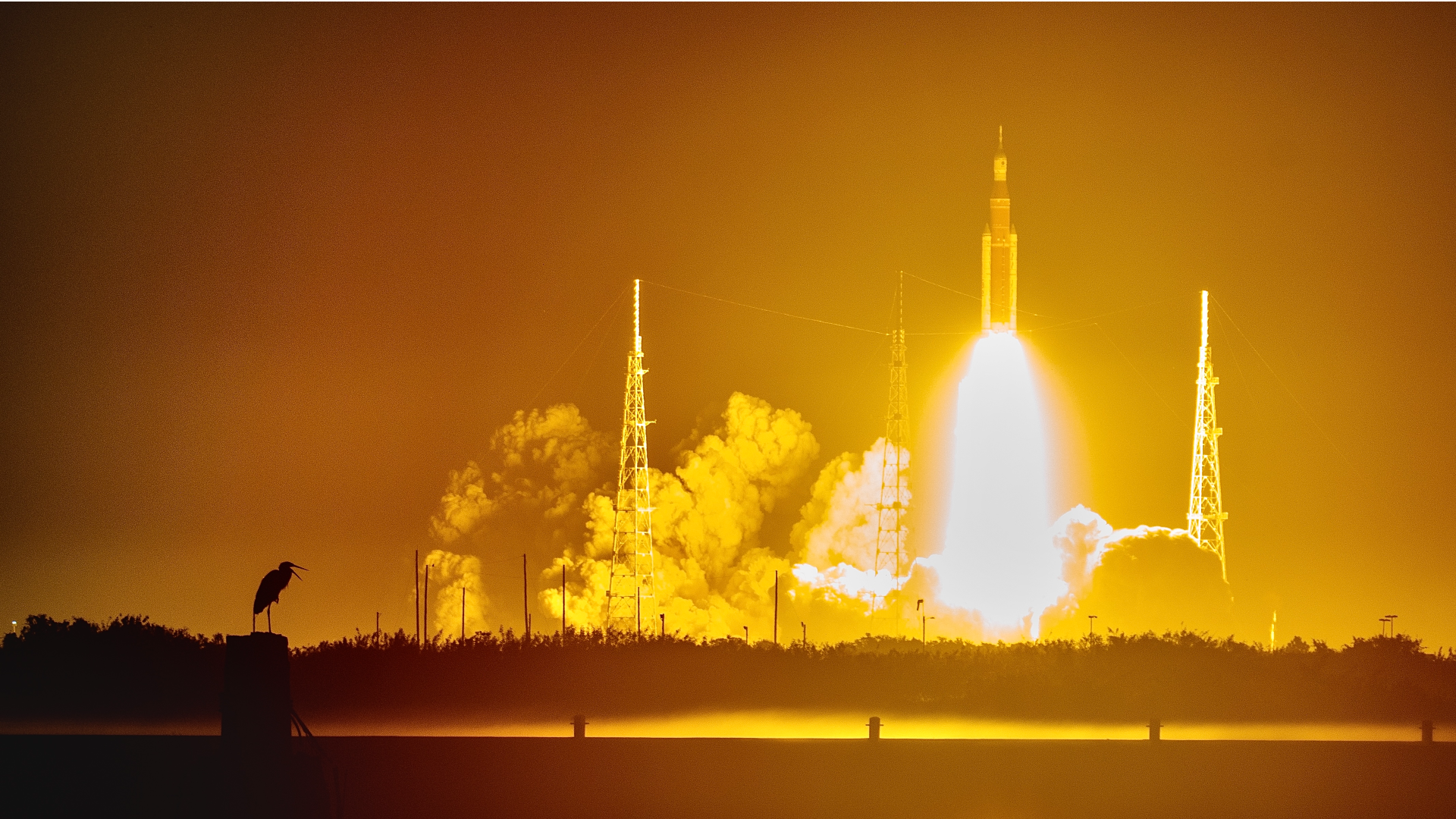
 Moon Rocket for the Artemis Program. Discover the latest updates and improvements to this crucial element of America's return to the Moon.)
NASA Expands Space Exploration with Upgraded SLS Mega-Rocket Design
A look into the future of NASA’s Artemis moon program reveals ambitious upgrades for the upcoming missions. The Space Launch System (SLS) is set to undergo significant enhancements to propel crew and large payloads towards the moon in preparation for establishing a lunar settlement at the south pole.
The forthcoming Block 1B version of SLS will feature a more potent second stage and an adapter for accommodating sizable cargos. These enhancements mark a crucial step towards NASA’s goal of further lunar exploration and settlement.
NASA is currently conducting tests on upgraded RS-25 engines at the Stennis Space Center, a development that builds upon the technology initially utilized in the space shuttle program. The testing phase, which includes a 12-engine hotfire certification series, is in preparation for future Artemis missions, including Artemis 5 and beyond.
As part of the broader Artemis program, NASA envisions a sustained human presence on the moon near valuable water ice resources. The international effort, guided by the NASA-led Artemis Accords, aims to uphold peaceful space exploration norms, with nations committing to collaborative missions.
Artemis 1, a critical uncrewed mission, circled the moon in 2022, setting the stage for upcoming crewed missions. Artemis 2 is scheduled to orbit the moon with four astronauts by 2025, followed by a crewed touchdown with Artemis 3 in 2026, despite technical setbacks earlier this year.
Moving forward, Artemis missions will transition from using an interim cryogenic propulsion stage to a four-engine exploration upper stage (EUS) starting with Artemis 4. The EUS will introduce a longer-lasting battery capable of operating for up to eight hours, facilitating extended mission durations.
Furthermore, Artemis 4 and subsequent missions will implement a universal stage adapter, offering ample storage space for transporting large components, such as modules for the Gateway space station. The upgraded EUS will also enable increased launch opportunities, with the potential for up to two launches per day.
With expanded communication capabilities between astronauts and ground control, the Orion spacecraft will have the ability to extract and deploy components destined for the Gateway station directly from the stage adapter. These advancements signal a new era of lunar exploration and settlement as NASA continues to push the boundaries of space exploration.