

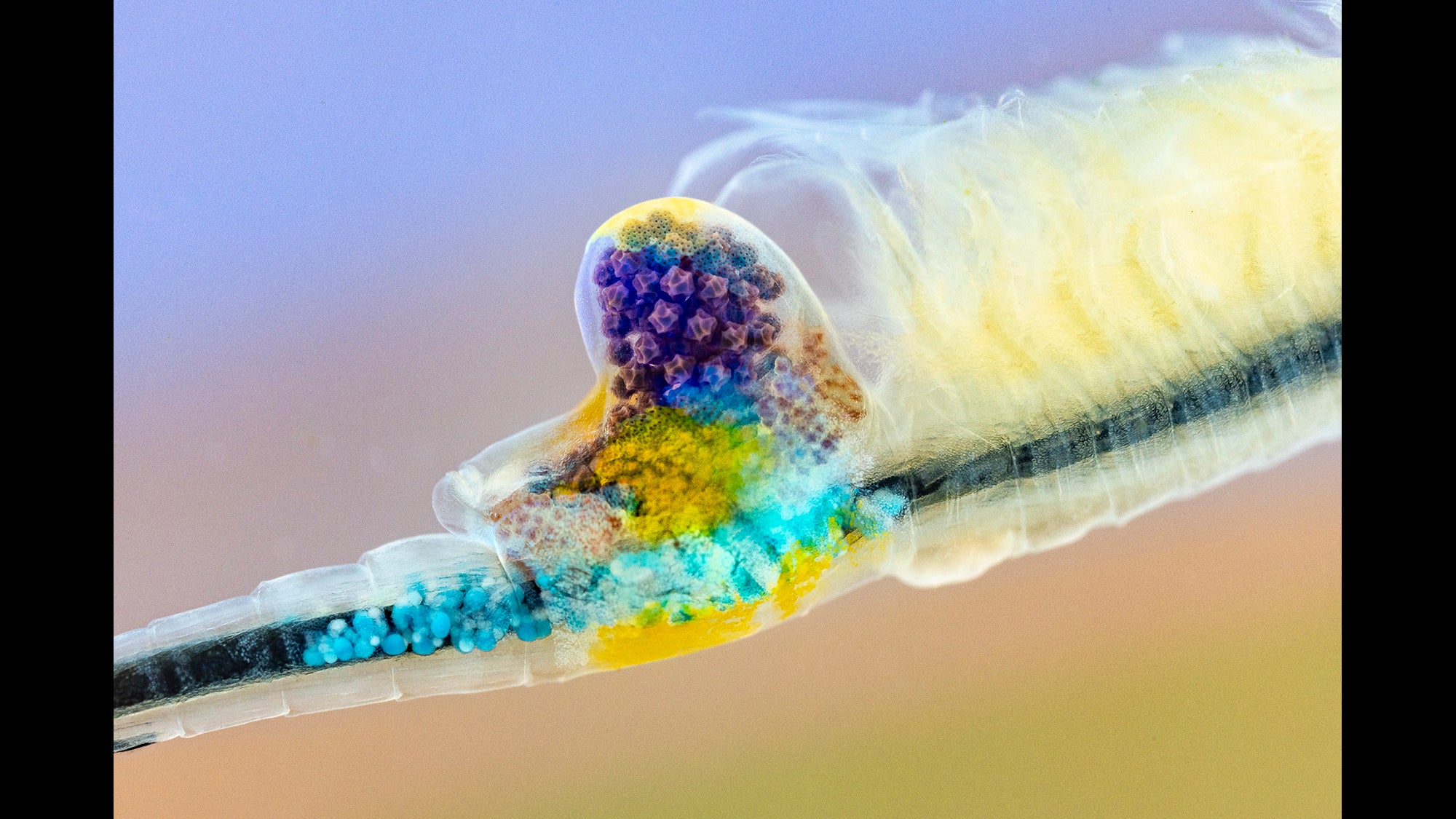

We all need to stop and appreciate the little things in life. Tracy and Dan Calder have been celebrating daily details through the Close-up Photographer of the Year competition since 2018. The competition showcases the best images capturing nature, animal, underwater, and human subjects from the past 12 months.
The 5th annual edition is no exception, featuring incredible photos of everything from sleeping frogs to magnetic waves, to microscopic life, and rarely-seen deep sea creatures. Photographers from around the world have managed to capture some incredibly striking and captivating moments. Check out a few of our favorite finalists and winners of 2023 below, and remember to keep an eye out for the little things this year. They’re always there and worth noticing, even if you don’t have a camera to snap their picture.
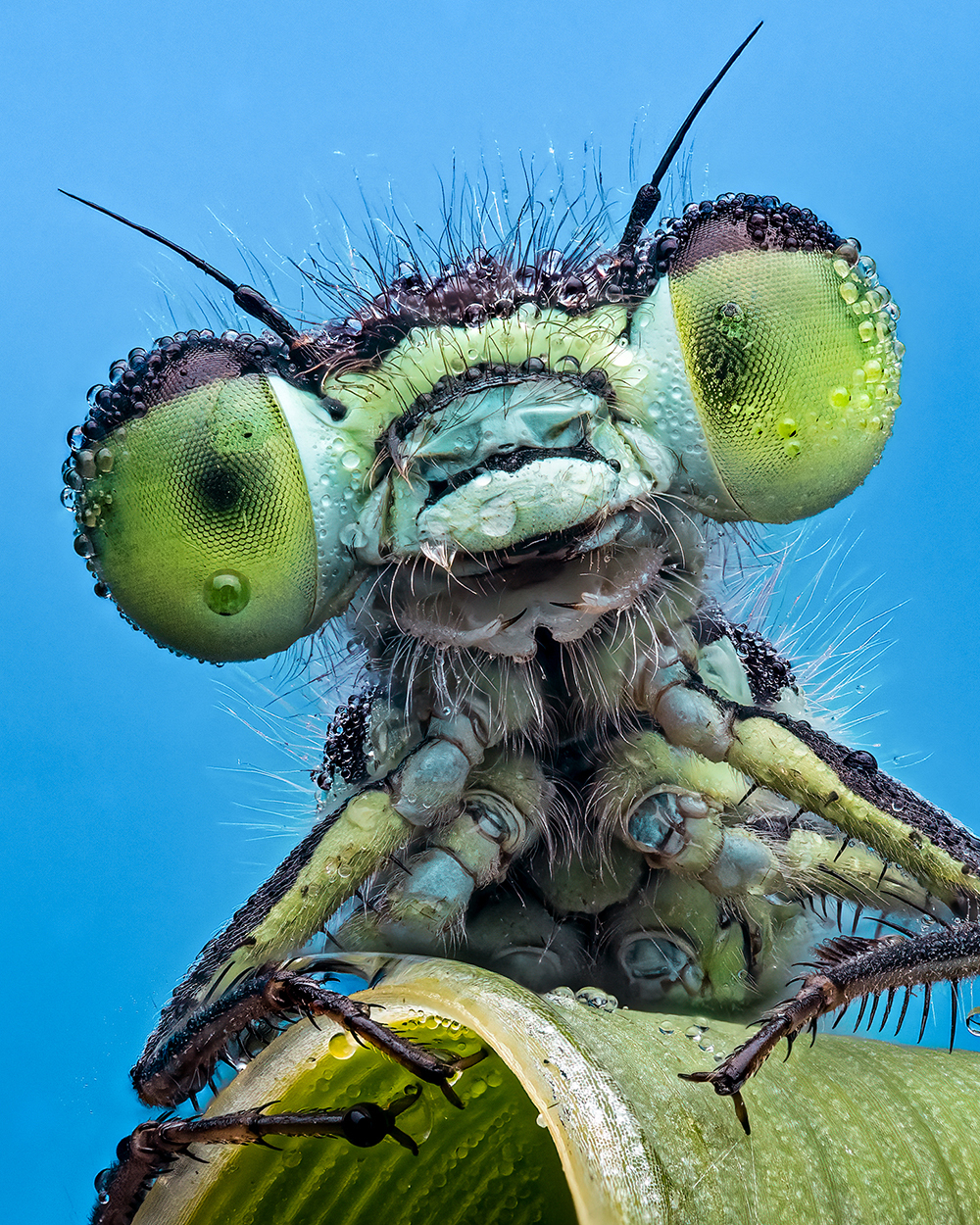 Invertebrate Portrait Finalist: “Look Into My Eyes,” portrait of a damselfly covered in dew taken in May in Shropshire, UK © Pete Burford | cupoty.com

Intimate Landscape 2nd Winner: “Ice Fossiel” taken by Piet Haaksma | cupoty.com
Intimate Landscapes and More
Take a look at these stunning images – each has its own story to tell. The first image is titled “Ice Fossil,” and depicts a small chunk of ice stuck to a twig that looks like a prehistoric find. Nature offers unique sights, making this discovery a memorable one. Another image in the collection is named “Electric Storm in a Bottle,” which captures the appearance of an electric storm. The images tell their tales and provide the audience with an opportunity to reflect.
Next is an image of a dark brown globular springtail, referred to as the “Allacma Fucsca,” shot in Solingen, Germany. A magnetic wave captured in a photo also displays a stunning “electric” effect that leaves viewers in awe. The last image, “The Ice Crown,” won first place in the Fungi category. These photos showcase the striking and mysterious images that nature offers.
 Butterflies & Dragonflies 2nd Place Winner: “Letting Go,” ‘‘Capturing a Four-spotted skimmer dragonfly (Libellula quadrimaculata) mating is particularly difficult because they connect and mate in-flight without any warning and for only a few seconds. » …
Read More rnrn