

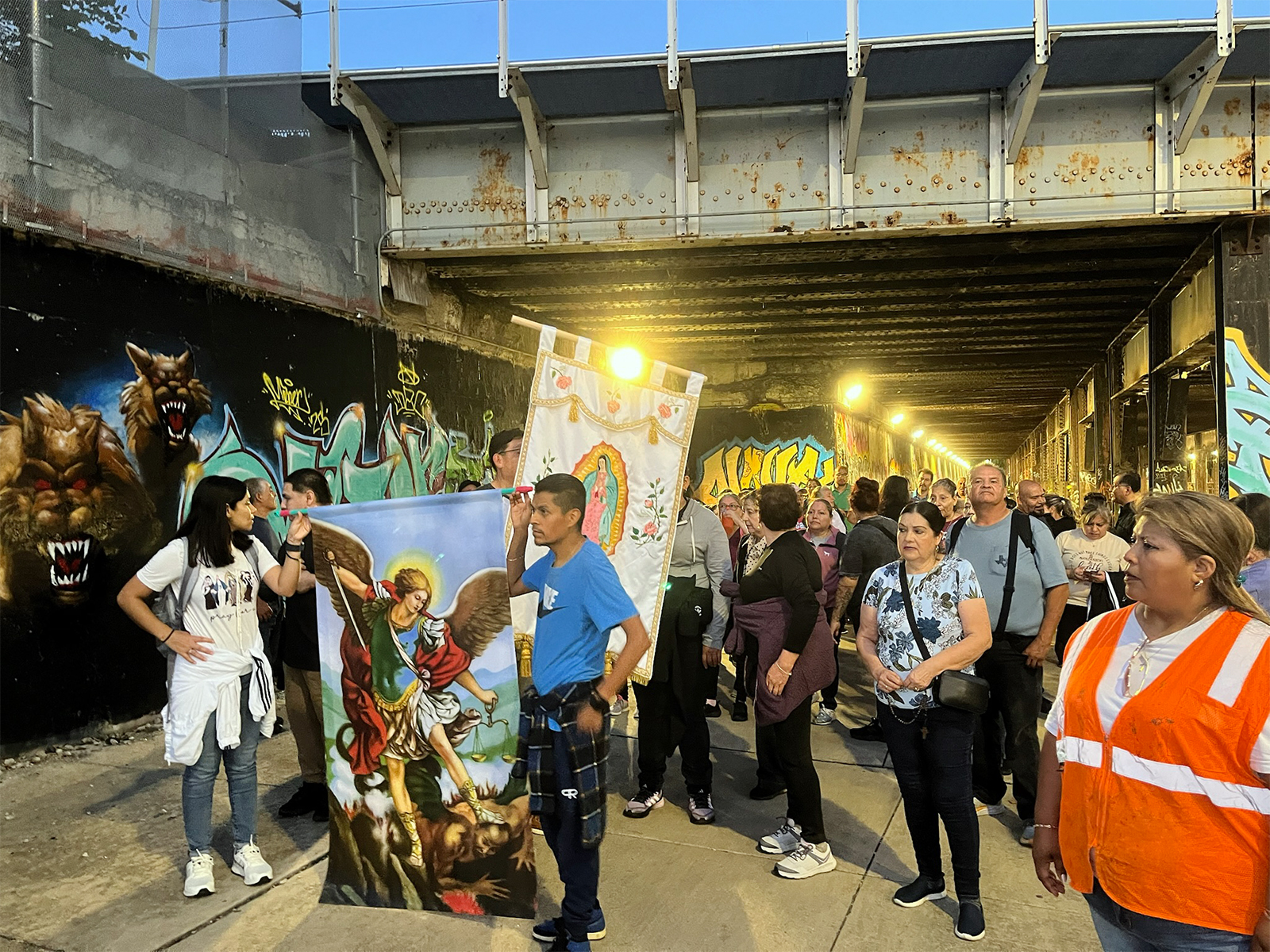

CHICAGO (RNS and NPR) — For three Guatemalan roofers, there has only been one place they have found community in the six years since the first one arrived here — Catholic Mass. As one of the three men, the most talkative of the Mayan language Q’eqchi’-speaking group, put it, “We don’t know anybody other than the parish here.”
But the three roofers, all relatives from the same small town in Guatemala and who now live and work together in Chicago, decided about two months ago they couldn’t risk going to Mass anymore.
“We decided to stay home, go to work and rest, and on Sundays it’s better to stay at home, because we have these dreams,” the talkative man, who came to Chicago two years ago, told NPR and RNS in Spanish. Dreams, he said, of making sure his daughter back in Guatemala gets a good education and of buying land. But there aren’t job opportunities in Guatemala, he added.
The three men, who don’t have legal immigration status, and other members of their parish agreed to speak with reporters on the condition that their names and their parish not be identified. The fear of being deported or of the church being targeted by an immigration raid has become intense. An immigrant leader at their parish said attendance at Spanish Masses has now dropped by 45%, part of an increasing decline throughout the fall.
The Department of Homeland Security says it has carried out more than 3,000 arrests since it announced on Sept. 8 Operation Midway Blitz targeting Chicago, part of the Trump administration’s efforts to carry out mass deportations.
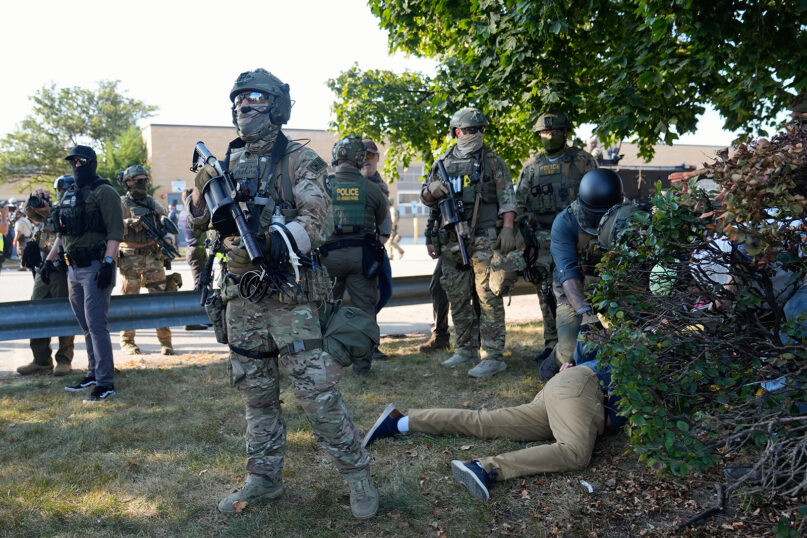
Law enforcement detains a protester near an Immigration and Customs Enforcement facility in Broadview, Ill., Oct. 3, 2025. (AP Photo/Erin Hooley)
The campaign — which has garnered national media attention for immigration agents who have released tear gas in residential neighborhoods, targeted street vendors and gig workers and shot protesting clergy with pepper balls — has led many immigrants to change their daily routines. Some, like the Guatemalan relatives, have made the emotionally fraught decision to give up church attendance.
But staying away from Mass is no small thing for the men. Last year, they were in a severe car accident on the way to work. One of them broke his leg, and another broke his knee and spine. They are also grieving one of the men’s brothers, who died in the accident.
As they were stuck in bed recovering from their injuries, the volunteer director of the parish’s migration ministry found resources to cover their rent and living expenses.
“When we needed it most, they helped us a lot,” said the Guatemalan man. And they didn’t just receive practical help — women from the church came and prayed the rosary with them, making sure they didn’t feel “alone” or like they were “without anybody.”
Going to Mass in Spanish feels like they’re back in their small town,