

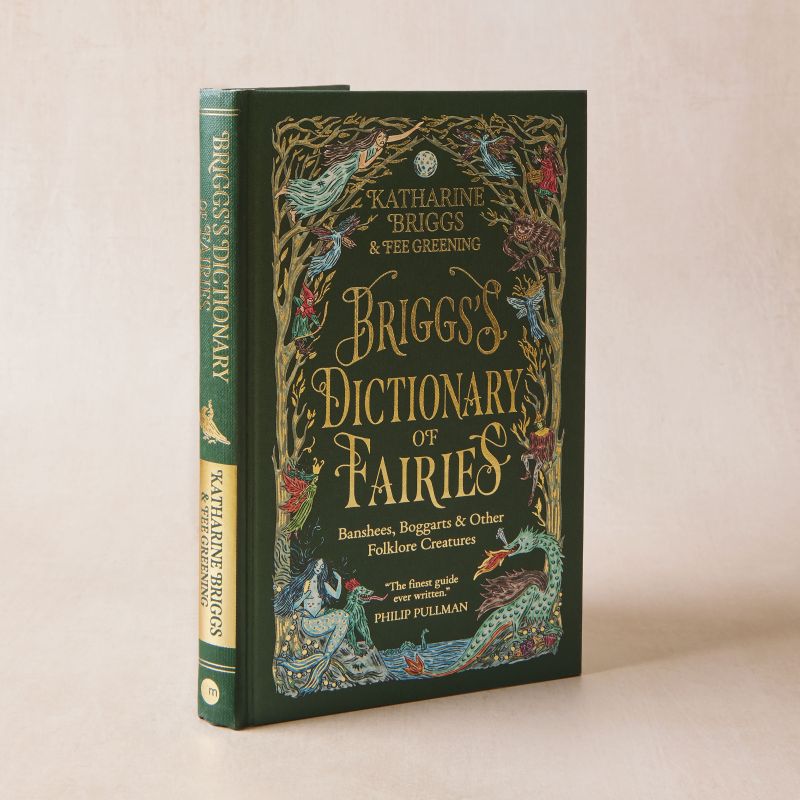

Dorset-based illustrator Fee Greening has spent her entire life fascinated by fairies, goblins, witches and anything supernatural. Now, her dream project has come to life in the form of Briggs’s Dictionary of Fairies – out this week from Monoray and packed with Fee’s artwork.
Just like spotting a fairy deep in an overgrown garden, for a project this perfect to come to an illustrator requires a little serendipity. The magic happened when Fee was brainstorming with her agent. It just so happens that said agent represents the estate of Katharine Briggs, the renowned chronicler of English folklore, whose work was popular throughout the 20th century. A few conversations later, and it was agreed – Fee and her dip pen ink illustrations would bring new life to Briggs’s Dictionary of Fairies: Banshees, Boggarts and Other Folklore Creatures.
“My work and indeed my entire identity is underpinned by Briggs’s tales of enchantment and nature,” says Fee. “I couldn’t believe it when the estate agreed to my idea, it’s such an honour. I feel really proud to be part of something championing such an important female figure.”
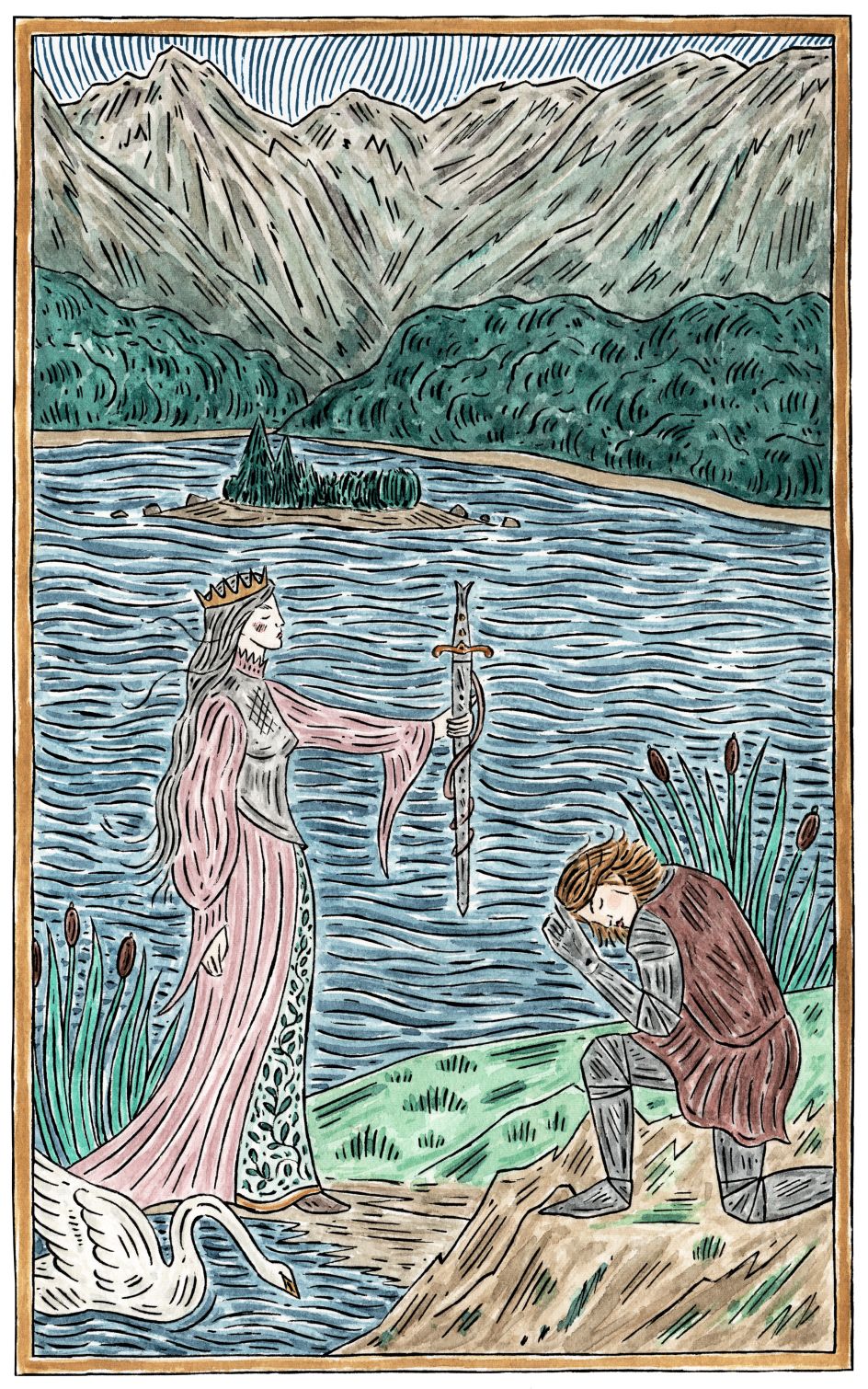

Cailleach Bheur

Peg Powler: avoid the stream.

The Fairy Queen
Grab a copy, and inside you’ll find text that details just about every folkloric creature you can imagine – and some you can’t, but for that we have Fee’s artworks. There are 90 illustrations between the covers, 13 of which are rendered in colour with the rest in black and white.
Once the project was up and running, the timeline was very tight. Fee had just three weeks to sketch her roughs. One of the biggest challenges was finding the right tone across the works.
“It was quite intimidating working out how to draw the fairies, their faces, their clothing, et cetera, without mimicking an existing illustrator’s interpretation. Arthur Rackham is one of my biggest inspirations, it was initially hard not to imitate his interpretation of a fairy,” says Fee.

Mermaid at the Tree

The Elves

A Giant
“The first day, I got drawing block when I got trapped in the Rackham idea of a fairy and ripped up a zillion bits of paper and threw them out the shepherd’s hut where I work. Thankfully, shortly afterwards, I had a eureka moment when I glanced at one of my cheeky medieval demon drawings in my studio and thought, ‘This is a fun route to explore’, and it felt different to the fairy imagery I’d seen before. Luckily, everything flowed from there.”
All the illustrations in the book were created by hand, using Fee’s meticulous dip pen method. With each dip of the pen, only a few centimetres can be drawn. But, if you try to fill the nib with too much ink, it’ll drip, splatter and smudge, sending you back to the drawing board.