

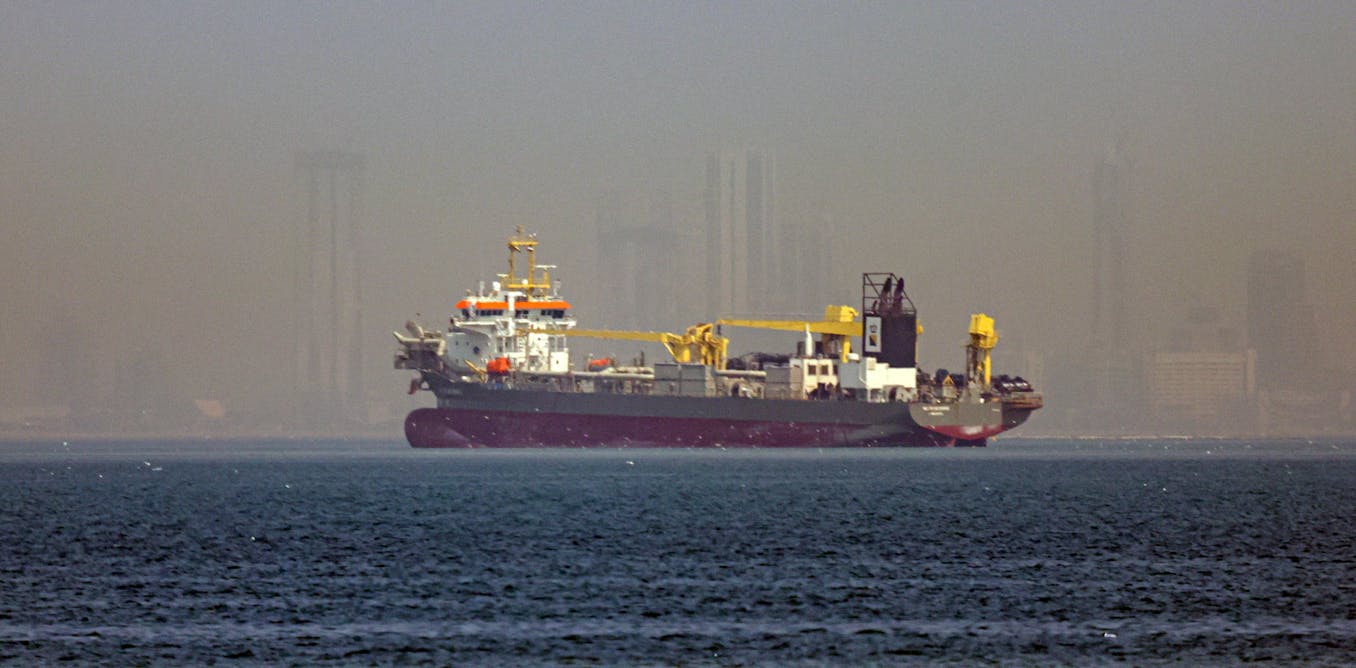

The conflict in Iran has disrupted energy and commodity markets. Iran has effectively closed the narrow strait of Hormuz, a vital oil transit point, attacking more than a dozen ships over the past two weeks that have tried to sail through the waterway.
Donald Trump has been pressing US allies in Europe to help secure the strait, warning on March 15 that it will be “very bad for the future of Nato” if they do not support American efforts to reopen Hormuz. But Iran has vowed to keep the waterway closed.
The disruption to Gulf shipping has caused Brent crude oil prices to jump sharply from around US$70 (£53) a barrel before the crisis began to more than US$100. Global trade in a wide range of other goods – from consumer products to agricultural raw materials – is being affected too.
But the crisis has also highlighted a broader issue: that global trade depends on a surprisingly small number of narrow waterways, which are often called maritime “chokepoints”. Here is a guide to the chokepoints that matter most for global trade, and how vulnerable each one is to disruption.
1. Strait of Hormuz
Hormuz is the world’s most critical energy chokepoint. Connecting the Persian Gulf to the Arabian Sea, it carries around 39% of the seaborne crude oil trade and 19% of natural gas. Unlike most trade chokepoints, there is no viable alternative to Hormuz for Gulf states to export their energy.
Iran has periodically threatened to close the strait of Hormuz since the 1980s. But the disruption caused to shipping since late February, when the US and Israel first launched airstrikes across Iran, is the most serious escalation in decades. It has caused the largest oil supply disruption in history and soaring global oil prices.
The consequences of the current disruption to Gulf shipping extend beyond energy. The Gulf region handles over 26 million containers annually, with major fertiliser exports passing through here too. Prolonged shipping disruption will therefore have a direct effect on global food production costs.
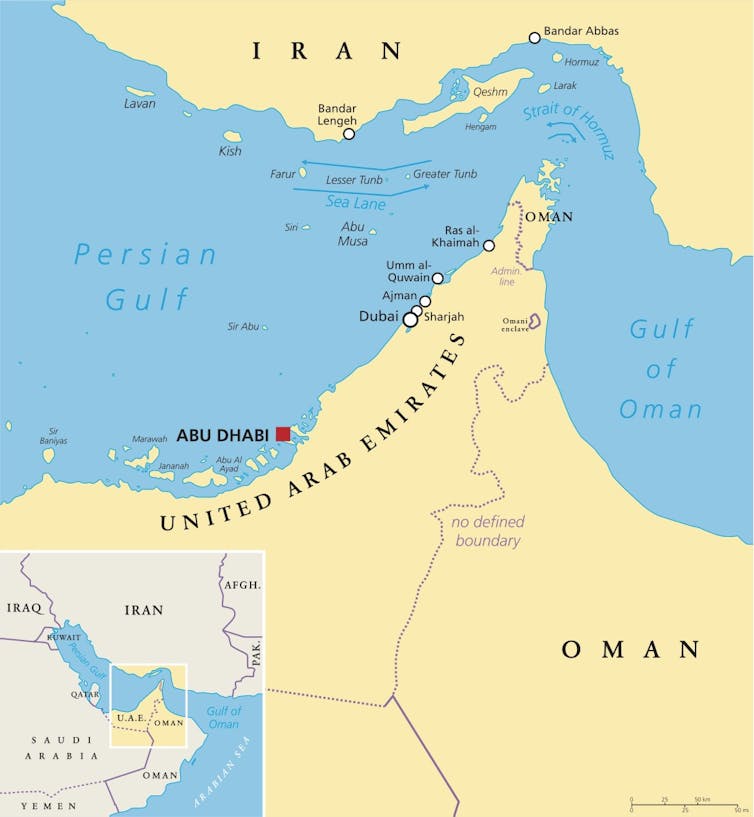
The strait of Hormuz, which has effectively been closed since the outbreak of the war in Iran, is the only sea passage from the Persian Gulf to the Arabian Sea.
Peter Hermes Furian / Shutterstock
2. Suez canal
The Suez canal links the Red Sea with the Mediterranean, cutting at least ten days off journey times between Asia and Europe. The waterway handles 10% of global seaborne trade, including 22% of container traffic, 20% of car shipments and 10% of crude oil.
Controlled by Egypt, it is not easily threatened directly. But the waterway is not immune to accidents, as demonstrated by the grounding of the Ever Given container ship in 2021. The vessel blocked the canal for six days, disrupting nearly US$10 billion in trade.
The bigger vulnerability of this chokepoint is the Bab el-Mandeb, the strait at the southern tip of the Red Sea.