


Groundbreaking Fisheries Research Conducted by Exail’s DriX Uncrewed Surface Vessel at US Offshore Wind Sites
March 8, 2024, Written by Zerina Maksumic
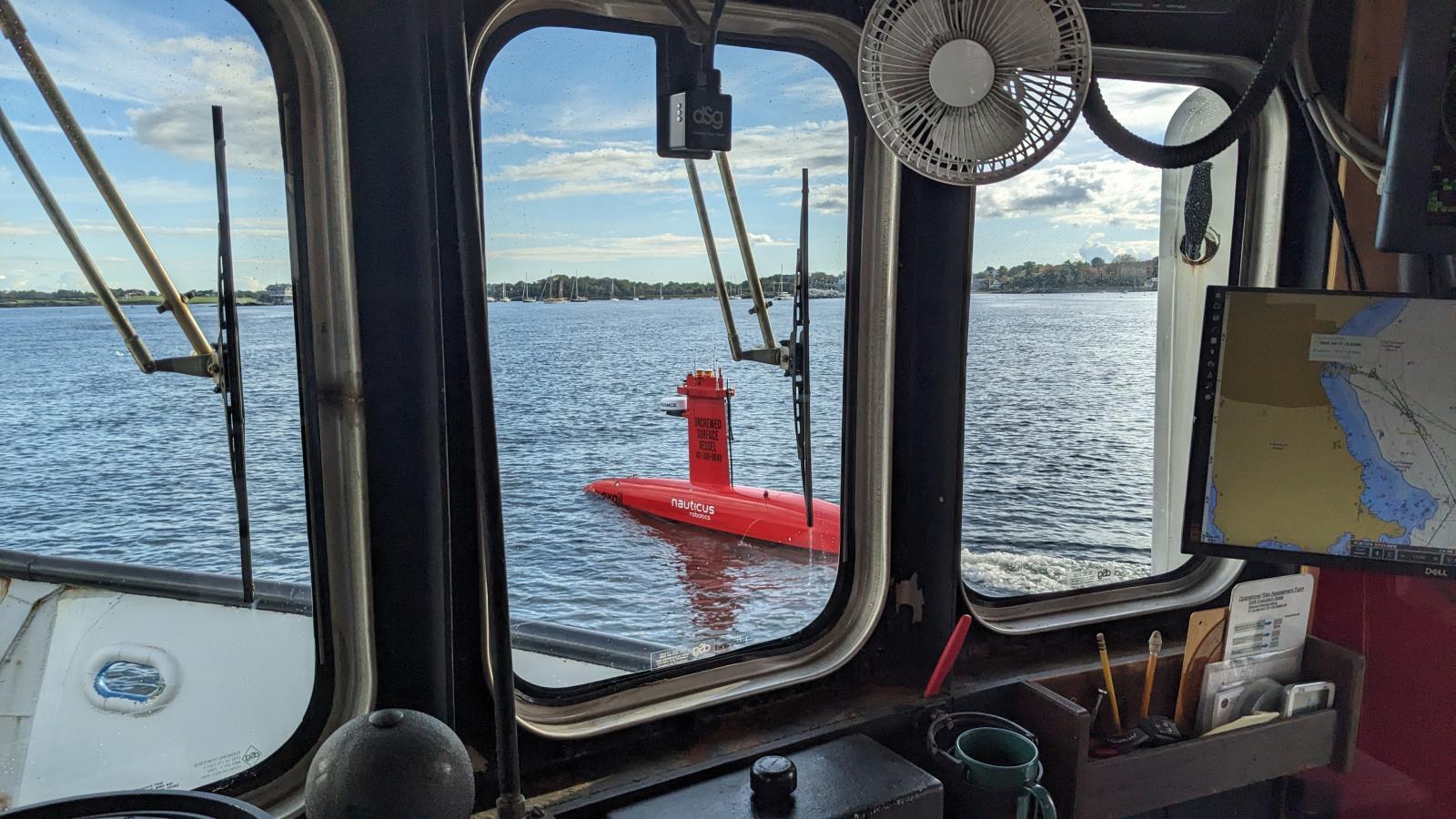
Exail’s DriX uncrewed surface vessel (USV) has recently completed a pioneering fisheries research survey to evaluate the impact on biomass and fish stock before, during, and after the construction of offshore wind farms in the United States.
 Source: NOAA
Conducted off the coasts of Massachusetts, Rhode Island, and New York, the survey was carried out for the NOAA Fisheries Northeast Fisheries Research Science Center (NEFSC) in conjunction with NOAA USxOC, Kongsberg, and Nortek.
The DriX USV was equipped with a SeapiX-R 3D high-resolution multibeam echosounder from Exail, two Kongsberg EK80 single-beam echosounders, and a Nortek ADCP.
The objective of the operations was to gather data on ocean conditions, marine life, and seafloor structures within both existing and future offshore wind farm areas utilizing various scientific sensors such as sonars and echosounders.
By collecting information at proposed turbine locations, NOAA can analyze environmental changes pre and post turbine installation.
Operating under supervised autonomous mode, the DriX USV covered over 5,000 kilometers of navigation lines, maintaining a distance of 20 meters from wind farm monopiles while avoiding obstacles like ships, fishing nets, and buoys.
Data was transmitted to the remote operation center (ROC) located at the University of Rhode Island’s Inner Space Center in Narragansett, Rhode Island, as well as Exail’s Maritime Autonomy hub in La Ciotat, France.
“We extend our gratitude to NOAA Fisheries Northeast Fisheries Research Science Center for their confidence in Exail’s USV and sensors,” stated Shayan Haque, Business Development Manager at Exail.
“We take pride in delivering highly precise scientific data to our clients, ranging from biomass identification in the water column to the intricacies of sand displacement bathymetry.”
Exail highlighted their cooperation with the U.S. Coast Guard Sector Southeast New England, wind farm developers, and local mariners to ensure the safe autonomous operation of the system within busy shipping channels and intricate wind farm construction areas.
According to the company, the DriX USV executed its mission with minimal environmental impact, achieving a 90% reduction in CO2 emissions compared to traditional survey vessels.
The DriX USV, developed by iXblue and ECA Group under the Exail joint brand, has obtained Approval in Principle (AiP) from Bureau Veritas and certification from Lloyd’s Register.
New Developments in Offshore Wind Technology
In the rapidly evolving world of offshore wind technology, there have been recent exciting advancements that are reshaping the industry. Let’s take a look at some of the latest developments that are propelling the offshore wind sector forward.
Cutting-Edge USVs Revolutionizing Offshore Operations
Unmanned Surface Vehicles (USVs) have been making waves in offshore operations, with orders exceeding 1.25 million units. Ocean Power Technologies has been at the forefront of this revolution, leveraging cutting-edge technology to enhance efficiency and sustainability in offshore activities.
ACUA Ocean has recently joined forces with Genevos to develop next-generation hydrogen-powered USVs, paving the way for cleaner and more environmentally friendly offshore operations. These innovative partnerships are driving the industry towards a more sustainable future.
Exploring New Frontiers with Advanced Technology
Agnes Ramboll and her team have been pushing the boundaries of offshore wind technology with their latest projects. By harnessing state-of-the-art technology and expertise, they have been able to achieve remarkable results in offshore developments.
The Future Looks Bright for Offshore Wind
With these recent advancements in offshore wind technology, the future looks promising for the industry. As companies continue to innovate and collaborate on new projects, we can expect to see even more exciting developments on the horizon. Stay tuned for the latest updates on offshore wind technology as the industry continues to evolve.Innovative Fisheries Research Survey Conducted at US Offshore Wind Sites
An unprecedented fisheries research survey has been conducted at US offshore wind sites, marking a significant milestone in the renewable energy industry. This groundbreaking initiative aims to gather crucial data on the impact of offshore wind development on local marine ecosystems and fish populations.
The survey, which was carried out using state-of-the-art unmanned surface vessels (USVs), represents a major step forward in understanding the potential environmental implications of offshore wind farms. By employing cutting-edge technology, researchers were able to collect detailed information on fish behavior, population density, and habitat use in the vicinity of these renewable energy installations.
A key highlight of the survey was the use of autonomous vehicles to navigate the challenging waters around offshore wind farms. This approach not only ensured the safety of researchers but also allowed for more efficient and accurate data collection. In addition, the data gathered during the survey will be instrumental in developing best practices for mitigating the impact of offshore wind farms on fish populations and marine ecosystems.
The successful completion of this research survey underscores the commitment of the renewable energy industry to environmental stewardship and sustainability. By proactively addressing potential environmental concerns, offshore wind developers can ensure the long-term viability of their projects while safeguarding the health of marine ecosystems.
Moving forward, continued research and monitoring efforts will be essential to further our understanding of the interactions between offshore wind farms and marine wildlife. By investing in innovative technologies and methodologies, we can pave the way for responsible and environmentally conscious renewable energy development.
To learn more about this groundbreaking fisheries research survey at US offshore wind sites, click here.