

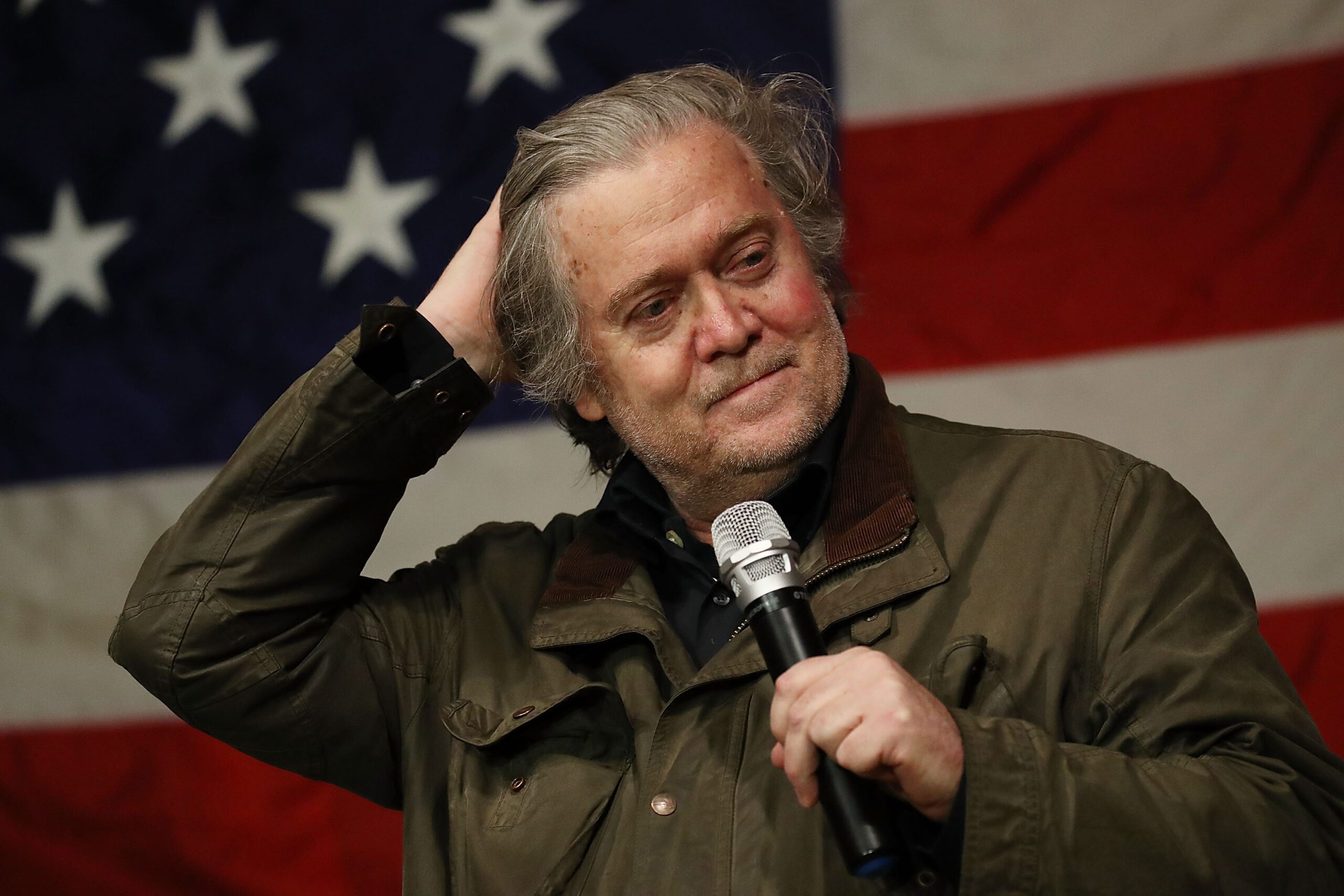

Steve Bannon Implies Financial Incentives Led to Trump’s Policy Shift on TikTok
The Influence of Financial Interests on Political Stances
A recent statement by Steve Bannon, the former advisor to Donald Trump, has raised eyebrows regarding potential financial motivations behind Trump’s change in position on the social media platform TikTok. This shift in stance has occurred amid renewed scrutiny of TikTok by U.S. lawmakers, particularly in relation to concerns over data privacy and potential ties to the Chinese government.
TikTok, a widely popular video-sharing app known for its youthful user base, is currently owned by the Chinese tech giant ByteDance. Allegations of ByteDance furnishing user data to the Chinese government have fueled bipartisan efforts to address these concerns. A bill proposed by members of the House Committee on the Strategic Competition between the United States and the Chinese Communist Party aims to encourage ByteDance to divest from TikTok. The bill would restrict the app’s presence in American app stores and grant the Executive Branch authority to take similar actions against social media companies with ties to foreign adversaries.
Legislative Response and Political Maneuvering
The House Committee on Energy & Commerce recently submitted the legislation to the full U.S. House of Representatives in a unanimous bipartisan vote, signaling widespread support for addressing the TikTok issue. In response, TikTok has framed the bill as a ban and urged users to engage with local representatives to oppose it.
Contradictory to his previous inclination to address the TikTok matter, Trump, a prominent figure in the GOP and a potential 2024 presidential candidate, expressed opposition to the bill. In a recent post on his Truth Social platform, Trump cited disproven claims of election fraud as the basis for his stance. He also made contentious remarks about rival social media platforms, suggesting that banning TikTok would benefit competitors like Facebook.
Potential Financial Influence on Political Decisions
Reports following Trump’s statement highlighted a meeting between him and Jeff Yass, a conservative hedge fund manager with a significant stake in TikTok. Speculations arose that Yass might have leveraged his financial interests to sway Trump’s position on TikTok. Bannon, a key figure in Trump’s political circle, utilized the Gettr platform to voice his suspicions about the potential influence of financial incentives on Trump’s policy reversal.
In an era marked by heightened scrutiny of political actions and their underlying motivations, the intersection of financial interests and political decisions continues to be a topic of interest. The implications of these dynamics on policymaking and governance warrant careful consideration and transparency to uphold the integrity of political processes.