


LONDON (AP) — King Charles won’t be out and about much over the next six weeks — and it’s not because of his ongoing cancer treatments.
Shortly after U.K. Prime Minister Rishi Sunak called an early parliamentary election for July 4, Buckingham Palace said that all members of the royal family were canceling most public engagements until after the vote to avoid doing anything that might divert attention from the campaign.
That announcement is just one of the ways that Charles will seek to play his part as a unifying head of state during the election, without violating a constitutional ban on interfering in politics. While the king’s role in government is largely ceremonial, it’s bound up by traditions that embody the way royal powers were gradually transferred to Parliament over the last 800 years.
Here’s a look at the monarch’s role in the run up to the election, including a few dos and don’ts.
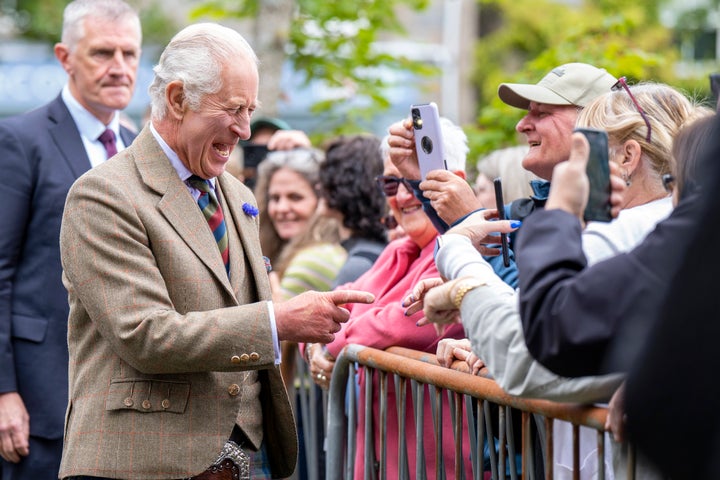 King Charles speaks with members of the public during a walkabout.
via Associated Press
DID CHARLES PLAY ANY ROLE IN CALLING THE ELECTION?
The decision to call an election was entirely Sunak’s. But before he could do so, the king had to grant permission to dissolve Parliament early.
Technically, the king still has the power to refuse a dissolution request if he believes an election would be detrimental to the nation. But no prime minister in modern times has been refused permission to dissolve Parliament.
Ignoring that precedent “would expose the monarch to allegations of political interference of an undemocratic nature, even if the intention of the refusal was to preserve the good functioning of democracy,” according to the Institute for Government, an independent think tank.
The last time a British monarch unilaterally brought down a government that had a majority in the House of Commons was in November 1834, when King William IV dismissed Lord Melbourne because of concerns about radical reforms supported by some members of his administration. But Robert Peel, the king’s choice as successor, was unable to command a majority in Parliament, and Melbourne returned to office five months later.
WHAT’S NEXT FOR THE KING?
The current session of Parliament will be “prorogued,” or ended, on Friday based on an order that Charles approved during a meeting of the Privy Council on Thursday at Buckingham Palace.
The king won’t attend the formal end of the session, a ceremonial affair where the speaker of the House of Commons and other members of Parliament will troop into the House of Lords to hear a speech written by the government.
WHAT ABOUT THOSE PUBLIC APPEARANCES?
The royal family is barred by law and tradition from interfering in politics at any time, but ensuring that those rules are strictly followed is even more important during an election.
That means the royals can’t campaign for candidates,