

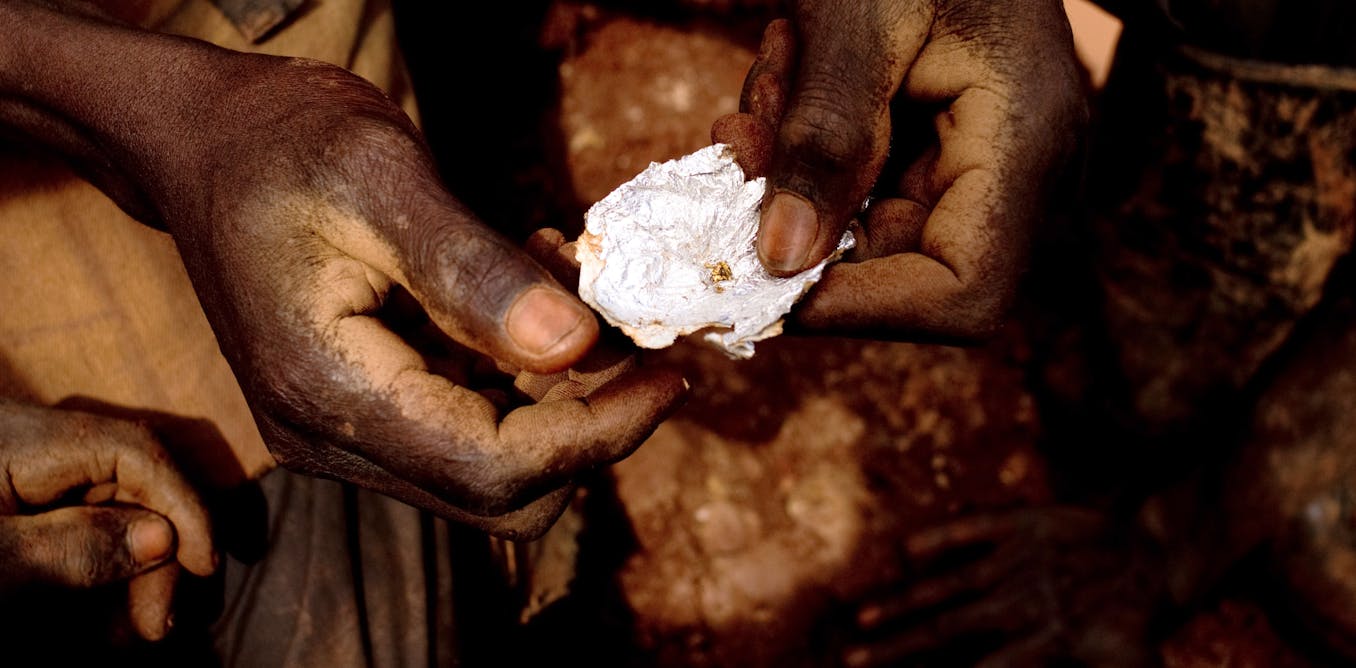

Minerals such as cobalt, copper, lithium, tantalum, tin and tungsten, which are all abundant in central Africa, are essential to the comforts of everyday life. Our phones, laptops and electric vehicles would not function without them.
These minerals are also tied intimately with conflict. For decades, military and paramilitary violence in the Democratic Republic of Congo (DRC) and on its borders – particularly with Rwanda – has been shaped and financed by control over some of these sought-after commodities.
Many of these minerals, including those that have supposedly been sourced responsibly, are linked to violence at the other end of the supply chain too. As we found in our recently published research, minerals sourced in central Africa play a crucial role in the waging of modern wars.
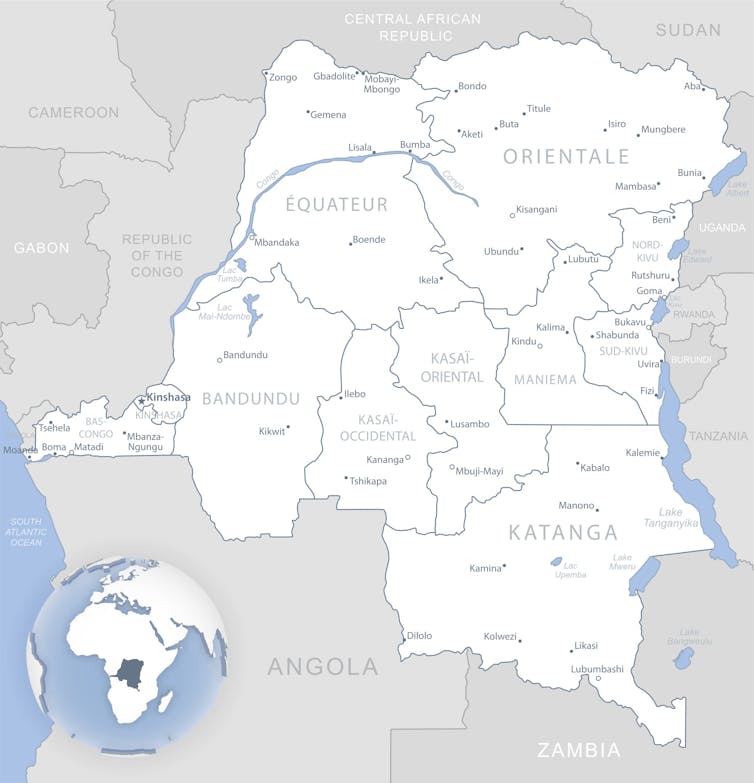
The eastern provinces of the DRC hold large mineral reserves, but mining there remains fraught with the involvement of armed groups.
gt29 / Shutterstock
Extensive campaigning and lobbying over the past two decades has focused on the idea of “conflict-free minerals” as a way to address links between extraction and armed conflict in mining regions.
This has resulted in a suite of legislation in the EU and US obliging tech manufacturers that use minerals from the DRC and surrounding countries to submit so-called “conflict minerals reports” to national authorities.
In the US, for example, tech firms file what is known as a “specialized disclosure form” to the Securities and Exchange Commission detailing all sources of four key minerals commonly associated with conflict in Africa: tantalum, tin, tungsten and gold.
The form requires a declaration that trade is compliant with the due diligence guidelines set by the OECD on responsible supply chains in the DRC and neighbouring states. This guidance has, in turn, given rise to an industry of regulators that seeks to ensure minerals connected to conflict do not enter supply chains.
Tech companies worldwide – big and small – now comply with conflict minerals policies. The fact that these firms can be held under a critical spotlight, and that attention is falling on how bloody wars are connected to consumer products, is a positive development. But there are many flaws to this system of accountability.
One issue is the difficulty in proving that mineral supply is truly conflict free. Many of the “conflict-free” minerals sold through Rwanda, for instance, are very likely to have at least some connection to war.
In the early 2000s, when Rwandan forces were involved in armed conflict in the DRC, the UN estimated that the Rwandan army controlled between 60% and 70% of all the coltan (tantalum ore) produced there. It is widely accepted that Rwandan influence has persisted in the DRC since.
Another issue is that, under conflict-free mineral legislation, “conflict” is associated with minerals only at source. There is no oversight on how minerals are connected to conflict at the other end of supply chains in modern weapons of war.