


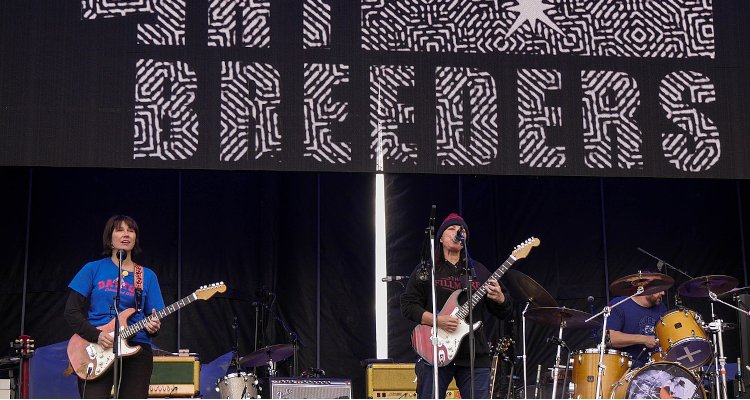
A captivating live performance by The Breeders, signed with 4AD. Photo Credit: Rebecca Sowell
Independent record labels are expressing dissatisfaction and hinting at potential legal action against Apple Music for the increase in royalties for tracks available in spatial audio.
The recent development in Apple Music’s royalty adjustments (following similar changes by Spotify, Deezer, and others) has gained attention in the media.
This news, along with other related reports, was initially revealed by Digital Music News in October 2023. It took several months for other sources to validate our initial coverage, and upon inspection, these subsequent reports mostly reiterated existing information.
As reported earlier, Apple Music is now offering higher royalty rates for spatial audio tracks. Billboard detailed in late January that eligible works could receive up to a 10 percent boost in recorded royalties.
Importantly, these increased royalties for spatial audio on Apple Music are financed from the main royalties pool under the platform’s pro-rata model. Indie labels argue that this redistribution of compensation benefits major labels and artists who are better equipped to produce content in spatial audio, at the expense of smaller players and independent artists.
(It is estimated that the cost of mixing a track in spatial audio can reach around $1,000. Less discussed but equally significant are the distribution fees associated with releasing in Dolby Atmos format, such as the $26.99 fee per track for artists using services like Apple Music and TIDAL via DistroKid.)
Apple’s push towards promoting spatial audio releases, which align with its overall business strategy and ecosystem, is facing resistance from entities like Beggars Group, Secretly Group, and Partisan Records.
According to the Financial Times, these companies have voiced concerns about Apple’s approach, with a senior executive at a major independent record company stating that the policy favors major labels like Universal, who have the resources to invest in spatial audio.
Additionally, sources have indicated that Apple’s financial support for certain spatial audio projects may not sufficiently address the challenges, particularly for extensive back catalogs comprising thousands of tracks.
In light of doubts regarding the artistic value of spatial audio, industry executives are seeking dialogue with Apple to advocate for policy changes. In case negotiations fail to yield desired outcomes, there is a possibility of exploring legal or regulatory options, according to individuals familiar with the situation.