

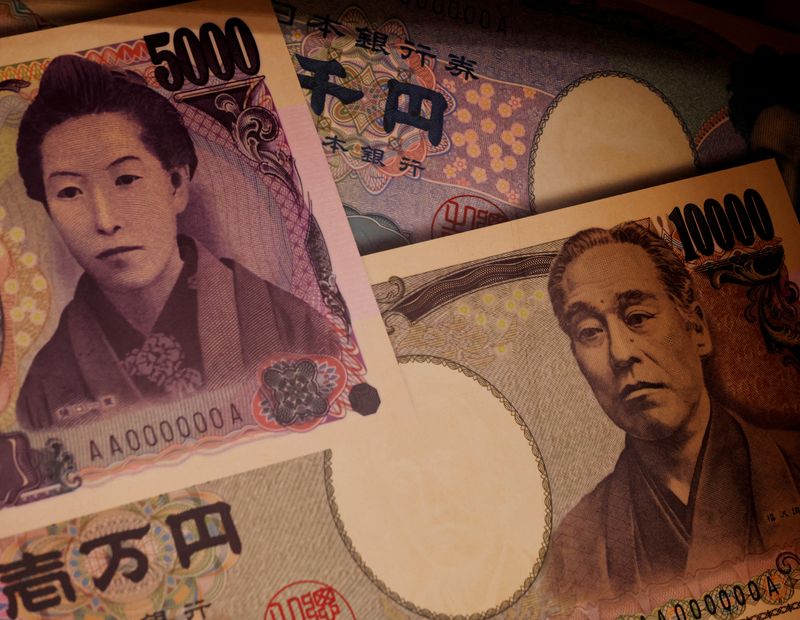

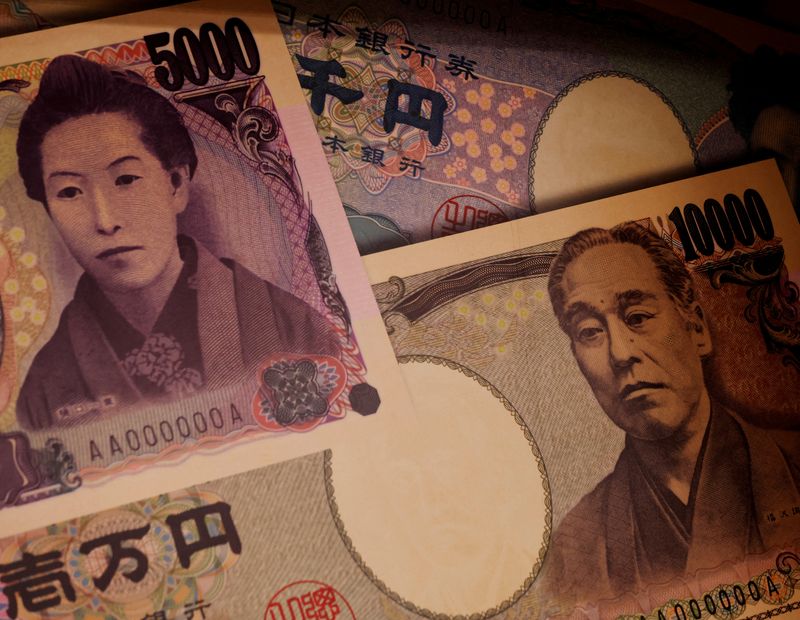
© Reuters. Illustration of Japanese yen banknotes on display during a production event for the Bank of Japan notes in Tokyo, Japan
Written by Jamie McGeever
ORLANDO, Florida (Reuters) - Hedge funds are making slight adjustments to their significant anti-yen stance in anticipation of the Bank of Japan’s upcoming policy verdict, indicating a lack of confidence that a potential interest rate increase would immediately benefit the currency.
The BOJ is projected to implement its first rate hike in nearly two decades on Tuesday, wrapping up a lengthy period of negative interest rate policy (NIRP) and shifting away from a protracted fight against deflation and accommodative monetary measures.
Despite the historical significance of this potential move, it may not have a significant impact on currency markets unless there are additional measures taken and a substantial narrowing of the yen’s yield gap with other major currencies like the dollar.
Further insight into these developments is expected from BOJ Governor Kazuo Ueda on Tuesday and subsequent statements from the U.S. Federal Reserve, including Fed Chair Jerome Powell’s press conference on Wednesday.
However, until these events unfold, market participants remain cautious about embracing the notion that Japan’s tentative step towards normalization will drastically alter the yen’s trajectory.
Recent data from the Commodity Futures Trading Commission indicates that funds have reduced their overall short yen positions by 16,521 contracts to reach 102,322 contracts by the week ending March 12.
This decrease follows a prior reduction of nearly 14,000 contracts in the preceding week, marking the first instance this year where funds have trimmed their pessimistic yen positions for two consecutive weeks.
A short position essentially reflects a belief that an asset’s value will decline, while a long position anticipates an increase. Hedge funds frequently make directional bets on currencies in hopes of aligning with long-term trends.
These figures suggest that funds have downsized their yen exposure by approximately 20% from the peak net short position in over six years recorded at the end of February – surpassing almost 133,000 contracts, constituting one of the most pessimistic yen stances on record.
In monetary terms, the current position corresponds to approximately an $8.65 billion leveraged speculation on yen depreciation, which remains substantial compared to historical standards, leaving room for further reduction and potentially exerting upward pressure on the yen.
Nevertheless, a catalyst is required for such a shift to materialize.
Considering the significance of a potential Japanese rate hike, it is reasonable to expect caution from BOJ policymakers. The current pricing of just 25 basis points of tightening in Japanese swaps this year underscores this approach.
» …
rnrn