

- Features
- Bass Player
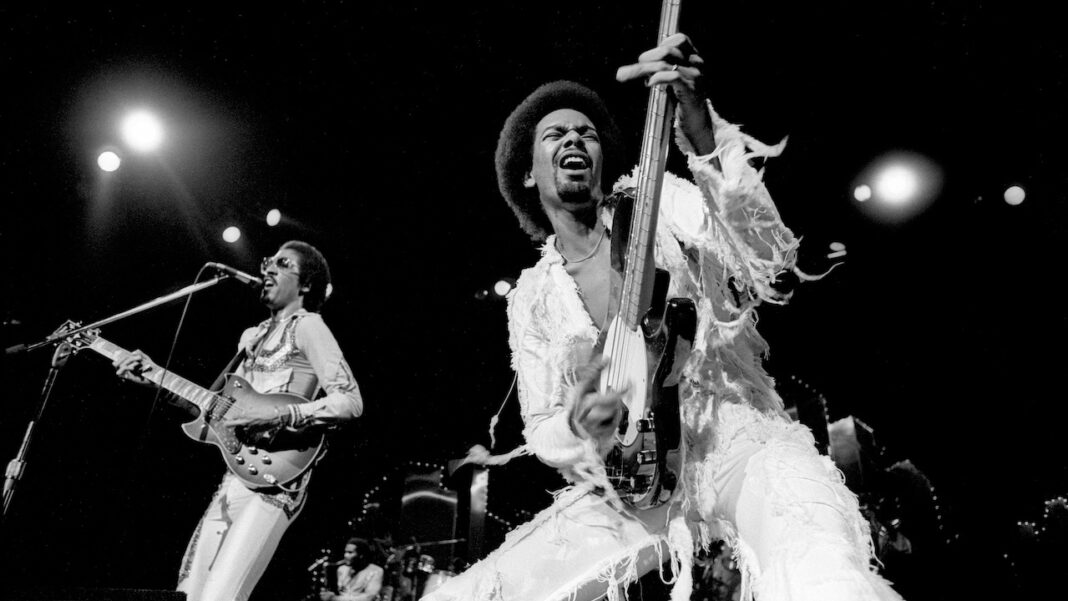
In-your-face-bass at the top of the charts is rare, yet it was a regular occurrence during the late-‘70s/early-‘80s heyday of Louis “Thunder Thumbs” Johnson. Best known to bassists as the steely bridge between slap pioneer Larry Graham and modern-day thump kings like Marcus Miller and Victor Wooten, Johnson – as “discovered” by Quincy Jones – had the musical midas touch.
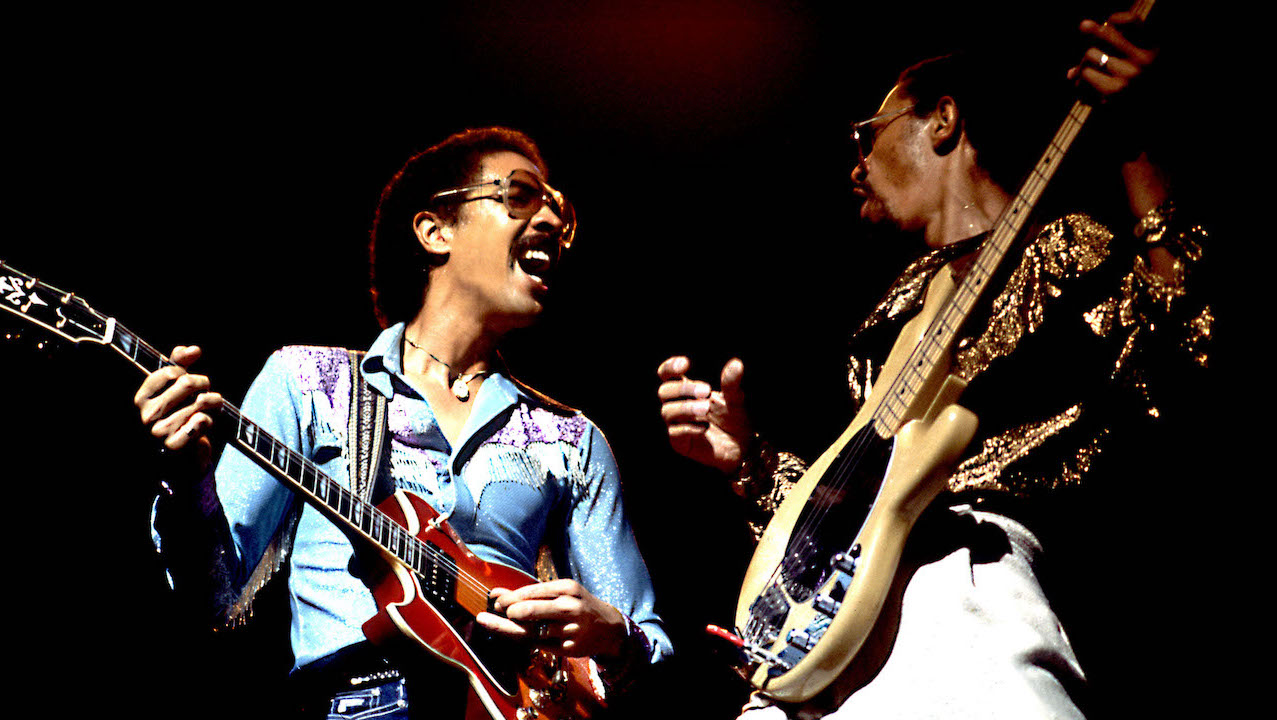
He capped a potent session run by playing on virtually every track of Michael Jackson’s landmark albums Off The Wall and Thriller. Simultaneously, with guitarist/brother George, he formed the Brothers Johnson, issuing such hits as Strawberry Letter 23, I’ll Be Good To You, and Stomp! The latter was the duo’s biggest hit, reaching No.1 on the R&B and dance charts.
Infectious and multi-sectioned, the dance hit clocked in at 6:20 on the Light Up The Night LP, with over 2 minutes cut for radio, but both versions had a most pleasantly surprising centrepiece: a slap bass solo.
“The song is about people dancing and having a good time partying,” Johnson once told BP. “We had it in about two takes, and I made no punches or fixes; the funk was there as soon as we hit it.” Johnson used a Music Man StingRay (which he helped design), and strung it with new D’Addario roundwounds. He recorded his bass direct and through a mic’d and baffled Fender Bassman amp.
Coming from guitar, Johnson got into slapping organically, first by plucking the bass strings with his thumb, and then “trying to find the little clicks and pops I got when I strummed chords on the guitar.”
When Johnson got his first big break, joining Billy Preston’s band in 1972, he was told he sounded like Larry Graham. “I hadn’t even heard of Larry yet. My influences were Ray Brown and James Jamerson.” Quincy Jones came upon a Johnson Brothers demo a few years later, paving the way for their 1976 album debut, Look Out For #1.
The late-1979 session for Stomp!, from the fourth and best-charting Brothers Johnson album, took place at A&M Studios in Los Angeles. “I started writing the song on bass first, and then guitar at my home studio. Next, Quincy had Rod Temperton, George and my wife Valerie helped out with some melodies and lyrics; Jerry Hey did the horn and string arrangements.”
Anchored by four-on-the-floor kick drum, the track launches with an extended intro based on the chorus changes. Johnson provides roots for the chord hits in the first eight measures, and adds some rhythmic motion to the next eight. With the full drum kit entering, Johnson lets loose with a funky, octave-switching two-bar phrase that sets up – and continues as – the first verse.