


Even recent feeble reforms have been rolled back when Trump appointees took the reins.
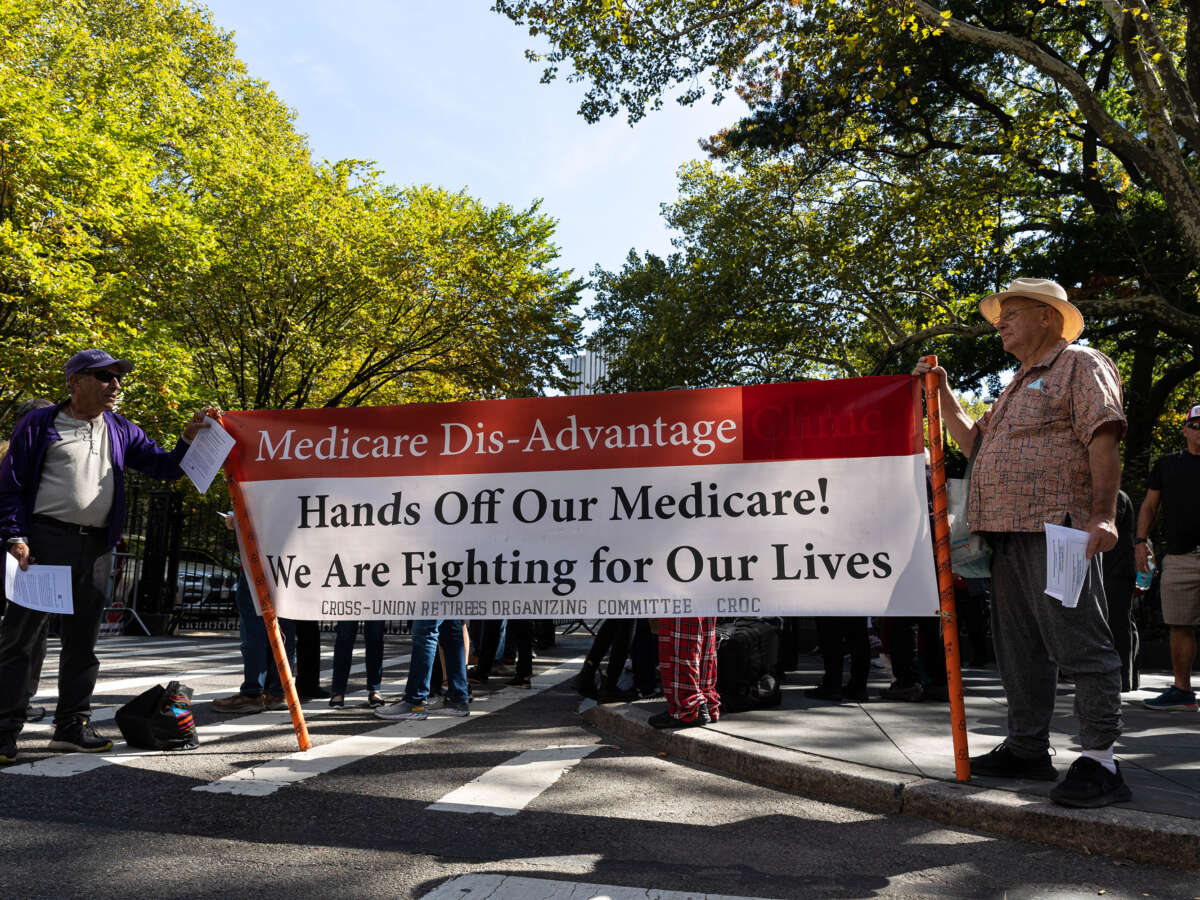
 Retirees protesting the Medicare Advantage situation relating to the 12-126 law outside of City Hall in New York, on October 12, 2022. Shawn Inglima / New York Daily News / Tribune News Service via Getty Images
Did you know that Truthout is a nonprofit and independently funded by readers like you? If you value what we do, please support our work with a donation.
The open enrollment period for Medicare ends on December 7, and chaos in the privatized Medicare Advantage market has left many who depend on MA plans confused and possibly uninsured in 2026.
Health insurance companies that sponsor Medicare Advantage (MA) plans have aggressively recruited members in the past. Low or $0 premiums plus supplemental benefits that traditional Medicare is not authorized by Congress to cover — dental, vision and hearing care — have attracted increasing numbers of seniors. The many disadvantages, including the need to get preauthorization for procedures or medicines your doctor has prescribed or the narrow group of health professionals that are in-network in many MA plans, are not mentioned in advertisements by brokers hired to recruit members. In 2025, more than half (54 percent) of Medicare beneficiaries — 34.1 million seniors — were in MA plans. UnitedHealthcare, which has the most enrollees in its MA plans, had 9.9 million members in 2025.
During the pandemic and for a time following it, seniors put off seeking medical care because of a concern that they would be vulnerable to COVID-19 or other viruses that might be circulating in hospitals. The insurance companies that sponsor MA plans — UnitedHealthcare, Humana, Elevance, Centene, Molina and others — were happy to collect premiums from Medicare and report high profits to Wall Street. But when fear of going to the hospital subsided, patients sought health care that they had postponed. Profit margins for MA plans began to shrink and Wall Street analysts showed their displeasure. Year-to-date (as of December 1, 2025), shares of most major health insurers that sponsor MA plans had fallen, with UnitedHealthcare, Centene and Molina down the most at -36.11 percent, -37.46 percent and -50.18 percent respectively. Even Humana is down at -4.52 percent, year-to-date.
Increasing Profit Pressures
MA plans are under pressure from financial markets to increase margins. And most have taken steps to do just that. UnitedHealthcare, for example, has increased deductibles on prescription drugs and reduced benefits for over-the-counter medications. Like many insurers offering MA plans, it now charges coinsurance on preferred brand name medications instead of set copayments. This means that members will have to pay more for higher priced drugs. These changes, according to health consulting company Jeffries, mean that UnitedHealthcare is likely to “extract more profit from its plans, even as they attract fewer members.”
It turns out that providing health care to MA plan members is not what MA plans are about.