

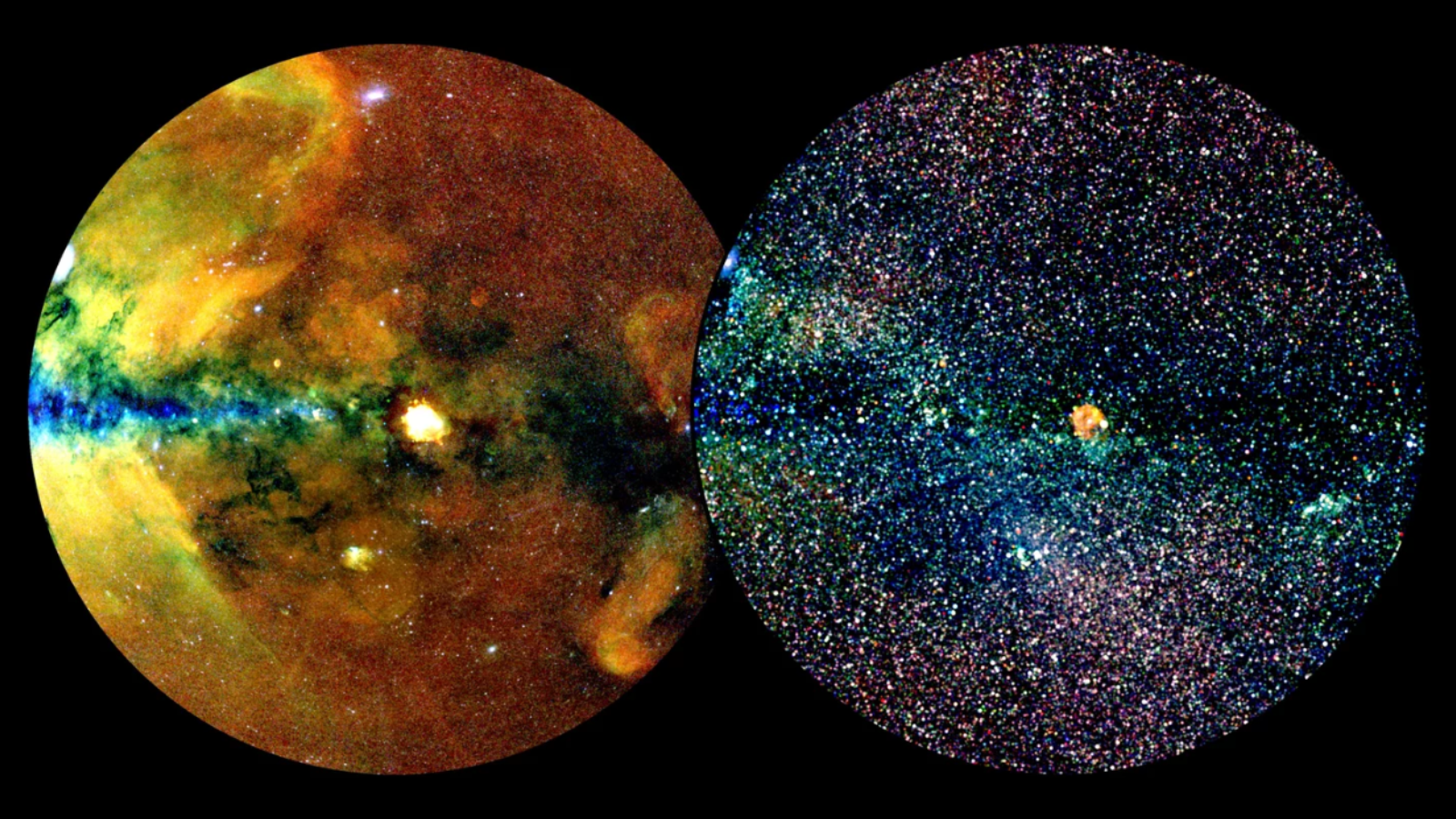

An extraordinary feat has been achieved by a team of scientists and researchers at eROSITA. The first data released to the public from the eROSITA sky survey, renders an X-ray view of the Earth’s sky. Brace yourselves; over 700,000 supermassive black holes and almost a million high-energy cosmic sources have been encompassed.
This extraordinary catalog, the “eROSITA All-Sky Survey Catalogue (eRASS1), was unveiled on Thursday (Feb. 1). It is undoubtedly the largest-ever catalog of the universe’s most powerful energy sources, showcasing exploding massive stars, black hole-powered active galactic nuclei, and highlighting the largest known cosmic web filaments of hot gas that connect galaxies in clusters.
Surprisingly, the results from eROSITA have surpassed anything achieved in the past six decades of examining the sky, in a mere half a year of operations since launching on 13th July, 2019.
This significant milestone could potentially answer some of cosmology’s greatest mysteries. What are the reasons behind the universe’s evolution, and why is the very fabric of space expanding at such an accelerating rate?
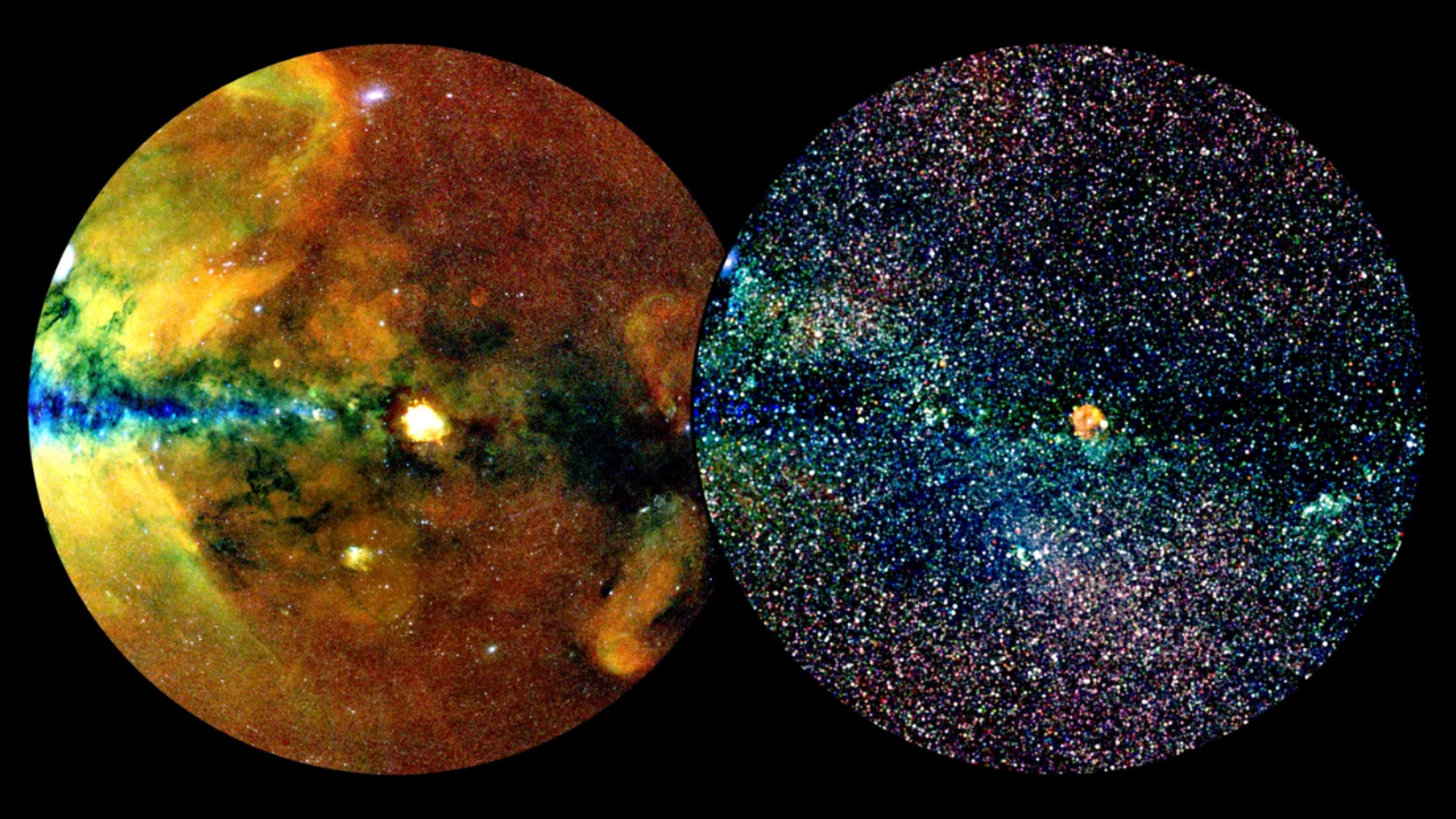
The unveiling of the eRASS1 data comes alongside almost 50 scientific papers published across an array of topics, underscoring the depth and breadth of these remarkable findings. Research shows the discovery of over 1,000 superclusters of galaxies, the revelation of two quasi-periodic erupting black holes, and the determination of the impact that stars’ X-ray radiation has on water and atmosphere retention of planets that orbit them.
“The scientific breadth and power of the survey is overwhelming; it’s hard to put into a few words,” Mara Salvato, spokesperson for the German eROSITA consortium, explained. “But the papers published by the team will speak for themselves.”
eROSITA All-Sky Survey Catalogue (eRASS1) data comprises eROSITA telescope observations conducted from Dec. 12, 2019, to June 11, 2020, which is no mean feat as it remains a testament to the painstaking work undertaken by the team. It is no surprise that the telescope detected around 170 million individual particles of X-ray light or “photons.” Processing these photons revealed a staggering 900,000 X-ray sources, of which 700,000 are feeding supermassive black holes, capable of powering quasars at the hearts of active galactic nuclei. In addition, 180,000 X-ray-emitting stars in the Milky Way have been observed in Andromeda.