


The Total Amount of Asteroid Bennu Sample Collected by OSIRIS-REx Surpasses Expectations
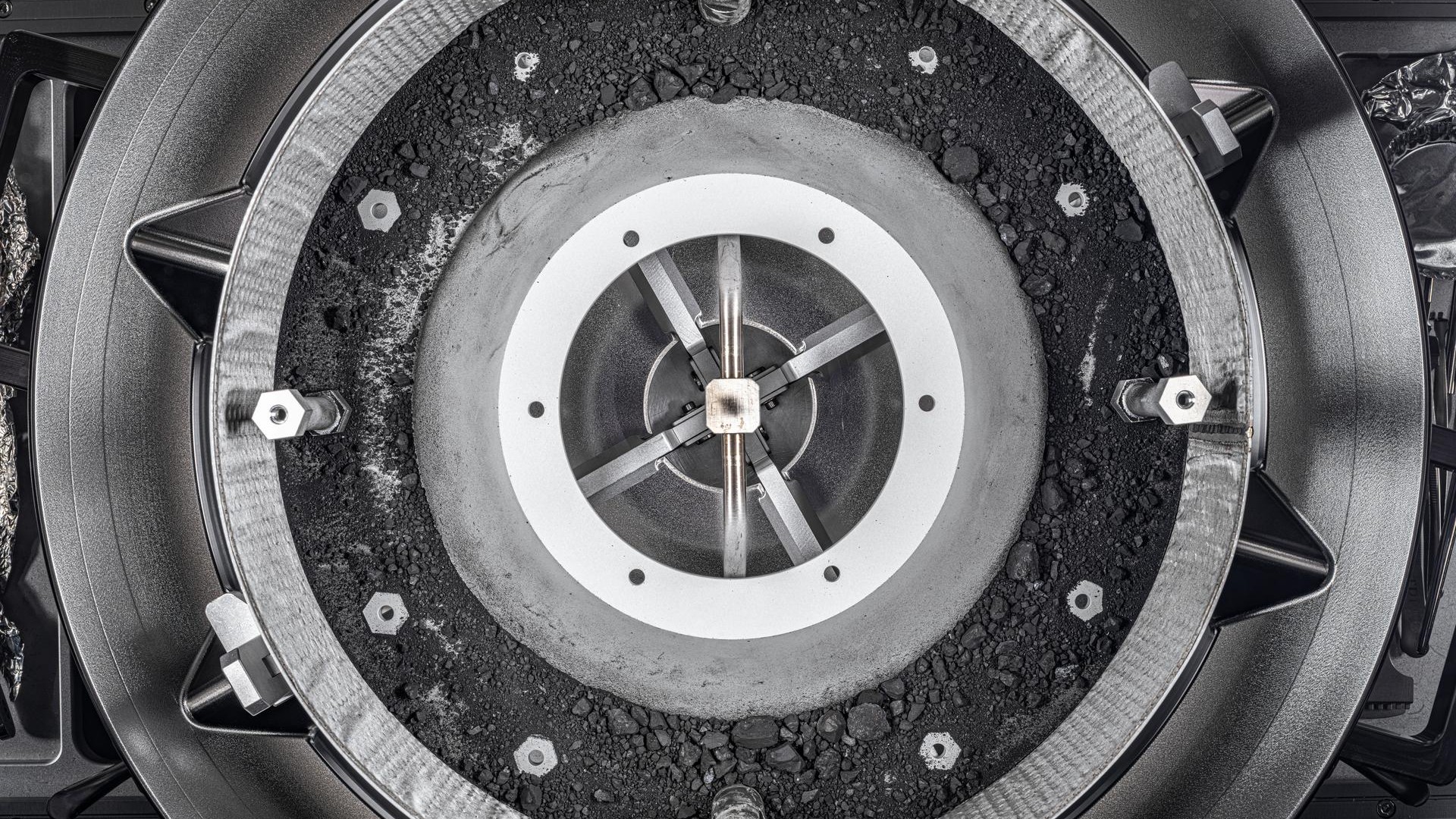
A recent revelation has unveiled the surprising amount of material that NASA’s OSIRIS-REx mission managed to capture from the asteroid Bennu. In addition to the initial 2.48 ounces (70.3 grams) of sample gathered from outside the canister, another 1.81 ounces (51.2 grams) of asteroid Bennu was discovered inside the sample container after it was fully opened. This surpassed the scientists’ expectations, as they had hoped for a much smaller amount.
OSIRIS-REx successfully concluded its mission by returning the tightly-sealed capsule containing the first pieces of an asteroid ever captured and brought back to Earth. The mission, which began in 2016, culminated with the safe recovery of the capsule last year, marking the end of a remarkable seven-year journey through space. However, a challenge arose when technicians encountered difficulty in opening the sample container upon its return.
The original goal of the OSIRIS-REx mission was to collect approximately 2.12 ounces (60 grams) of material. Although bits of Bennu were visible on the exterior of the container, scientists were aware that there was a substantial amount inside. To access the entirety of the Bennu sample, a new tool was designed by NASA teams to unlock the sealed container.
The container was found to be nested inside a larger protective enclosure during the probe’s journey, with some of the material ending up outside the designated sample container. This unexpected discovery allowed scientists to obtain a portion of the Bennu sample even before the main container was opened.
Upon successfully unlocking the inaccessible part of the capsule, mission operators were pleased to find a total of 4.29 ounces (121.6 grams) of material collected from asteroid Bennu. This amount far exceeded the mission’s original goal and stands as the largest asteroid sample ever obtained. In comparison, Japan’s Hayabusa2 mission retrieved only about 0.18 ounces (5 grams) of material from its asteroid target in December 2020.
The examination of the samples has commenced, revealing new insights into the composition of the asteroid material that was previously inaccessible through meteorite samples. Scientists are excited about the wealth of information that these samples will provide for further study.