

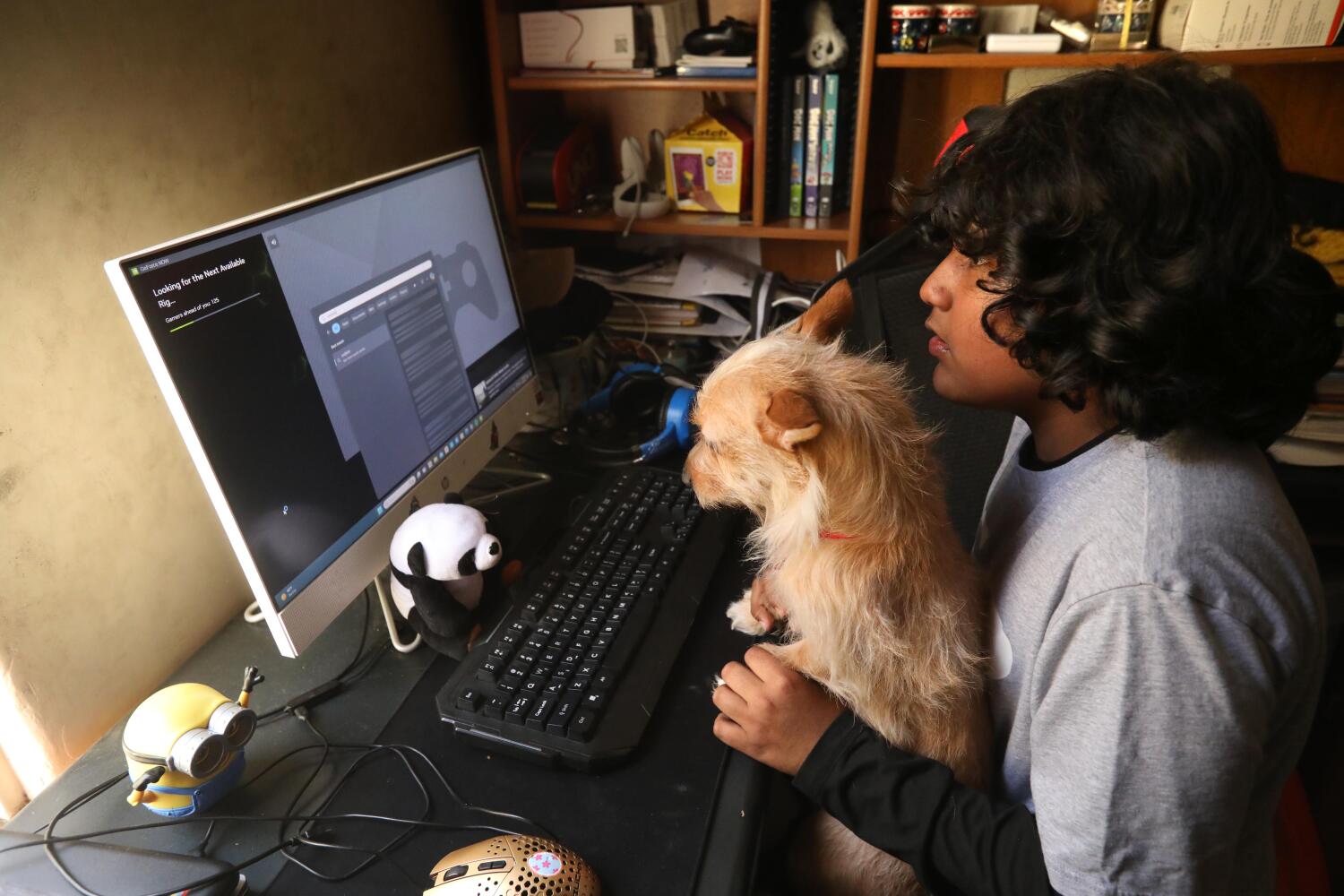

Four years ago, Claudia Aleman and her family had only one way to get online — through their cellphones. Without internet service on a computer, her youngest daughter couldn’t get homework assignments in on time, her parents couldn’t keep up with online doctor visits, and the English classes she wanted to sign up for were out of reach.
Then came a game-changer: The federal government started offering a subsidy that covered $30 of the family’s $80 monthly internet bill.
But while opening mail at her home in South Gate two months ago, Aleman came across a letter from the Federal Communications Commission announcing that the Affordable Connectivity Program they had come to rely on would end in May unless Congress approved more funding.
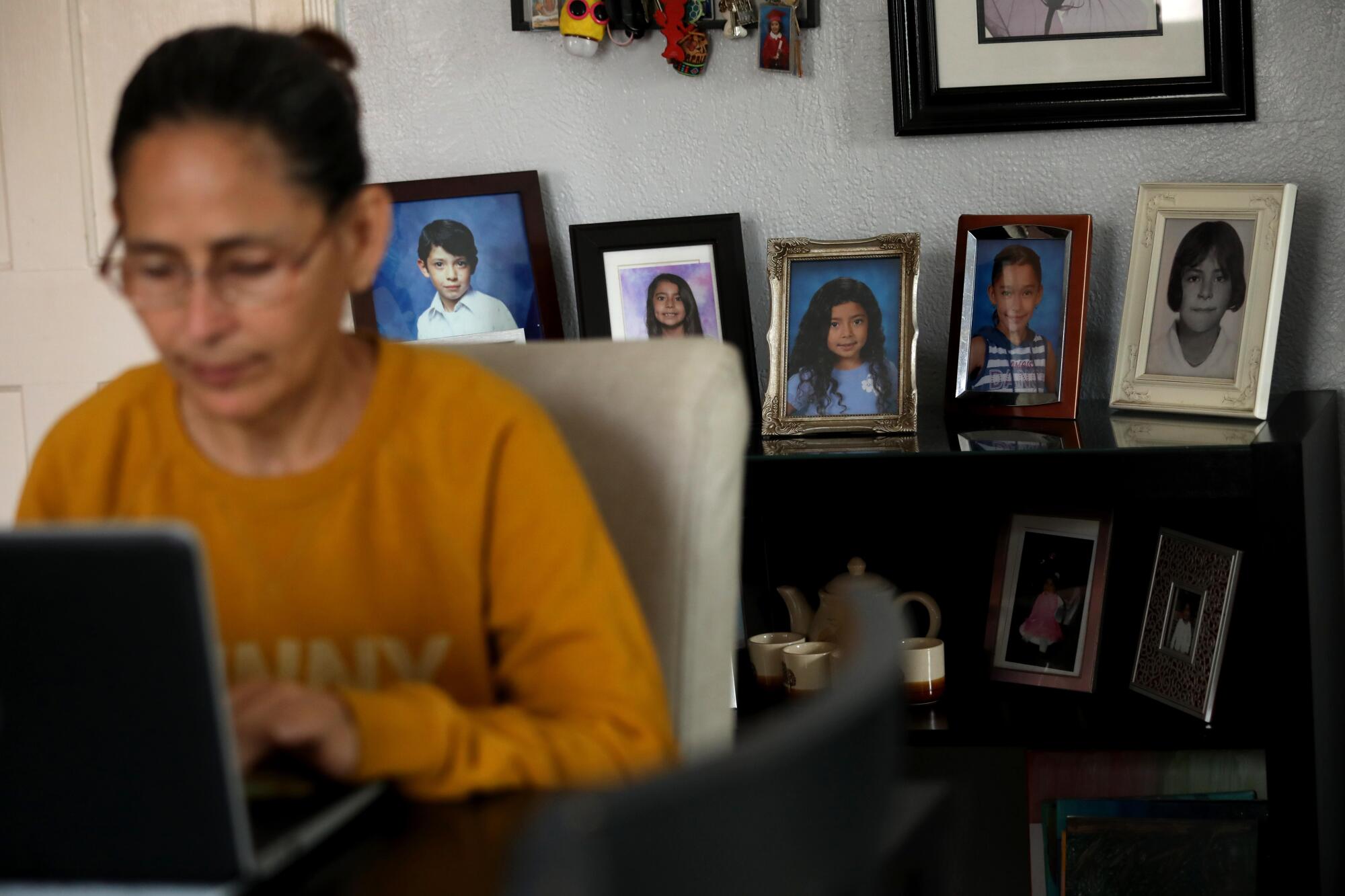
Claudia Aleman of South Gate said her family did not have a computer with internet service until the federal subsidy was created.
(Genaro Molina / Los Angeles Times)
“My husband is the only one who works, and everything is so expensive right now,” Aleman said. “Sometimes we don’t have $30 to spare.”
“The program made a significant difference in our lives,” she added. “Without it, life is going to be difficult, and I’m sure I’m not the only one who feels this way.”
The program, which was created after the pandemic forced many Americans to turn to the internet to connect with work and school, has 23 million enrollees nationwide — 1 in 6 U.S. households — including nearly 3 million in California.
Since 2021, it has provided a $30 monthly subsidy for low-income households and $75 for those on tribal lands. But the $14.2 billion funded through the Infrastructure Investment and Jobs Act has run out.
April was the last month of full program benefits, but households could receive a partial discount in May.
In a letter to Congress this month, FCC Chairwoman Jessica Rosenworcel warned that not funding the program would have widespread impact, especially for senior citizens, veterans, schoolchildren and residents of rural and tribal communities.
“Households across the country are now facing hard choices about what expenses they have to cut, including food and gas, to maintain their broadband access, with some households doubtful they can afford to keep their broadband service at all,” she wrote.
Internet service providers have their own programs for low-income households. People can enter their address on the FCC’s broadband map to find providers in their area. The California Public Utilities Commission also provides a list of providers with low-cost internet plans.
But finding a cheaper alternative can be difficult. Rural households sometimes have just one provider, and families who can’t afford it have little recourse.
Rep. Salud Carbajal (D-Santa Barbara) is among 228 bipartisan co-sponsors of the Affordable Connectivity Program Extension Act of 2024, which would provide an additional $7 billion to keep the program afloat for another year.