

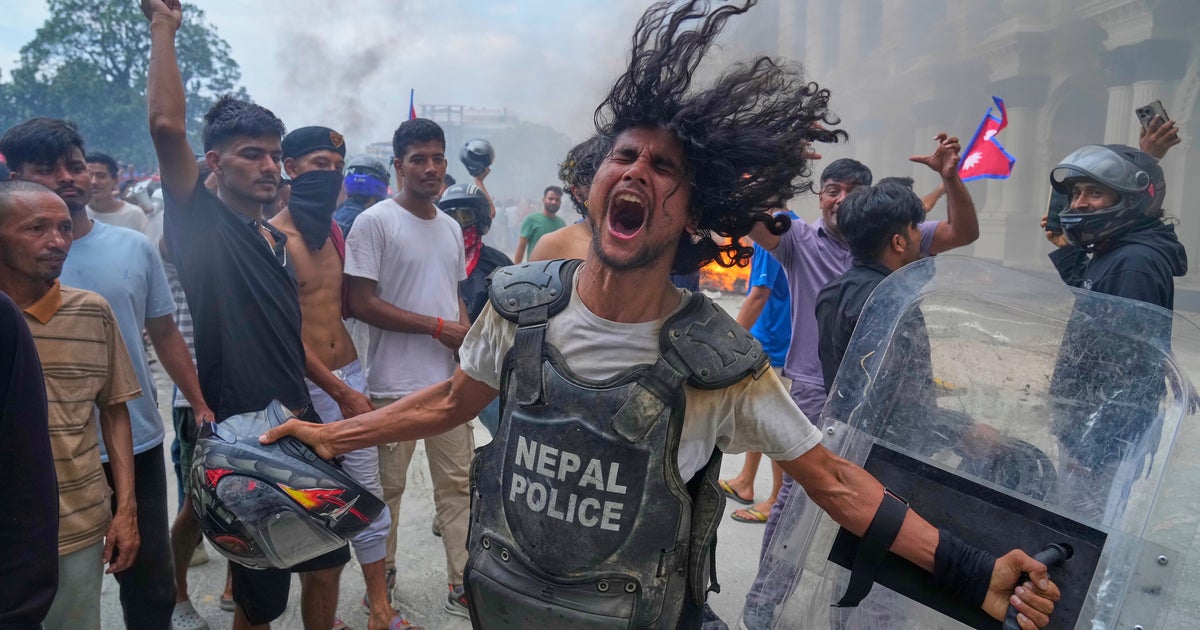

KATHMANDU, Nepal (AP) — Protests against Nepal’s short-lived ban on social media grew increasingly violent Tuesday as demonstrators set government buildings and politicians’ homes on fire and attacked some leaders. The prime minister resigned amid widening criticism of the country’s political elite.
The resignation appeared to have little effect on the unrest. Tens of thousands of protesters remained on the streets late in the day, blocking roads and storming government facilities. Army helicopters ferried some ministers to safe places.
A day earlier, demonstrations led by young people angry about the blocking of several social media sites gripped the capital, and police opened fire on the crowds, killing 19 people.
The ban was lifted Tuesday, but the protests continued, fueled by rage over the deaths and accusations of political corruption in the nation wedged between China and India.
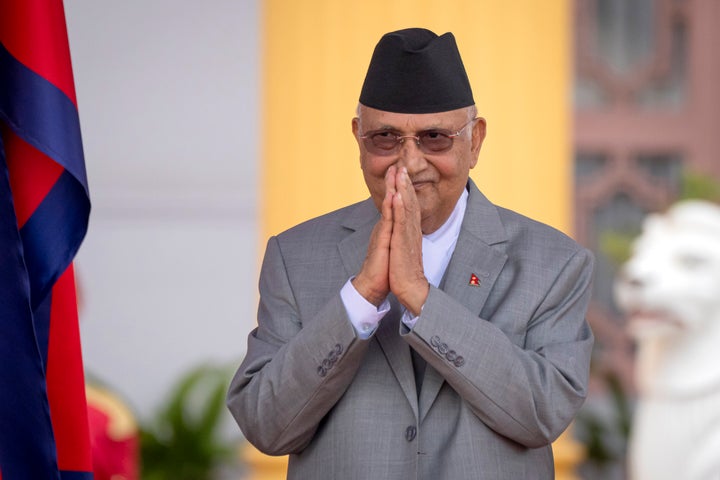 The then newly elected Prime Minister Khadga Prasad Oli greets after the oath of office in President residence in Kathmandu, Nepal, on July 15, 2024.
AP Photo/Niranjan Shrestha, File
As the protests escalated, Prime Minister Khadga Prasad Oli announced he was stepping down. The president accepted the resignation and appointed Oli to lead a caretaker government until a new one is in place — though it was unclear what power he would wield or even where he was.
President Ram Chandra Poudel, the ceremonial head of state, appealed to the protesters to engage in discussions to find a peaceful resolution and stop further escalation.
In a video message, Nepalese army chief Ashok Raj Sigdel urged protesters to stop the demonstrations to prevent further loss of lives and property and to come forward for dialogue.
In a written statement that followed, the army warned that the country’s security forces were committed to preserving law and order. It was not clear if the army, which so far has stayed in its barracks, would be mobilized to help after police failed to control the situation.
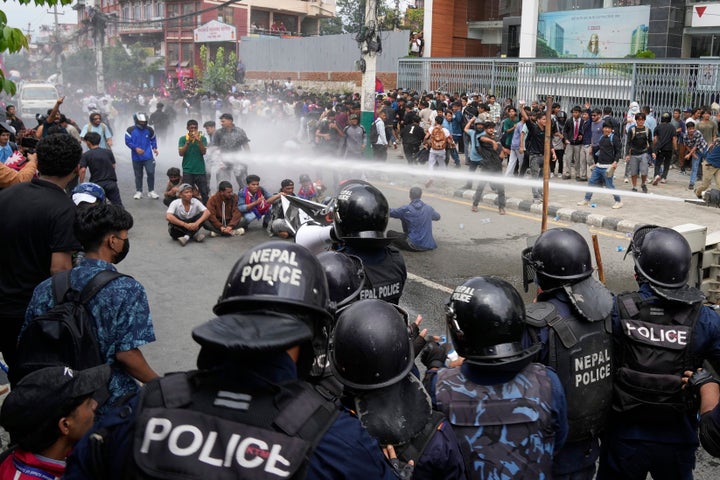 Riot police use a water cannon on protesters outside Parliament in Kathmandu, Nepal, Monday, Sept. 8, 2025.
Niranjan Shrestha via Associated Press
Focus turns to the government
The demonstrations — called the protest of Gen Z — began after the government blocked platforms, including Facebook, X and YouTube, saying the companies had failed to register and submit to government oversight.
But the protests spiraled to reflect broader discontent. In particular, many young people are angry that the children of political leaders — so-called nepo kids — seem to enjoy luxury lifestyles and numerous advantages while most youth struggle to find work. With youth unemployment running at about 20% last year, according to the World Bank, the government estimates that more than 2,000 young people leave the country every day to seek work in the Middle East or southeast Asia.
“I am here to protest about the massive corruption in our country,” said Bishnu Thapa Chetri,