


While Palestinians in Gaza fear death from heat in makeshift tents, Israelis in Tel Aviv stay cool in air-conditioned homes – highlighting the unequal effects of extreme weather
Throughout April and May, people across the Middle East and much of Asia have suffered from record-breaking heatwaves, which have been made more frequent and more severe by climate change.
But not everyone has been affected equally, as Climate Home found out when speaking to people living by the Mediterranean Sea, just an hour or two’s drive apart. The Israeli city of Tel Aviv has been largely unscathed by the ongoing war between Israel and the Palestinian militant group Hamas, while Gaza’s urban areas have been bombed heavily, forcing most residents to flee Israeli attacks.
Climate Home spoke to two Palestinian fathers, now living in Gazan refugee camps in Rafah and Deir al-Balah, who have lost children to the recent heatwave. Both had fled their homes before their children died and are living with their surviving families in makeshift wood and nylon tents, fanning themselves with plastic food containers for ventilation.
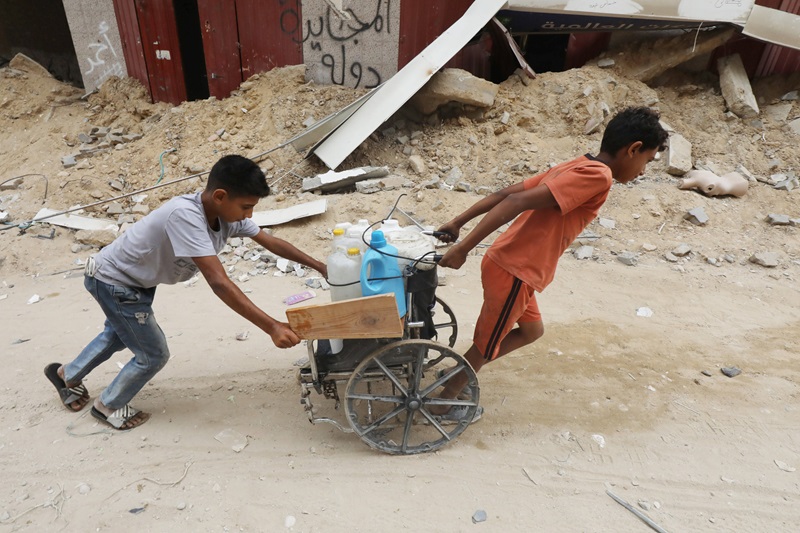
Boys carry water bottles in Gaza on May 28, 2024. (Photo: Naaman Omar)
Meanwhile, just to the north, on the beach-side promenade of Tel Aviv, Israeli locals told Climate Home they had waited out the heatwave in air-conditioned apartments. Their main concerns were the cost of cooling, the strain it places on the country’s electric grid and drooping house plants.
Not just temperatures
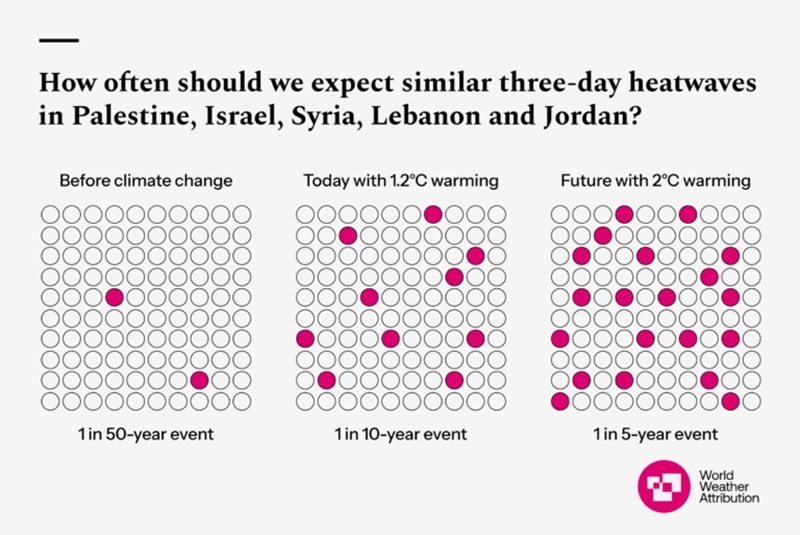
Friederike Otto is one of the scientists who worked on a study issued by the World Weather Attribution group which found that climate change made the April heatwave in the Middle East five times more likely.
She told a press briefing that heatwaves are “not just about the temperatures – it’s what these temperatures mean to people”.
Asked separately about Gaza, she told Climate Home: “If you don’t have access to water, if you don’t have access to shade, if you don’t have access to medication – the extreme heat just compounds so much the challenges that these people are already facing.”
The Gaza Strip, one of two Palestinian territories, is just 25 miles long and about five miles wide. Since a bloody attack by Hamas on Israeli civilians on October 7, the Israeli military has repeatedly bombed and invaded Gaza, killing over 35,000 people.
The attacks have caused 1.9 million people, nearly 85% of the Gazan population, to flee their homes. While air conditioning, electricity and clean water have long been scarcer in Gaza than Israel, the current conflict has worsened that inequality, development agencies have said.
Greenhouse tents
Many refugees are living in nylon tents. Without walls, fans or air conditioning, they told Climate Home they are battling heat by using expensive water to shower as often as they can and stripping children – nearly half of the region’s population – to their underwear.