


 great white shark” title=”Orca (killer whale) predatory behavior study. Credit: Christiaan Stopforth, Drone Fanatics SA” width=”800″ height=”530″/>
New Insights into Killer Whale Predatory Behavior
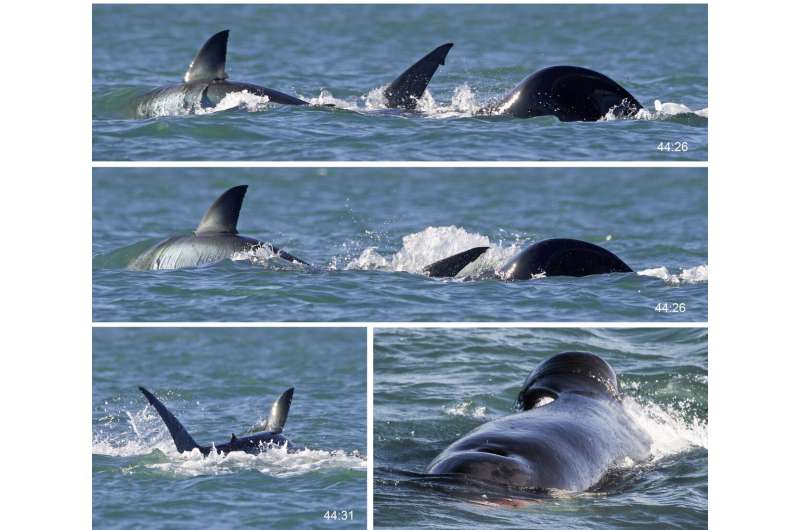
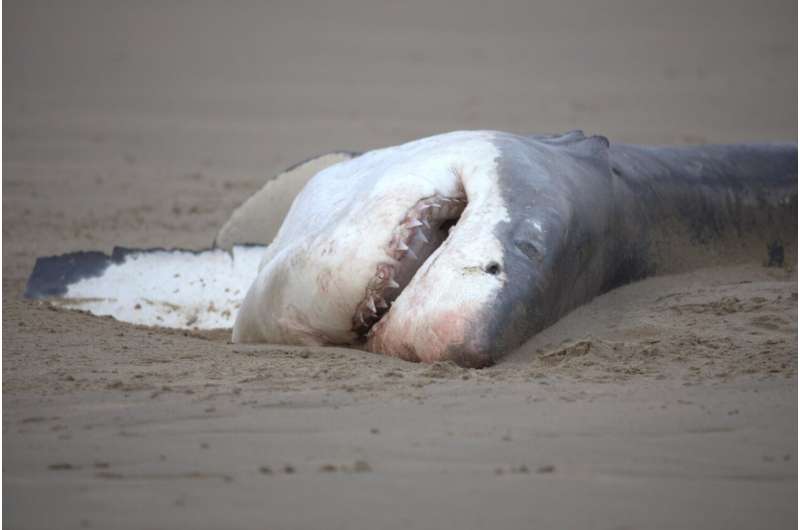
Recent research has unveiled a remarkable discovery – an orca (killer whale) successfully hunting and consuming a great white shark within a mere two-minute timeframe.
The groundbreaking observation took place off the coast of Mossel Bay, South Africa, shedding light on the extraordinary capabilities of these marine predators. Dr. Alison Towner of Rhodes University, leading an international team of researchers, emphasizes the unprecedented nature of this behavior in killer whales.
The study, now published in the African Journal of Marine Science, builds upon previous findings from 2022, where orcas were documented hunting and eradicating great white sharks from South African waters since 2017.
A Solo Act by Starboard
While orcas typically collaborate to capture large prey, such as seals and other sharks, the recent observation of a solitary orca named Starboard feasting on a juvenile white shark is a rare occurrence. Starboard, known for his collapsed dorsal fin, efficiently incapacitated and consumed the shark within minutes, showcasing individual hunting skills rarely seen in killer whales.
This exceptional event challenges the conventional understanding of orca feeding behavior and adds valuable insights into predator-prey relationships and marine ecosystems.
Implications for Conservation
The significant impact of killer whale predation on shark populations raises important questions about the ecological balance in South African waters. Dr. Towner stresses the need for adaptable conservation strategies and ongoing ecological monitoring to mitigate potential disruptions in marine food chains.
As we delve deeper into the predatory dynamics of killer whales, it becomes evident that sustained conservation efforts are imperative for the preservation of marine biodiversity in the face of changing environmental conditions.
For more information, the study can be accessed at: Study on Orca Predation