


Civil Society, Global, Global Governance, Headlines, International Justice, IPS UN: Inside the Glasshouse, TerraViva United Nations
Opinion

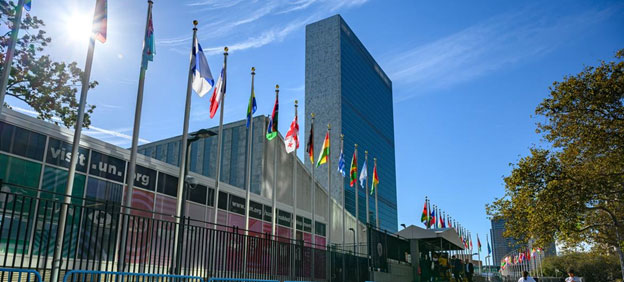
UN’s ‘responsibility to deliver’ will not waver, after US announces withdrawal from dozens of international organizations. Credit: UN Photo/Loey Felipe
“Take up the White Man’s burden — Send forth the best ye breed… By all ye cry or whisper, by all ye leave or do, [T]he silent, sullen peoples shall weigh your gods – and you…” — Rudyard Kipling, The White Man’s Burden: The United States and the Philippine Islands (1899)
NEW YORK, Jan 12 2026 (IPS) – We’re living in an age where the world is loudly proclaiming the death of empire, yet reproducing its structures. This is not nostalgia for colonial postcards — it’s a reinvention of foreign policy, international governance and global economic power that resembles colonial logic far more than it does meaningful cooperation.
The term “New Colonialism” feels extreme until you look not at poetry, but at power in motion — from military takeovers and genocides, to diplomatic withdrawal, to institutions that still perpetuate inequality and human rights’ abuses under the guise of neutrality.
I – Where Are We Today
“Imperialism after all is an act of geographical violence through which virtually every space in the world is explored, charted, and finally brought under control.”
— Edward Said, Culture and Imperialism (1993)
In January 2026, the United States executed what amounts to the most dramatic foreign intervention in Latin America in decades: a military incursion into Venezuela resulting in the abduction of President Nicolás Maduro. President Donald Trump openly declared that the U.S. would “run the country until such time as we can do a safe, proper and judicious transition.” This is not coded language — it is overt control.
Critics and allies alike see the move not as a limited counternarcotics or law enforcement operation (as the Administration frames it), but as a return to the old playbook of hemispheric domination. Latin American governments from Mexico to Brazil condemned it as a violation of sovereignty — a modern mirror to the regime-change interventions of the 20th century.
Analysts at Foreign Policy have highlighted precisely how this intervention fits into a larger pattern of U.S. foreign policy ambition. Rishi Iyengar and John Haltiwanger note that under the banner of battling “narcoterrorism,” the United States has expanded the role of its military into actions that blur the distinction between security and political control — “adding bombing alleged drug traffickers to its ever-growing list of duties.”
Such actions reflect a foreign policy that is increasingly militarized and deeply unilateral in its execution.
This intervention was not an isolated blip. It fits into a broader dynamic which suggests Washington’s moves in Venezuela are less about drug interdiction and more about strategic positioning and resource control — especially Venezuela’s vast oil reserves.