


Credit: Unsplash/CC0 Public Domain
Wow! Marine heat waves seem to trigger earlier reproduction, leading to high mortality of early life stages and smaller numbers of surviving juvenile Pacific cod in the Gulf of Alaska, based on an amazing study from Oregon State University.
These changes in the hatch cycle and early growth patterns persisted in years following the marine heat waves, which could have grave implications for the future of Gulf of Alaska Pacific cod, an economically and culturally significant species, said Jessica Miller of OSU’s Coastal Oregon Marine Experiment Station at Hatfield Marine Science Center in Newport and the study’s senior author.
“We were stunned to find out that the fish were hatching two to three weeks earlier. To see that dramatic of a shift in hatch dates of a species due to a one- or two-year event is pretty remarkable,” Miller said. “That those changes continue to persist suggests that marine heat waves might be having long-lasting impacts that also influence the likely trajectory of the species under climate change.”
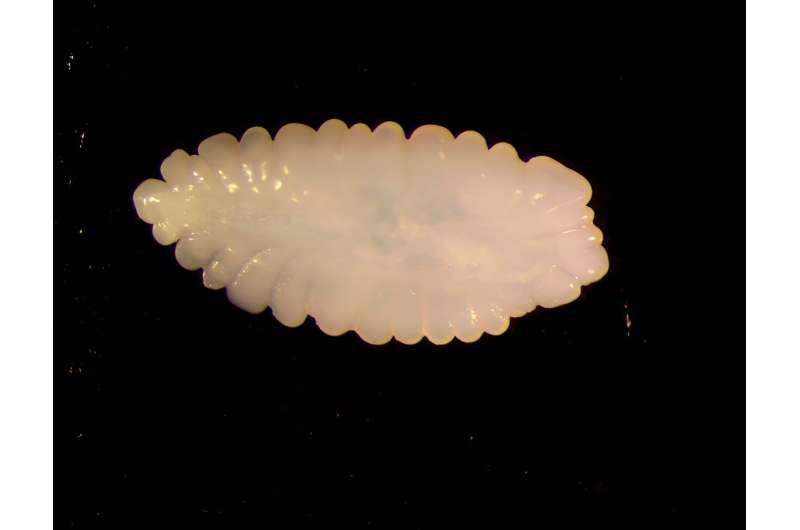
An otilith, or ear stone, from a Pacific cod. Credit: Jessica Miller, Oregon State University
The findings, which were just published in the journal Elementa: Science of the Anthropocene, could also have implications for future management of the fishery.
Pacific cod, perhaps best known as the key ingredient in fish and chips, is the second largest commercial groundfish fishery off the coast of Alaska. The 2022 commercial harvest totaled 403 million pounds and was valued at $225 million, according to NOAA Fisheries. The Gulf of Alaska stock is one of four Pacific cod stocks. It has a long history in Alaskan culture and is important to Indigenous communities in the region.
From 2014 to 2016 and in 2019, marine heat waves, which are periods of unusually high ocean temperatures, led to a steep decline in the abundance of adult Gulf of Alaska Pacific cod. As a result, the fishery was closed in 2020, and a federal disaster was declared in 2022.
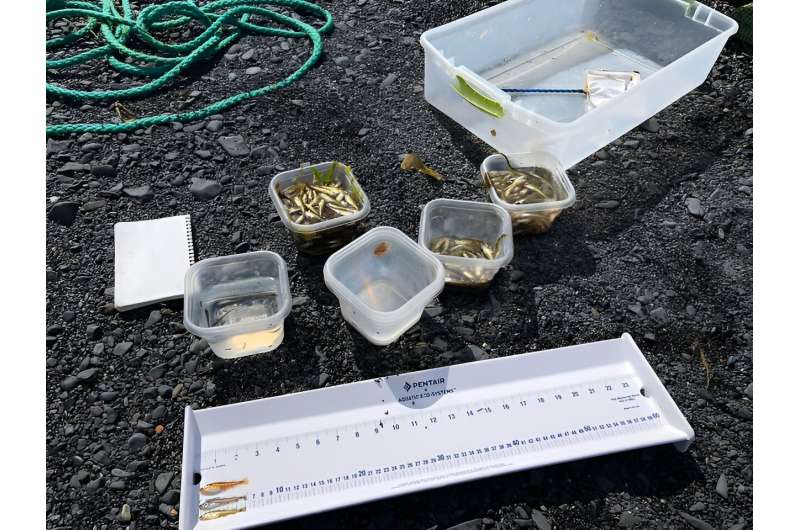
Collecting juvenile Pacific cod. Credit: Ben Laurel, NOAA Alaska Fisheries Science Center
The researchers studied otoliths, or ear stones, from young Pacific cod to better understand how heat waves impacted the Gulf of Alaska population of Pacific cod. The tiny bony structures begin to grow during the embryonic stage of development and chronicle a fish’s life in a manner similar to rings on trees. Understanding how marine heat waves impact the fish’s early growth cycle provides critical information to researchers and to fisheries managers.
“The stones are a common tool in fish ecology. They are a time capsule that can be very useful for tracking what the fish ate and how fast they grew across time,” said Miller, a professor in the Department of Fisheries, Wildlife, and Conservation Sciences in OSU’s College of Agricultural Sciences.