


deep dive
Behind closed doors, rich donors plotted to stop a movement reshaping NYC politics — and exposed their deeper fears
Published
October 30, 2025 6:45AM (EDT)
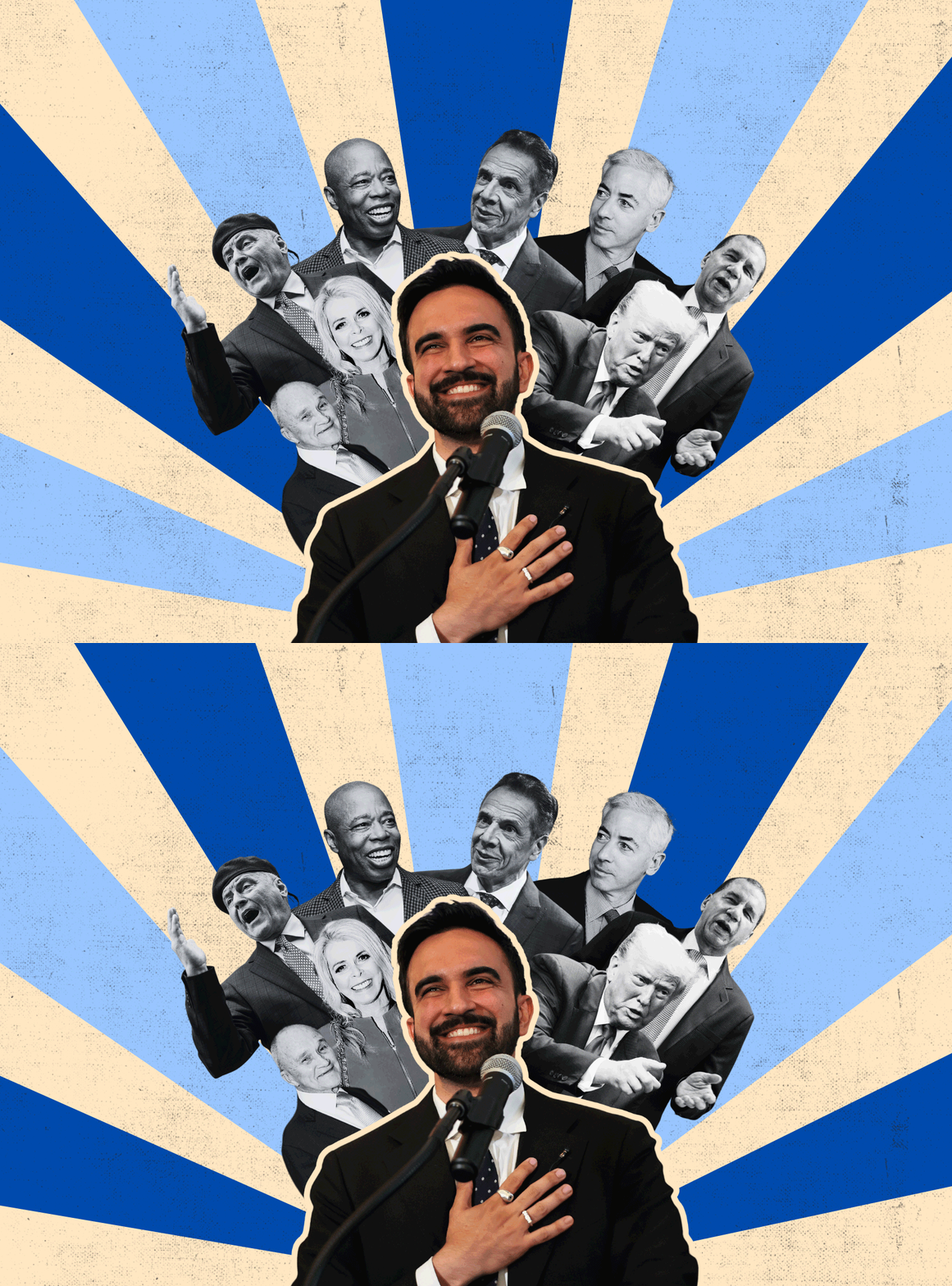
(Photo Illustration by Salon/Getty Images/Michael M. Santiago/Jared Siskin/Patrick McMullan/Spencer Platt/Marleen Moise/Angelina Katsanis-Pool/Patrick T. Fallon/Newsday/Andrew Harnik)
Conversations around the effort to defeat insurgent mayoral candidate Zohran Mamdani have often started with a seemingly unrelated question: “Do you summer in the city?” At least they did for much of this past summer, when the ruling class of New York City still believed that a well-funded unified campaign to defeat the democratic socialist was on the table. Now, as Election Day draws near and a sense of fatalism sets in, the highest echelons of wealth and power in Gotham are panicking as a bungled attempt to reassert an old order enters its final push and becomes a desperate scramble, not only in the city but also within the Democratic Party at large. The stakes are much higher than one mayoral election. It’s about whether or not the rich and powerful can still command politics in the beating heart of American capitalism.
In mid-July, around 150 people, including a handful of reporters, packed into a ballroom at the Women’s National Republican Club in Midtown Manhattan.
“New York as we know it is over.”
The clubhouse, the only such venue specifically dedicated to Republican women, is located just around the corner from Rockefeller Center. On that summer evening, it hosted a talk on how to prevent crime on the city’s subways by a researcher at the Manhattan Institute, the house think tank of New York City’s conservative elite, which is probably best known as the incubator for ideologues like Charles Murray, the author of “The Bell Curve,” and Christopher Rufo, who helped instigate the moral panic around critical race theory.
Despite the club’s name, the crowd was a mix of well-heeled men and women who, before the talk started, loosely gathered around the seating area and bar, though almost no one was ordering drinks. Before the event, the members of the crowd spoke to each other in hushed tones about the recent Democratic mayoral primary. This was soon after the Board of Elections had released the final tally, which made it clear that Mamdani had romped through the primary, but before the race was certified.
And indeed, many of the attendees, it seemed, were not there to hear about how more police interactions on the subways could stop crime. They were there because the former lieutenant governor of New York state, Betsy McCaughey, who had been plucked from the pages of The New Republic under former editor Andrew Sullivan to serve as former Gov. George Pataki’s running mate in 1994, had promised to give the crowd her theory on how concerned New Yorkers could defeat Zohran.
McCaughey, who still commands a certain respect in conservative circles in the city,