

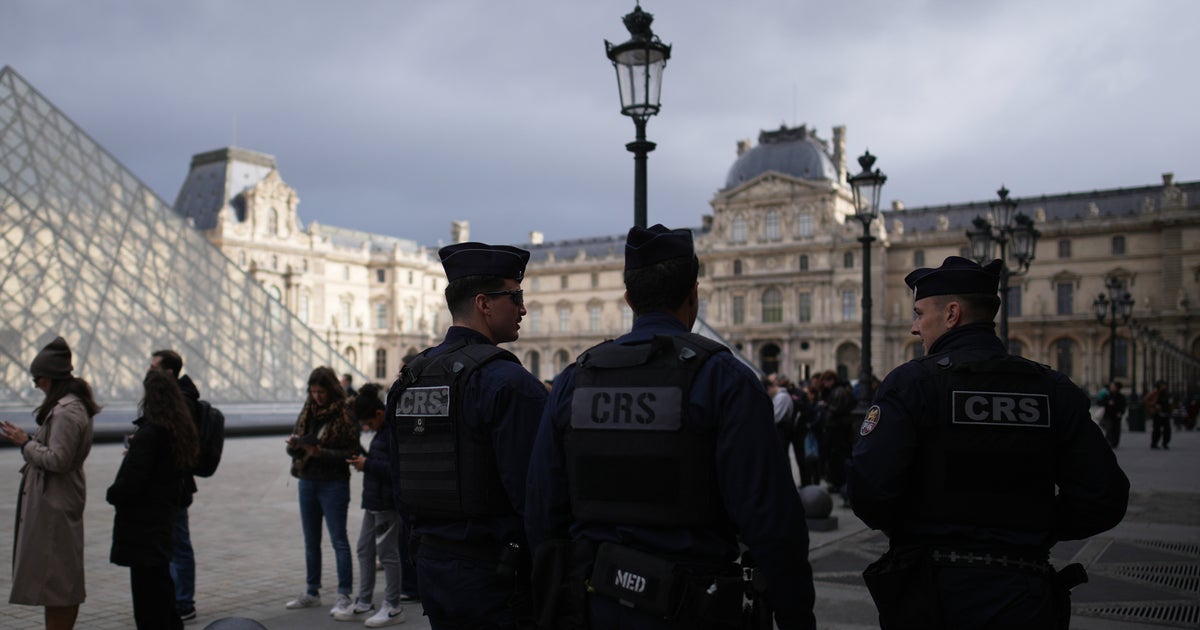

PARIS (AP) — French police acknowledged major gaps in the Louvre’s defenses on Wednesday — turning this month’s dazzling daylight theft into a national reckoning over how France protects its treasures.
Paris Police Chief Patrice Faure told Senate lawmakers that aging systems and slow-moving fixes left weak seams in the world’s most-visited museum.
“A technological step has not been taken,” he said, noting parts of the video network are even still analog, producing lower-quality images that are slow to share in real time.
A long-promised revamp — a $93 million project requiring roughly 60 kilometers (37 miles) of new cabling — “will not be finished before 2029–2030,” he said.
Faure also disclosed that the Louvre’s authorization to operate its security cameras quietly expired in July and wasn’t renewed — a paperwork lapse that some see as a symbol of broader negligence after thieves forced a window to the Apollo Gallery, cut into cases with power tools and fled with eight pieces of the French crown jewels within minutes while tourists were inside.
“Officers arrived extremely fast,” Faure said, but he added the lag occurred earlier in the chain — from first detection, to museum security, to the emergency line, to police command.
Faure and his team said the first alert to police came not from the Louvre’s alarms but from a cyclist outside who dialed the emergency line after seeing helmeted men with a basket lift.
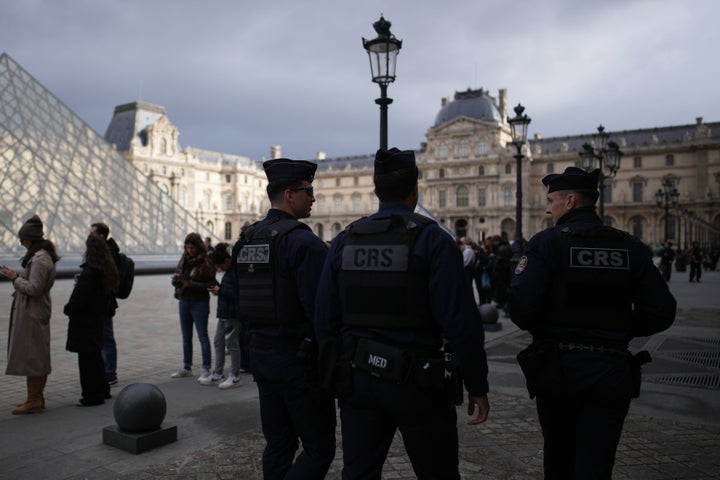 Riot police officers patrol as people queue to enter Le Louvre museum Monday, Oct. 27, 2025 in Paris. (AP Photo/Christophe Ena)
via Associated Press
Suspects’ custody expiring
Officials say two suspects were arrested over the weekend, including one stopped at Charles-de-Gaulle Airport as he tried to leave France. Under French rules for organized theft, custody can run up to 96 hours; that limit expires late Wednesday, when prosecutors must charge the suspects, release them, or seek a judge’s extension. The Louvre values the eight stolen pieces at about $102 million. None has been confirmed recovered.
The theft has also exposed an insurance blind spot: officials say the jewels were not privately insured. The French state self-insures its national museums, because premiums for covering priceless heritage are astronomically high — meaning the Louvre will receive no payout for the loss. The financial blow, like the cultural wound, is total.
Faure pushed back on quick fixes. He rejected calls for a permanent police post inside the palace-museum, warning it would set an unworkable precedent and do little against fast, mobile crews. “I am firmly opposed,” he said. “The issue is not a guard at a door; it is speeding the chain of alert.”
He urged lawmakers to authorize tools currently off-limits: AI-based anomaly detection and object tracking (not facial recognition) to flag suspicious movements and follow scooters or gear across city cameras in real time.
The Oct. 19 heist was swift and simple.