

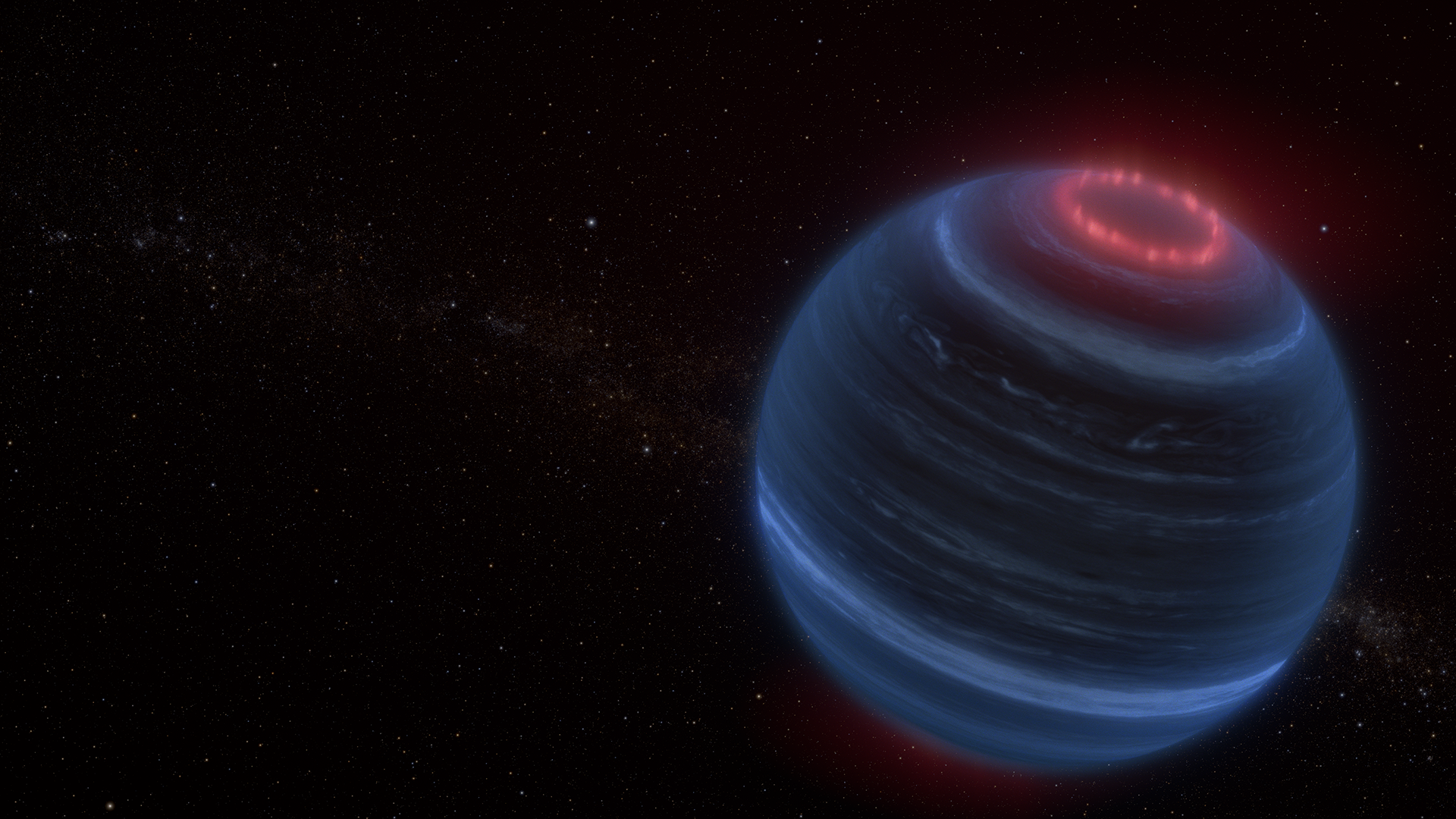

New Discovery: Methane Emission from Brown Dwarf May Be Linked to Aurorae
Exciting news from NASA’s James Webb Space Telescope! Astronomers have made a surprising discovery of infrared emission from methane on a brown dwarf known as W1935. This unexpected finding suggests that energy in the dwarf’s upper atmosphere may be due to processes generating aurorae.
Presented at the 243rd meeting of the American Astronomical Society in New Orleans.
To unravel this mystery, the team looked to our solar system, where methane emission is linked to aurorae on gas giants like Jupiter and Saturn.
On Earth, aurorae are created by energetic particles captured by Earth’s magnetic field, resulting in dancing curtains of light near the poles. Similar processes occur on Jupiter and Saturn, but the source of energy for W1935’s methane emission remains a puzzle.
The team believes that internal processes or interactions with other celestial bodies may provide an explanation for this intriguing discovery.
A detective story: Led by astronomer Jackie Faherty, the team used the Webb telescope to investigate cold brown dwarfs, including W1935 and W2220. These two objects were remarkably similar, with the exception of the methane emission observed on W1935.
Stay tuned for more updates on this fascinating discovery!