

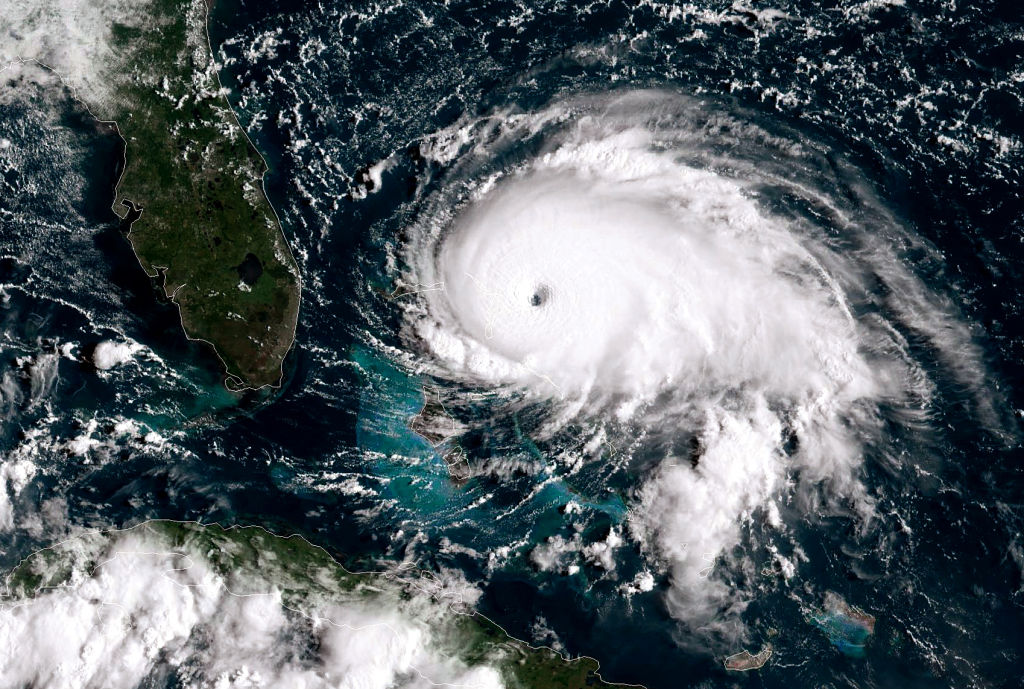

Experts Suggest a New Category of Hurricanes
In recent years, the world has witnessed a few extraordinarily powerful tropical storms, hinting at the possibility of even more devastating hurricanes in the future. To address this growing concern, some experts are proposing the creation of a new classification for these extreme weather events: Category 6.
Recent studies have indicated that the most intense tropical storms are becoming increasingly stronger due to the effects of climate change. This has prompted two climate scientists to question the accuracy of the traditional five-category Saffir-Simpson scale, which was established over half a century ago. In a study published in the Proceedings of the National Academy of Sciences, they argue that storms with winds surpassing 192 miles per hour (309 kilometers per hour) should be classified under a new sixth category, as the current Category 5 designation may not adequately reflect the sheer power of these monstrous storms.
At present, storms with wind speeds of 157 mph (252 kilometers per hour) or higher are classified as Category 5 hurricanes. However, the researchers behind the study assert that this classification fails to sufficiently alert the public to the heightened risks posed by storms with wind speeds approaching or exceeding 200 mph (322 kph).
Some experts have expressed reservations about introducing a Category 6 classification. They suggest that it could potentially mislead the public by focusing solely on wind speed, despite the fact that water is the primary cause of fatalities during hurricanes.
In recent years, there have been several instances of storms in the Pacific Ocean boasting wind speeds of 192 mph or higher, which would qualify them for the proposed Category 6 classification. According to the study authors, as global temperatures rise, the conditions become increasingly favorable for the formation of these exceptionally powerful storms, particularly in regions like the Gulf of Mexico, where hurricanes frequently make landfall in the United States.
Lead author of the study, Michael Wehner, emphasizes the role of climate change in exacerbating the intensity of these extreme weather events, stating that “Climate change is making the worst storms worse.” While the overall number of storms may not be increasing significantly, the most severe hurricanes are becoming more ferocious as a result of warmer ocean temperatures.
Experts have occasionally floated the idea of a Category 6 classification in the past, particularly following the devastating impact of Typhoon Haiyan, which reached wind speeds of 195 mph (315 kilometers per hour) in the Pacific Ocean. However, the researchers argue that Haiyan is not an isolated incident, indicating a concerning trend towards more frequent occurrences of such powerful storms.
Hurricanes, typhoons, and cyclones are all terminologies used to describe storms with the requisite wind speeds, depending on their geographical origin. The recent storms that have reached or exceeded 192 mph winds include Typhoon Haiyan in 2013 and Hurricane Patricia in 2015, both of which resulted in significant devastation and loss of life.
In conclusion, the need for a new classification system for hurricanes has never been more pressing, given the escalating threat posed by these extreme weather events in an era of changing climate patterns. The proposed Category 6 designation would help better prepare communities for the potential onslaught of increasingly powerful storms and mitigate the risks associated with these natural disasters.