


Legislative efforts in Missouri and Mississippi are aiming to prevent voters from having a say over abortion rights, following the anti-abortion strategies in other states, such as Ohio last year.
Democrats and abortion rights advocates are speaking out against these efforts, arguing that Republican lawmakers and abortion opponents are trying to undermine democratic processes that are meant to give voters a direct role in shaping state laws.
“They’re scared of the people and their voices, so their response is to prevent their voices from being heard,” said Laurie Bertram Roberts, executive director of Mississippi Reproductive Freedom Fund. “There’s nothing democratic about that, and it’s the same blueprint we’ve seen in Ohio and all these other states, again and again.”
Since the United States Supreme Court overturned the constitutional right to abortion in 2022, voters in seven states have either protected abortion rights or defeated attempts to restrict them in statewide votes. Democrats have pledged to make the issue a central campaign topic this year for races up and down the ballot.
A proposal passed Jan. 24 by the Mississippi House would ban residents from placing abortion initiatives on the statewide ballot. Mississippi has among the toughest abortion restrictions in the country, with the procedure banned except to save the life of the woman or in cases of rape or incest.
In response to the bill, Democratic Rep. Cheikh Taylor said direct democracy “shouldn’t include terms and conditions.”
The resolution is an attempt to revive a ballot initiative process in Mississippi, which has been without one since 2021 when the state Supreme Court ruled that the process was invalid because it required people to gather signatures from the state’s five previous U.S. House districts. Mississippi dropped to four districts after the 2000 census, but the initiative language was never updated.
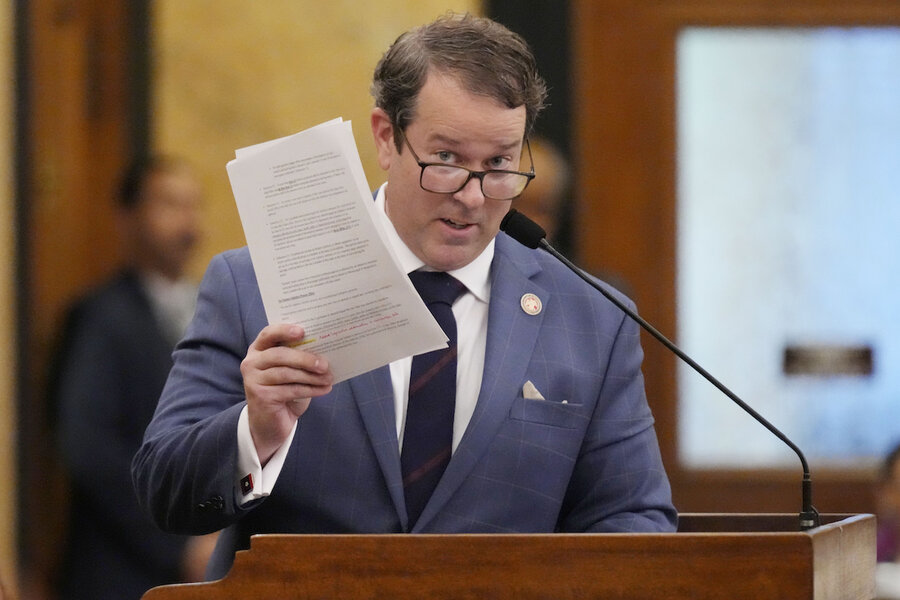
Republican Rep. Fred Shanks said House Republicans would not have approved the resolution, which will soon head to the Senate, without the abortion exemption. Some House Republicans said voters should not be allowed to vote on changing abortion laws because Mississippi originated the legal case that overturned Roe v. Wade.
“It took 50 years … to overturn Roe v. Wade,” said Mississippi House Speaker Jason White, a Republican. “We weren’t going to let it just be thrown out the window by folks coming in from out of state, spending 50 million bucks and running an initiative through.”
Mississippi Democrats and abortion access organizations panned the exemption as limiting the voice of the people.
“This is an extremely undemocratic way to harm access to reproductive health care,” said Sofia Tomov, operations coordinator with Access Reproductive Care Southeast, a member of the Mississippi Abortion Access Coalition.
In Missouri, one of several states where an abortion rights initiative could go before voters in the fall, a plan supported by anti-abortion groups would require initiatives to win a majority vote in five of the state’s eight congressional districts, in addition to a simple statewide majority.
The proposal comes days after a Missouri abortion-rights campaign launched its ballot measure effort aiming to enshrine abortion rights into the state constitution.