

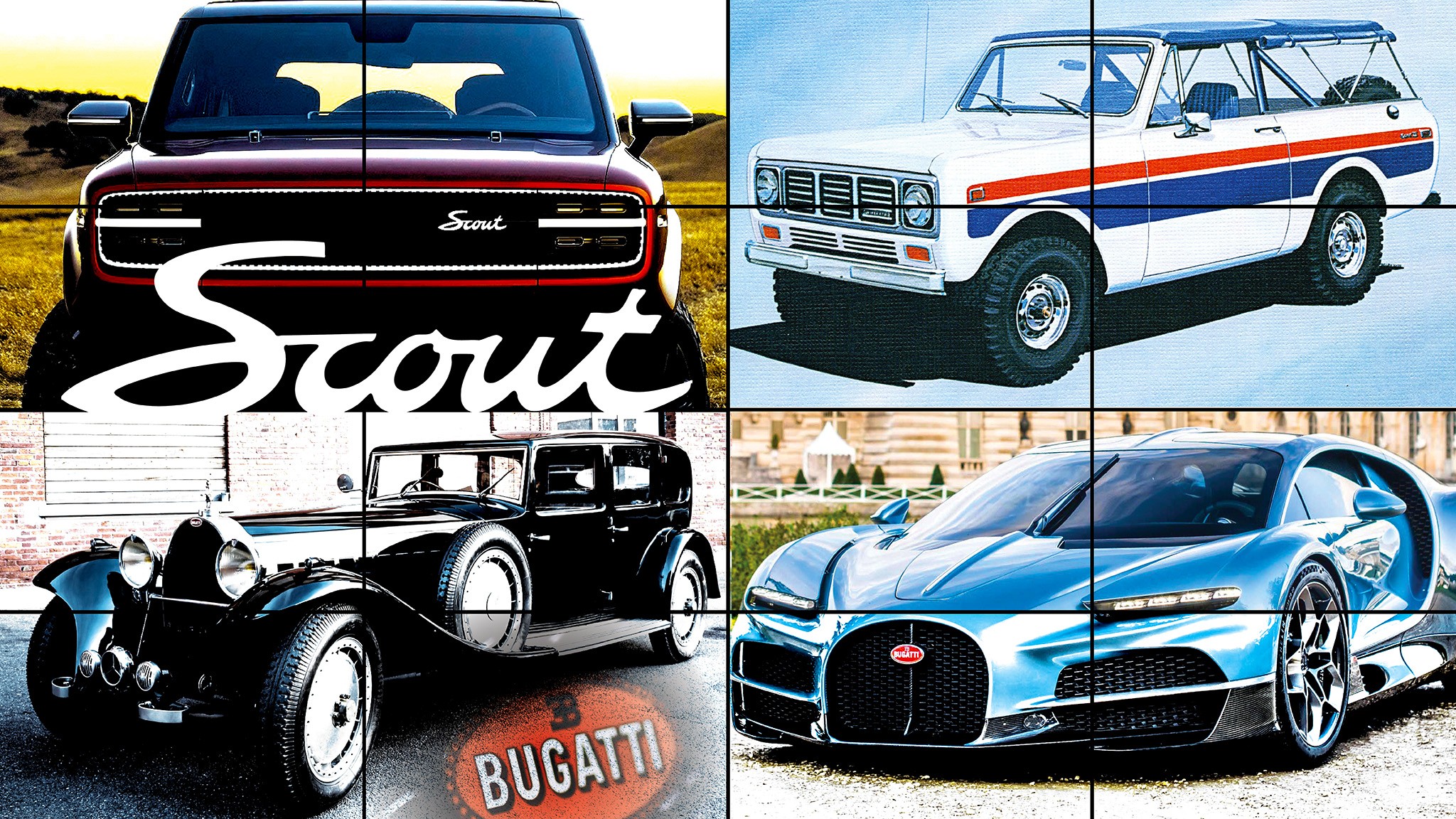

Automakers have resurrected numerous nameplates over the years, but not every comeback has ended well.
Benjamin HuntingWriter
Motor Trend ArchivePhotographerGetty ImagesPhotographer
Alan MuirIllustrator
Oct 28, 2025
Reviving a classic automotive brand is a dice roll. On the one hand, there’s a chance that dusting off a once-proud nameplate will attract interest from customers curious to see just how much heritage has transferred across the decades from old to new. It also can provide a ready-made narrative and legacy for marketers to use as they attempt to sell an entirely different set of vehicles.
On the other, there’s always the risk that no one still cares enough about that badge to give the gambit a second look, which can doom a once-promising project to ignominy. Or if people care too much, the backlash against messing with the past can bury any imagined goodwill intended by the gesture.
Over the years, several automakers have resurrected dormant brands, both well-known and incredibly obscure, with surprisingly random results. It seems that while some second chances blossom into profitable second acts, others fail to catch on and sink back into obscurity.
Here are seven of the most interesting automotive rebirth sagas of the past 40 years.
Unqualified Successes
Bugatti
Few enthusiasts need to be reminded of Bugatti’s importance in the early days of the automotive industry. Arriving just after the turn of the century, Ettore Bugatti’s Alsace-based company produced some of the most beautiful designs ever to grace a public road while also building a succession of exceptional race cars that became Grand Prix legends.
When its namesake founder died shortly after the end of World War II, the company was thrown into chaos, and it wasn’t long before it shuttered its factory doors. The Bugatti name lay dormant for more than 30 years before it was revived by Romano Artiolo, who bought the brand in 1987 with the goal of building a series of supercars. The effort started strongly: The EB110 GT was well ahead of its time in terms of both technology and speed. But the early-1990s recession effectively stopped the automaker in its tracks, with bankruptcy following in 1995.
The Bugatti badge wasn’t left on the shelf for long. During its late-’90s buying spree, Volkswagen added Bugatti to its list of prestigious brands in 1998, which led to a succession of shockingly high-performance cars that spared no expense in their quest for speed. The first production Bugatti under the Volkswagen umbrella—the Veyron—introduced the “hypercar” category to the world in 2005, and it’s been nonstop success for Bugatti ever since as it continues to release vehicles that threaten to liquefy their owners’ internal organs at full throttle.
Alpine
Europe produced many boutique sports car builders in the years following World War II, with France’s Alpine being one of the most prominent. Alpine was founded in 1954 by Jean Rédélé, whose company began modifying Renault models designed to dominate at the racetrack.