

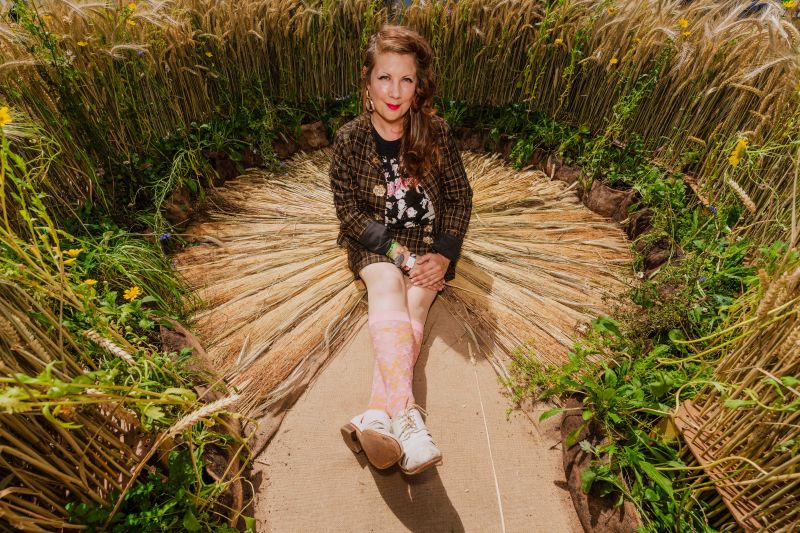

Last month, as a fifth of a million people streamed into Glastonbury’s sprawling Worthy Farm, the entrance to Shangri-La radiated with even more energy than usual. This year, as we reported live, the legendary field felt both familiar and radically new: a patchwork of fresh collectives, interactive art, and a palpable sense of inclusivity.
Standing at the centre of it all was creative director Kaye Dunnings; her vision, once again, pushing the boundaries of what a festival environment can be.
Shangri-La has always been Glastonbury’s wildest playground, but this year, the changes were dramatic. The field’s layout was reimagined to be even more open and welcoming, with themes of nature and growth evoked by a series of interactive art installations.
As Kaye reasons: “People come to Glastonbury for more than just the headliners. They want to be transported, challenged, welcomed—and for that, we have to keep evolving.”
But how does one person orchestrate this level of creative anarchy at scale? To understand the alchemy behind Shangri-La’s transformation, you have to start with Kaye herself.
Early years: surviving, seeking, and subverting
In an industry dominated by middle-class graduates, Kaye’s journey is anything but conventional. Born in the late 1970s and raised on an estate in Totton, near Southampton, her childhood was marked by adversity.
“My area was really violent, never really that safe,” she recalls with a grimace. No one in her family had been to university; most of the women had entered motherhood as teenagers. Kaye, though, felt she was destined for something different.
School was a battleground, where her creativity and unique sense of style made her a target for bullies. “I managed to cope through music,” she says. “The radio was my window onto the world. John Peel, my dad’s records… I realised there was more out there.”
She left school at the age of 16 and took a job in retail. Even then, Kaye’s instinct was to push boundaries rather than conform. “Window dressing was the closest thing to set design I could find,” she laughs. “But my windows were always too out there for John Lewis.”


Photo: Jana Rumely
The job itself introduced her to creative people, but it was the underground music scene that truly ignited her imagination. London’s galleries and clubs beckoned, and by 18, she was making regular pilgrimages to East London, soaking up the work of Tracey Emin, the Chapman Brothers, and the city’s vibrant nightlife.
Finding her tribe: art, music and the power of DIY
Art college was out of reach for Kaye: she couldn’t afford the fees, and the government was no longer providing grants to students. Instead, she snuck into life-drawing classes, found work in a gay bar, and used costumes as a means of self-expression. “I found my tribe in the clubs and bars,” she says. “It was all about improvisation. If I needed something,