

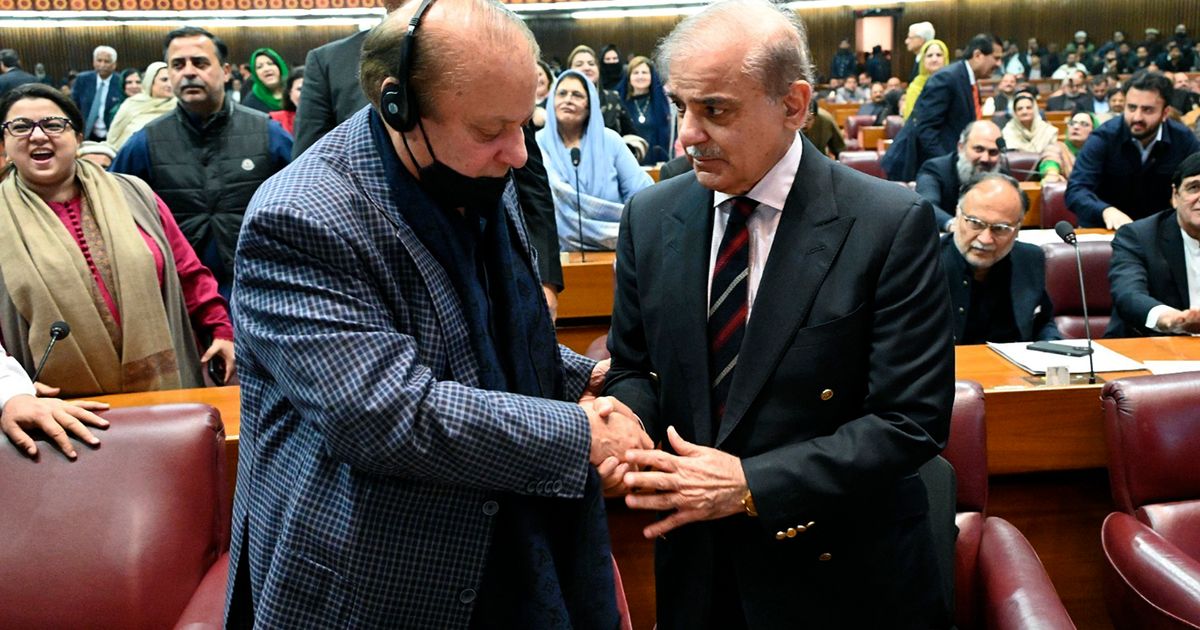

Pakistan’s New Prime Minister: Shehbaz Sharif
In a contentious session of Pakistan’s National Assembly, Shehbaz Sharif was elected as the country’s new prime minister, marking his second tenure in office. This appointment came amid fierce protests from allies of the imprisoned former premier Imran Khan, who alleged widespread rigging in the recent election.
Implications of Imran Khan’s Imprisonment
Imran Khan, currently serving prison terms across multiple cases, has been disqualified from seeking or holding any public office. Following his ouster in a no-confidence vote earlier this year, Sharif stepped in to fill the vacuum left by Khan’s absence, garnering 201 votes to secure the premiership. His victory margin over his opponent, Omar Ayub, was significant, as he only needed 169 votes for a majority.
Political Landscape and Coalition Building
Ayub, supported by Khan’s Pakistan Tehreek-e-Insaf (PTI) party, failed to muster enough seats to form a government independently. Despite this setback, the PTI declined to engage in coalition talks with other parties. After extensive negotiations, Sharif’s Pakistan Muslim League and its allies formed a coalition following the election marked by violence, disruptions, and delayed results.
Allegations of Election Interference
The build-up to the election was marred by allegations of rigging and irregularities by Khan’s party, which claimed that their victory was stolen through manipulated vote counts. The Election Commission refuted these claims, emphasizing the integrity of the electoral process. Sharif, in his inaugural speech, acknowledged past political challenges but stressed a commitment to moving forward without retribution.
Challenges Ahead for the New Premier
As Shehbaz Sharif assumes leadership, he faces a myriad of challenges, with economic instability at the forefront. Pakistan’s reliance on foreign loans to sustain its economy presents a significant hurdle for his administration. Additionally, his administration aims to mend strained relations with the United States, a key diplomatic partner whose ties with Pakistan have been strained in recent times.
A Call for Unity and Progress
In the face of opposition protests and disruptions during his speech, Sharif extended an olive branch, urging collaboration for the betterment of Pakistan. Despite vocal dissent from some lawmakers, he remained steadfast in his commitment to reconciliation and progress. The road ahead is fraught with obstacles, but Sharif’s leadership signals a new chapter in Pakistan’s political landscape.