

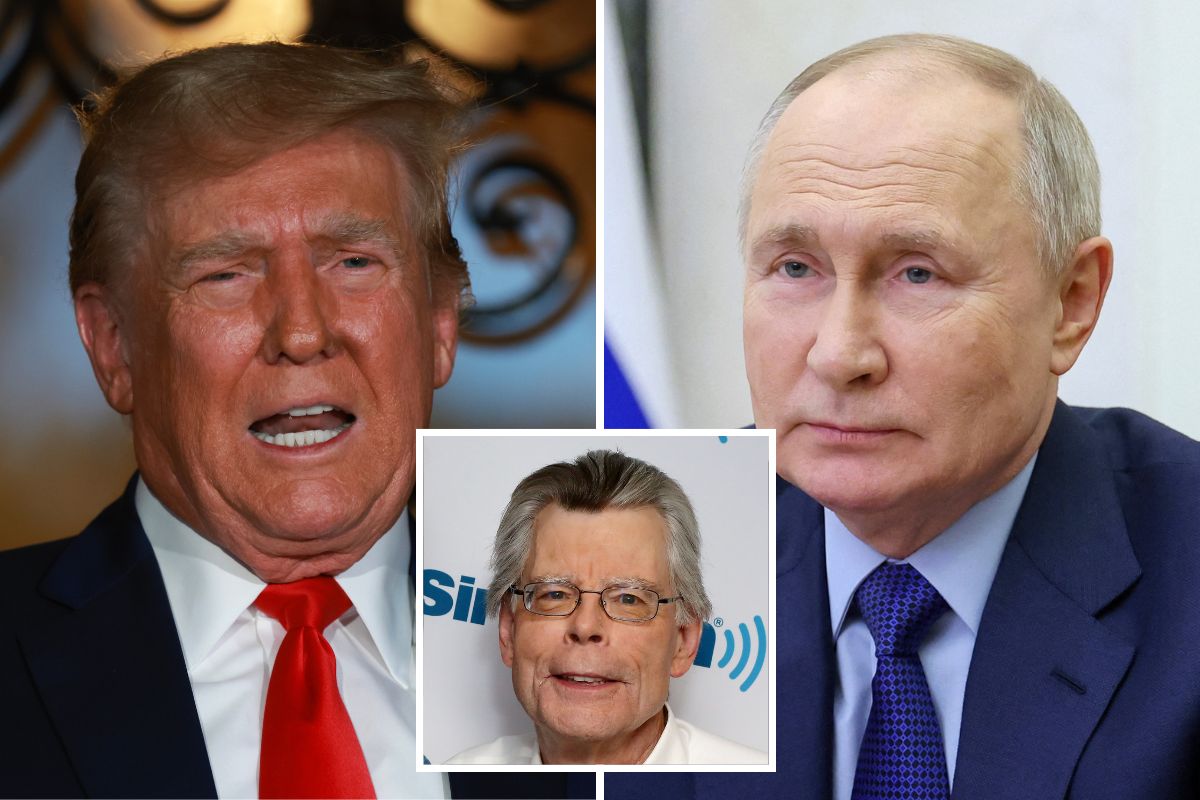

Renowned writer Stephen King recently voiced his disapproval of former President Donald Trump, labeling him as Vladimir Putin’s “loyal follower.” This criticism came in the wake of Trump’s delayed reaction to the tragic passing of Alexei Navalny, a prominent opposition figure in Russia who was imprisoned and later succumbed to his condition. While leaders around the globe expressed their grief over Navalny’s demise, Trump initially remained silent, drawing ire from his opponents, including Republican candidate Nikki Haley.
When Trump eventually broke his silence, his response seemed more focused on his personal grievances rather than directly criticizing Putin. He shifted the conversation to highlight what he perceived as the detrimental impact of leftist politicians, prosecutors, and judges in the United States, which many viewed as a deflection from addressing the issue at hand.
In a social media post that garnered considerable attention, King condemned Trump as Putin’s mere puppet, eliciting mixed reactions from users. Some defended Trump, alleging that King’s statements were baseless, while others supported the writer’s bold stance. The division among online commentators reflected the polarized views regarding the ongoing political discourse.
Among those who resonated with King’s sentiments, there was a sentiment of gratitude for his outspokenness, deeming Trump’s actions as disgraceful. Concurrently, Putin faced mounting scrutiny following Navalny’s suspicious passing in a Russian penal facility, sparking widespread outrage and demands for accountability.
The aftermath of Navalny’s untimely death underscored the complex dynamics of international politics and the repercussions of leaders’ actions on a global scale. As tensions continue to brew, the intersection of power struggles and ethical dilemmas remains a critical point of discussion in shaping the narrative of contemporary geopolitical landscapes.