

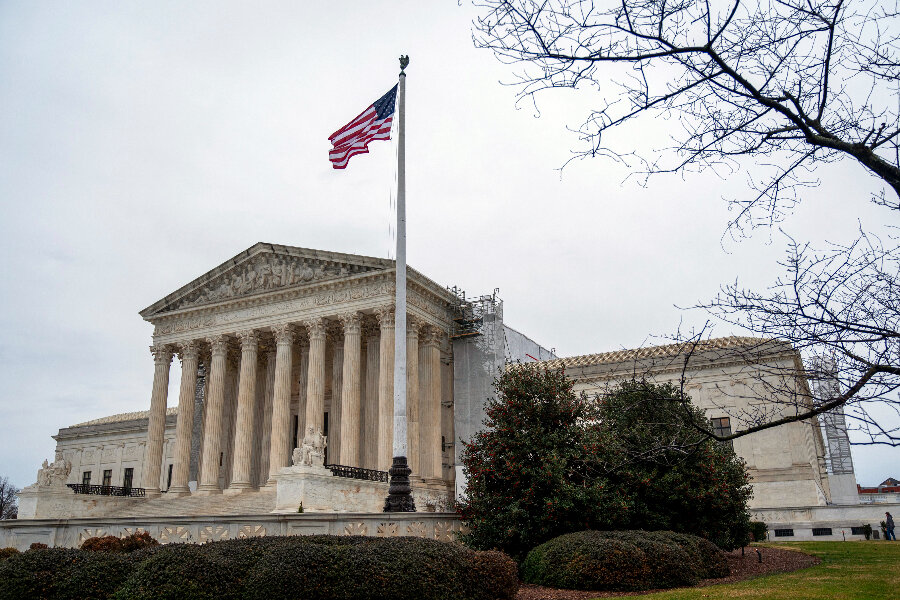

The Supreme Court to Decide on Trump’s Legal Immunity Bid
The Supreme Court has agreed to rule on whether former President Donald Trump can be prosecuted for allegedly interfering with the 2020 election, raising questions about the timing of a potential trial before the upcoming November election.
Setting a rapid timetable for the resolution of this matter, the court has put a hold on trial preparations centered around Trump’s alleged attempts to undermine the election results. The scheduled hearing for arguments is in late April, with a final decision expected by the end of June.
This accelerated timeline is unprecedented, but if Trump’s immunity bid is rejected by the justices, there is uncertainty about whether a trial can be concluded before the election in November, especially with early voting in some states beginning as early as September.
The Supreme Court’s involvement in another significant legal case involving Trump this term, coupled with the debate over his eligibility to run for president again following the 2020 election, demonstrates the pivotal role the justices will play in influencing the election outcome.
Trump’s legal team has pushed for a delay in the trial proceedings until after the election, emphasizing the potential impact on future presidential candidates facing post-office prosecution.
The ultimate timing of a potential trial hinges on the promptness of the justices’ ruling, as they have displayed the ability to expedite decisions in past cases, such as the Watergate tapes case in 1974 and Bush v. Gore in 2000.
This legal uncertainty created by the Supreme Court’s decision to address the untested question of immunity now adds a layer of complexity that special counsel Jack Smith had hoped to avoid when originally petitioning the court for immediate intervention in December.
Trump has expressed gratitude for the court’s involvement, citing concerns about the chilling effect of post-office prosecution on former presidents. However, a spokesperson for Smith declined to comment on the matter.
The rescheduled trial date, impacted by Trump’s immunity appeal, holds significance for both the prosecution and defense. Prosecutors aim to expedite the trial this year, while Trump’s defense team seeks further delays. The potential implications of a pending trial if Trump were to be re-elected underscore the urgency for a prompt resolution of the case.
Although not explicitly mentioning the upcoming election or Trump’s position as the leading Republican primary candidate, prosecutors have emphasized the national importance and the public interest in a swift and fair resolution of the charges.
Trump’s legal counsel has characterized the prosecution in partisan terms, highlighting the political stakes involved in the case.