

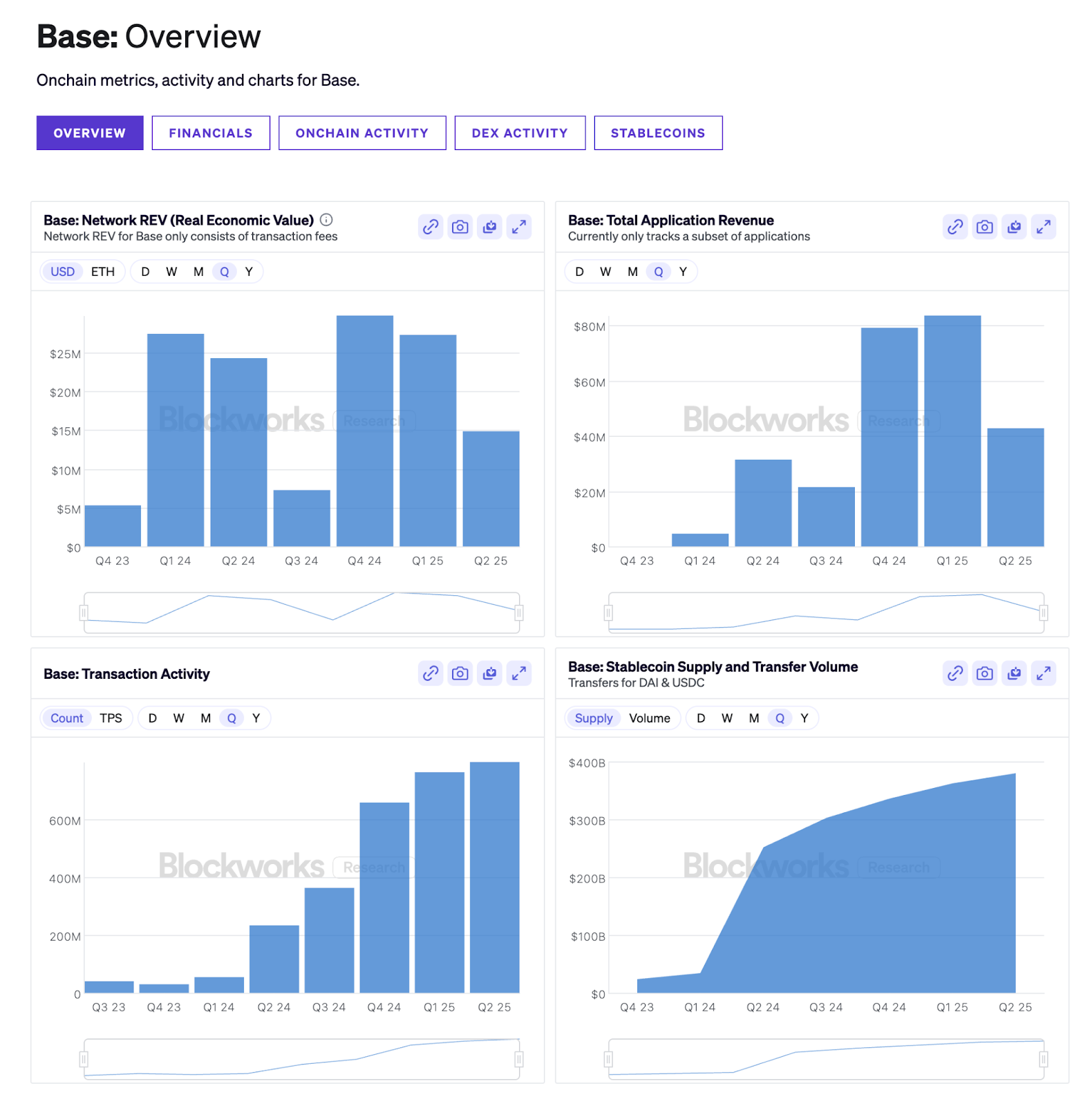
Over the past two years, the Base blockchain has been considered the “capital” of SocialFi. While other Layer 2s have focused more on DeFi, Gaming, or NFTs, Base has chosen a different path: decentralized social networks. From the short-lived boom of Friend.tech to the sustainable growth of Farcaster and its surrounding ecosystem, SocialFi is gradually becoming the strongest driver of user adoption for Base.
Why is Base Considered the “Capital” of SocialFi?
The Base ecosystem is one of the largest in the crypto market and holds a rare advantage: inheriting a user base from Coinbase, which provides an extremely strong foundation. Inheriting from Coinbase also means Base integrates most of the tools and utilities that Coinbase has built. The most prominent asymmetric advantage here is the Coinbase Smart Wallet. Using Coinbase’s wallet makes it easy to register, authenticate, and join social applications. The experience is as smooth as Web2, but all data and interactions run on-chain, which is a major plus for SocialFi.

Source: Blockworks
Data from Blockworks shows Base maintains very high daily active users (DAU), consistently around 600,000–800,000 per day, and at times even surpassing Arbitrum and Polygon. Base at its peak had 181 million wallet addresses, and on certain days it executed between 1 million and 2 million transactions, even hitting 3 million on the occasion of Onchain Summer 2025.
For more: Best Base Network Gaming and NFT Ecosystem
Friend.tech: Rise and Fall of a SocialFi Craze
Debuting in 2023, Friend.tech became the first SocialFi application to genuinely go viral. Its straightforward mechanism allowed users to buy and sell “shares” (later renamed “keys”) of individual accounts, thereby converting social relationships into something like a tradable financial asset.

Source: Dune
In a mere 17 days following its launch on August 11, 2023, Friend.tech ascended to a $6.4 million TVL, amassing at times an absolutely bonkers $1.5 million in daily fees, trading $80 million worth of this new asset, and welcoming 125,000 different traders into its fold. Positive news about a Paradigm funding round fueled the hype, and Friend.tech became one of the standout success cases after PEPE.

Source: X
At its peak, Friend.tech recorded more than 500,000 daily transactions on Base and generated millions of dollars in fees. But the excitement didn’t last. Within about 20 days of its peak, transactions dropped 95%, TVL collapsed from millions to nearly zero, and users quickly exited once speculative momentum disappeared. The ecosystem was left with little social value.


Source: Dune
In which, it means SocialFi can’t survive on speculation alone. If it wants to last, it needs to deliver both financial upside and real social value that keeps people coming back.
Farcaster and Warpcast: Building Real Social Infrastructure
Unlike Friend.tech, which spiked in popularity and then quickly fizzled out, Farcaster has been building momentum slowly and steadily,