

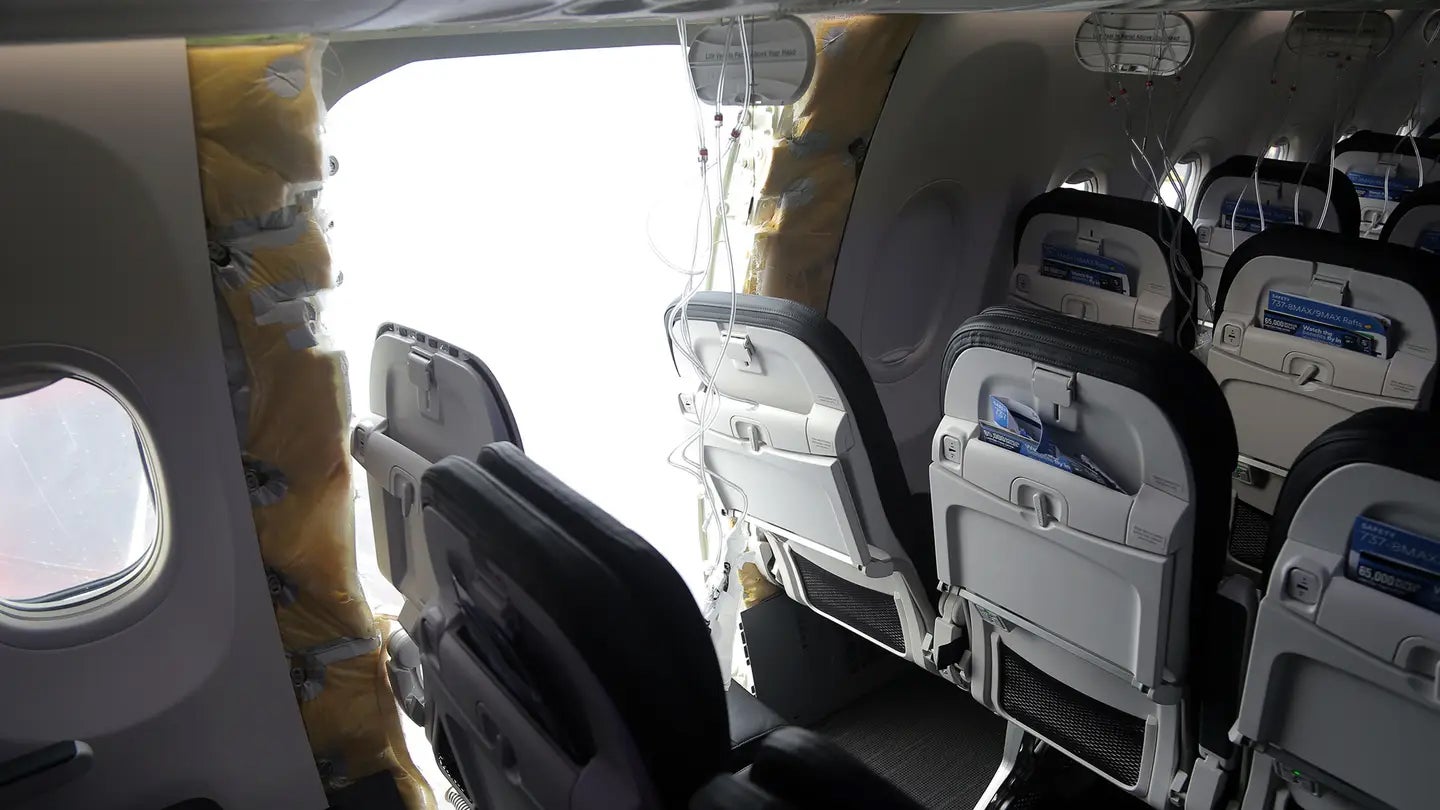

The Unfortunate Incident That Shook the Aviation Industry
Author: Jane Smith / Science Journal
Published: Mar 5, 2024 3:00 PM PST
In an unprecedented event, Alaska Airlines Flight 1282, a Boeing 737 MAX 9, faced a terrifying ordeal when a fuselage door-plug broke free mid-flight, causing a sudden decompression in the cabin. The chaos that ensued included headrests being ripped from their positions and a teenager’s shirt being torn off and sucked into the void, while his mother desperately held on to him.
Thankfully, there were no casualties in this harrowing incident, but the outcome could have been catastrophic if circumstances had been slightly different. The fact that the adjacent seats were empty and the seatbelt light illuminated likely saved lives on that fateful day.
While aircraft malfunctions are rare occurrences, the nature of this particular failure is cause for concern. Initial investigations suggest that the root cause of the mishap was a simple oversight in securing the door-plug by Boeing or one of its contractors. The discovery of missing bolts and improperly bolted plugs on other fuselages further complicates the situation, highlighting the gravity of neglecting routine manufacturing or maintenance procedures.
Jetliners, by their very design and operation, face unique challenges in achieving and maintaining the high level of reliability expected by passengers. The intricacies of ensuring flawless performance in such complex systems operating in demanding environments are often underappreciated. The aviation industry must continuously strive to overcome these challenges to uphold its reputation for safety and excellence.
The incident involving Alaska Airlines Flight 1282 serves as a stark reminder of how a seemingly trivial error can have significant and far-reaching consequences in aviation safety. As we reflect on this event, it is imperative to analyze and learn from it to prevent such mishaps in the future.