

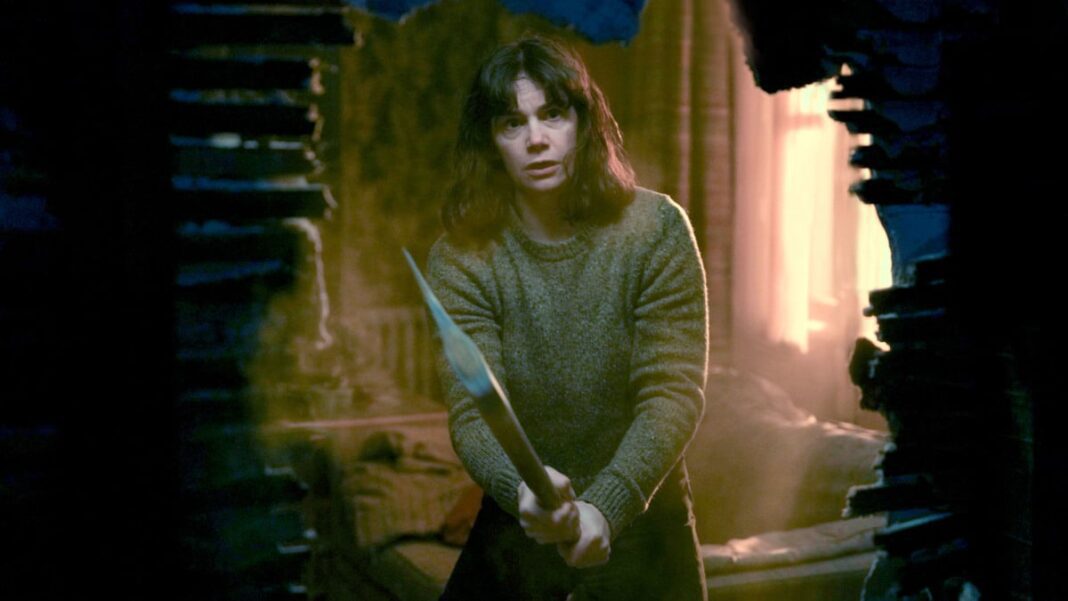

Ruth Wilson as Lorna Brady in “The Woman in the Wall”.
Credit: BBC/Motive Pictures/Chris Barr
Are you aware of the haunting history of the Magdalene Laundries? If you grew up in Ireland, or perhaps the UK, you’ve probably heard about this dark part of Irish history. But if you’ve been living elsewhere, chances are you might not have, despite how recently it happened. A criminally underrepresented part of history, it’s the basis of the BBC’s latest genre-blending crime series.
Set in West Ireland with Calm with Horses writer Joe Murtagh and director Harry Wootliff at the helm, The Woman in the Wall spotlights this heinous part of Ireland history, without residing solely in the well-trodden genres of true crime or social realism. Instead, the series, led by Ruth Wilson and Daryl McCormack, blends these elements with psychological horror, crime procedural, historical drama, and, somehow, black comedy. It all makes for a compelling, well-paced story about the survivors of the Magdalene (pronounced as “maudlin”) institutions, including the Church’s mother and baby homes.
What were the Magdalene Laundries?

The exterior of the now derelict Sisters of Our Lady of Charity Magdalene Laundry on Sean McDermott St in Dublin.
Credit: Julien Behal/PA Images via Getty Images
While the history of the Magdalene Laundries is no secret, it isn’t something taught in every classroom. In fact, it was only launched as a pilot education program for schools in Ireland in 2021.
From approximately 1837 to the closure of the last laundry in 1996, around 10,000 women and girls were forcibly sent to workhouses across Ireland owned by the Roman Catholic church and run by nuns. The inmates of these institutions were deemed “fallen women” — pregnant women who were unmarried or survivors of sexual assault, or simply women branded “flirtatious” or “promiscuous” — and forced into unpaid labour for undetermined lengths of time.

The former Marianvale mother and baby home in Newry, run by the Good Shepherd Sisters, photographed in 2021.
Credit: Charles McQuillan/Getty Images
In addition, the church operated a series of “mother and baby homes” — former workhouses which housed predominantly unwed pregnant women, who were socially ostracized in the conservative, Catholic country. There, they would give birth, and often their babies were taken away for adoption — a grief shared by Ruth Wilson’s character, Lorna Brady, in The Woman in the Wall. Conditions were abysmal and infant mortality rates soared. A proper investigation into these homes only began in the 2010s, and research was published by amateur historian Catherine Corless, which led to the discovery of a mass, unmarked grave containing the remains of hundreds of babies and children at a former home in Tuam, County Galway, where it is alleged approximately 800 died.