

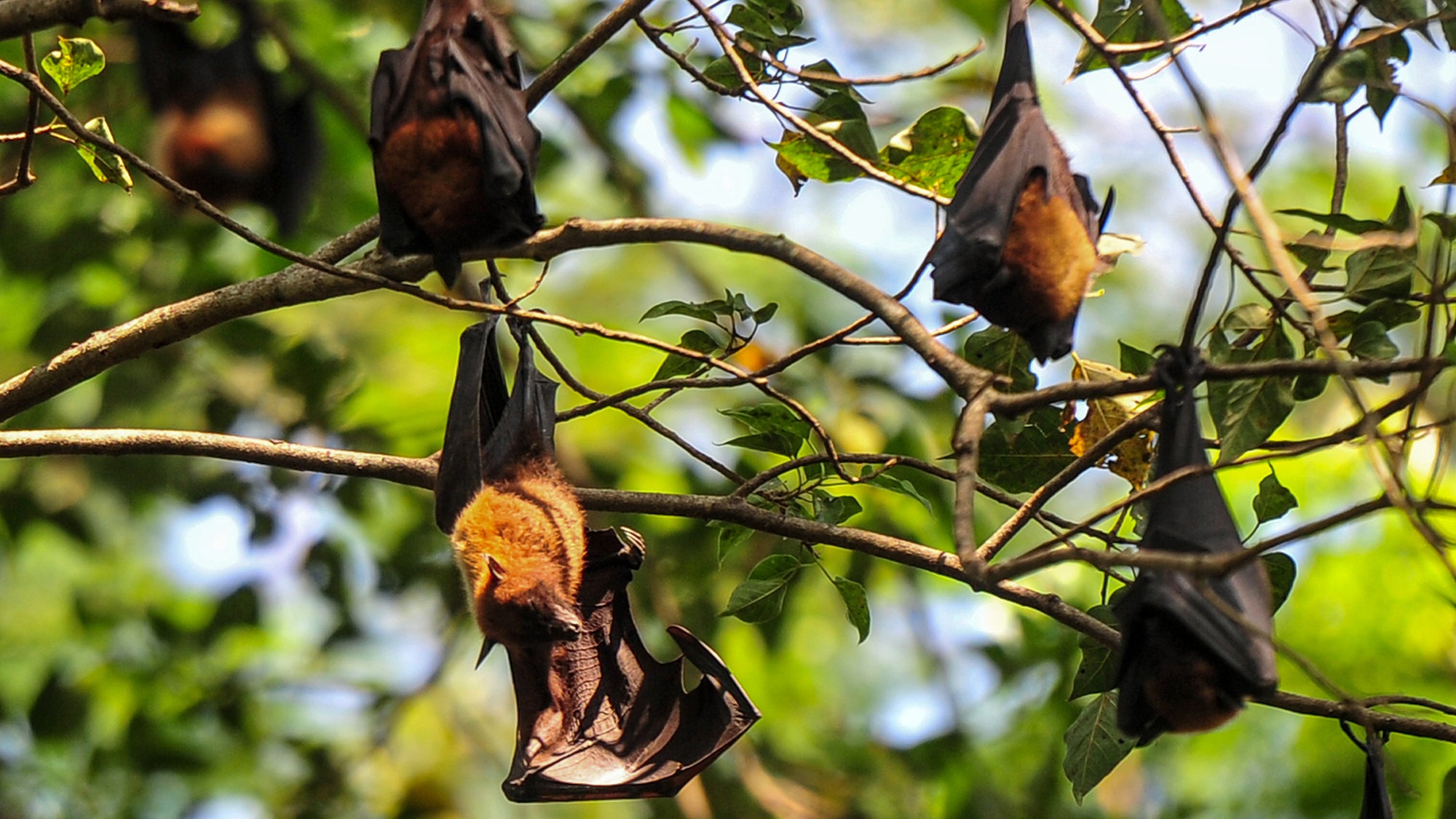

Some fruit bats devour up to twice their body weight in sugary mangoes, bananas, or figs every day to not just survive, but thrive. Unlike humans, these flying mammals can have an essentially permanent sweet tooth and do not develop some of the negative health consequences such as diabetes. A study published January 9 in the journal Nature Communications found that genetic adaptations have helped keep their sugary diets from becoming harmful.
[Related: How do bats stay cancer-free? The answer could be lifesaving for humans.]
The study could have future implications for treating diabetes, which affects an estimated 38 million Americans, according to the Centers for Disease Control and Prevention (CDC). It is the eighth leading cause of death in the United States and the leading cause of kidney failure, lower-limb amputations, and adult blindness.
“With diabetes, the human body can’t produce or detect insulin, leading to problems controlling blood sugar,” study co-author and University of California, San Francisco geneticist Nadav Ahituv said in a statement. “But fruit bats have a genetic system that controls blood sugar without fail. We’d like to learn from that system to make better insulin-or sugar-sensing therapies for people.”
Fruit bats vs. insect bats
Every day, fruit bats wake up after about 20 hours of sleep and feast on fruit before returning back to their caves, trees, or human-built structures to roost. To figure out how they can eat so much sugar and thrive, the team in this study focused on how the bat pancreas and kidneys evolved. The pancreas is an abdominal organ that controls blood sugar.
Researchers compared the Jamaican fruit bat with an insect-eating bat called the big brown bat. They analyzed the gene expression–which genes were switched on or off–and regulatory DNA that controls gene expression. To do this, the team measured both the gene expression and regulatory DNA present in individual cells. These measurements show which types of cells primarily make up the bat’s organs and also how these cells regulate the gene expression that manages their diet.
They discovered that the compositions of the pancreas and kidneys in fruit bats evolved to accommodate their sugary diet. The pancreas had more cells to produce insulin, an essential hormone that tells the body to lower blood sugar. It also had more cells that produce another sugar-regulating hormone called glucagon. The fruit bat kidneys had more cells to trap scarce salts and electrolytes as they filter blood.
Changes in DNA
Looking closer at the genetics behind this, the team saw that the regulatory DNA in those cells had evolved to switch the appropriate genes for fruit metabolism on or off. The insect-eating big brown bats had more cells that break down protein and conserve water and the gene expression in these cells was calibrated to handle a diet of bugs.