


- Travel to Qaanaaq, Greenland
From traditional foods to handmade goods, travelers get a glimpse of Inughuit life in Qaanaaq. Here’s how to visit this remote coastal community.
Published December 13, 2023
12 min read
An armada of towering icebergs has arrived along the coastline of Qaanaaq, Greenland.
They seem to have appeared in the blink of an eye as if summoned from the depths of Inglefield Bay. The floating sentinels—some the size of a city block—sit scattered casually across the coast.
With an average drift speed of .4 miles per hour (and higher speeds of two miles per hour), icebergs can appear quite quickly, rendering vital shipping lanes into impenetrable blockades in just a matter of hours. Both icebergs and floating ice sheets have been known to halt maritime traffic in towns like Qaanaaq for days (and occasionally weeks) at a time. I know I won’t be leaving Qaanaaq by boat anytime soon.
The area above the Arctic Circle known collectively as the High Arctic is one of the few places on the planet where the traditional rhythms of wind, tide, and animal movements still direct one’s schedule.
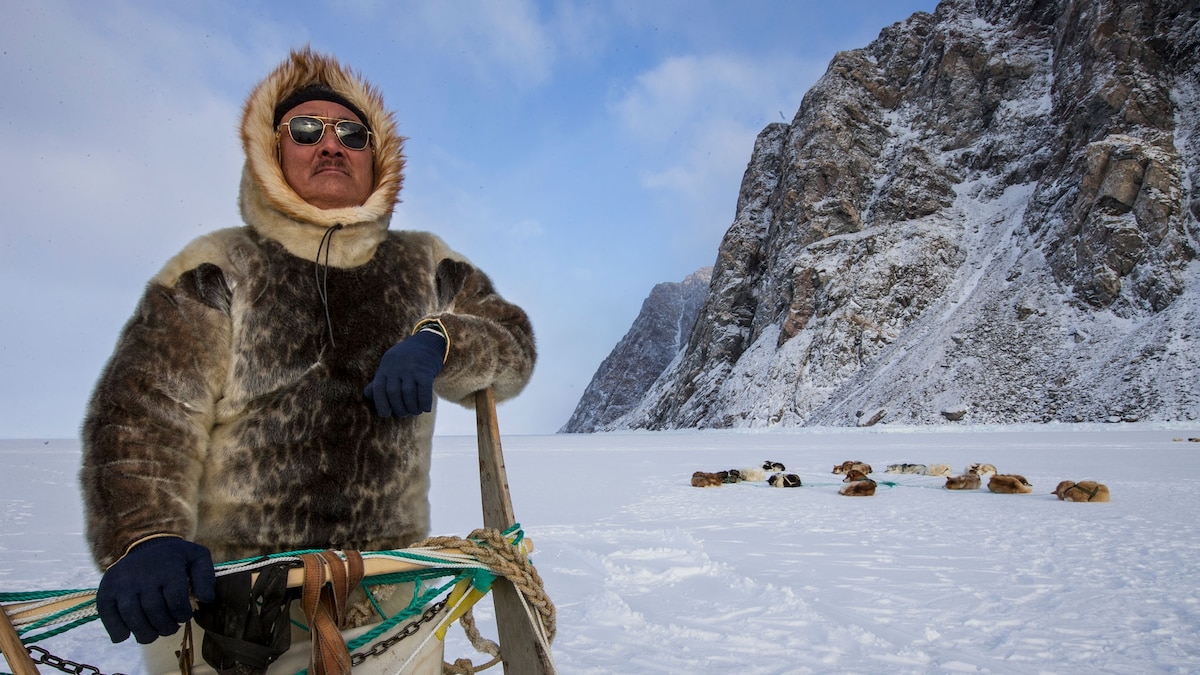
With a current population of 646, Qaanaaq is the central town in northwestern Greenland’s Avanersuaq district, one of the world’s least densely populated administrative zones. It is home to a community of Inughuit, historically known as Smith Sound Inuit or Arctic Highlanders.
Until the last century, Inughuit peoples survived primarily by utilizing every part of their sea mammal prey. In this land without trees, everything—clothing, sleds, tools, weapons, fuel, kayaks, and even parts of structural dwellings—came from sea mammals. The villages of northwestern Greenland are one of the last remaining places to experience the remnants of ancient Arctic life.
Despite modernization and imported goods, elements of the traditional diet still hold firm. I’m here to learn more about these fascinating old foodways—and taste some of the delicacies myself, from fermented seabird to fresh narwhal.
Learn about the art of chasing icebergs in Newfoundland.
Kiviak: traditional Arctic food
“Would you like to try some kiviak? It has a strong smell, so we have to eat it outside,” says Birthe Jenson, one of the chefs at Hotel Qaanaaq. The hotel has long been one of the few places in town where travelers can rent a room. [It is currently closed as it changes management.] It’s the last comfort stop for many travelers venturing farther north into the vast Arctic wilderness. And while there are no conventional restaurants in town, some local families are more than happy to accommodate travelers with home-cooked local fare.
Kiviak is an Arctic delicacy made by stuffing hundreds of birds, most commonly little auks (Alle alle), also known as dovekies, a small black-and-white seabird, inside of a fresh seal skin.