

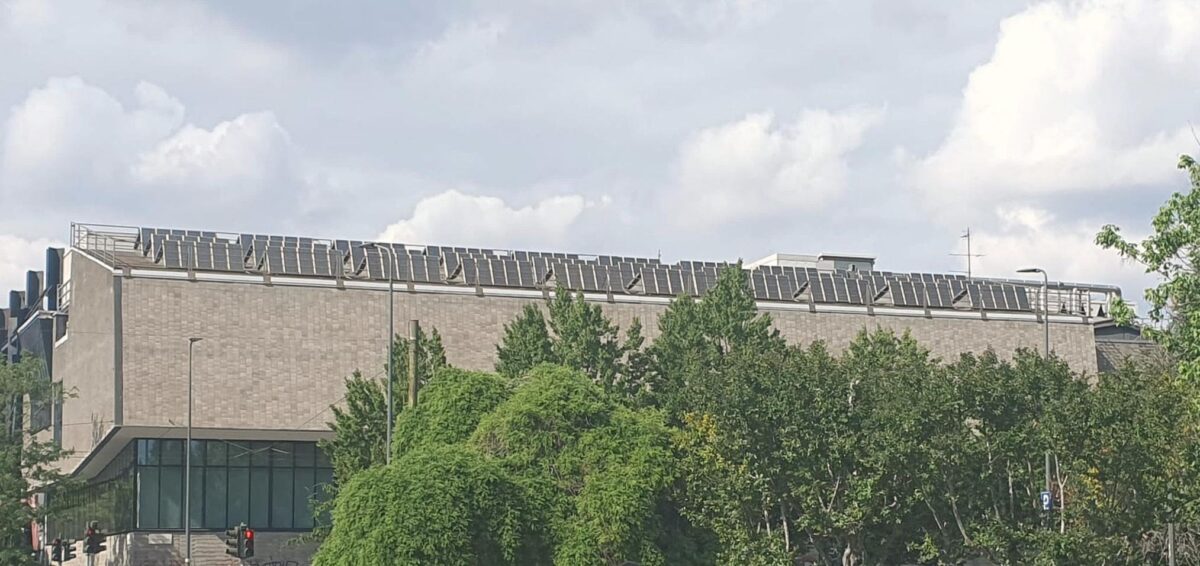
 project in this in-depth exploration. Learn about the innovative technology and sustainable design of this groundbreaking solar initiative.)
Two decades after its installation, researchers from the Polytechnic University of Milan have closely examined the performance of Italy’s premier publicly funded BIPV project. Their findings reveal one glaring fault that essentially rendered just one out of ten panels useless in the 11 kW array.
December 8, 2023 Lior Kahana
The project was launched in 2001, setting the stage for the country’s first venture into building-integrated photovoltaic technology. It was built on a Polytechnic University of Milan building, and systematic monitoring has been carried out over the years to assess its efficiency and overall functionality.
In a paper titled “Long-term reliability of photovoltaic c-Si modules – A detailed assessment based on the first Italian BIPV project,” published in Solar Energy, the research team explains that the system consists of 150 polycrystalline photovoltaic panels encapsulated in an anodized aluminum frame. Manufactured by Shell Solar, these panels boasted an impressive peak output of 73 W and an efficiency rate of 10.6% when they were first installed.
All these years later, the team discovered that issues with waterproofing the skylights resulted in severe damage to some panels, causing a complete loss of functionality in one of them. This discovery is just one of many outlined in their comprehensive evaluation, which sheds light on the real-world, long-term performance of this pioneering BIPV system.
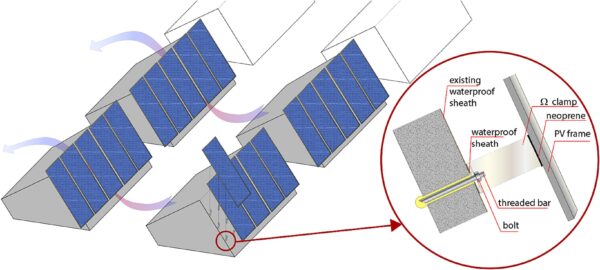 Schematic of the BIPV system
Image: Polytechnic University of Milan, Solar Energy, Creative Commons License CC BY 4.0
The research team also addressed the widespread delamination and chalking issues experienced by the plant, providing an insightful behind-the-scenes look at the realities of long-term solar energy installations.”Interested in the finer details? You can read more here.