


An Engaging title goes here
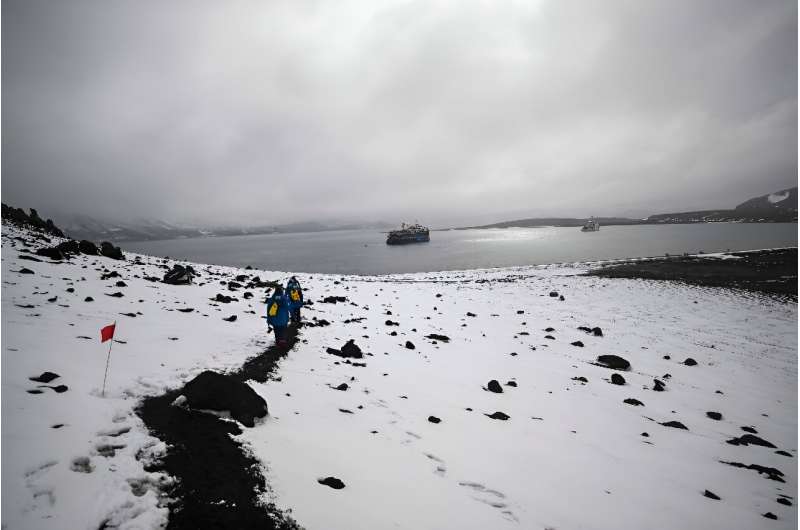
On Deception Island in Antarctica, steam rises from the beaches, and glaciers dot the black slopes of what is actually an active volcano—a rare clash of ice and fire that provides clues to scientists about what life could look like on Mars.
The horseshoe-shaped isle in the South Shetland Islands is the only place in the world where ships can sail into the caldera of an active volcano, making it a unique spot on Earth. There are 420 kilometers (260 miles) from Chile’s Port Williams, where fish, krill, anemones and sea sponges survive in the waters, and unique species of lichen and moss grow on the surface due to an ecosystem of extreme contrasts.
The island, uninhabited by people, is home to perhaps the world’s largest colony of chinstrap penguins, seabirds, seals and sea lions. The volcano has been active for thousands of years, with the most recent eruptions—in 1967, 1969 and 1970—devastating British and Chilean bases and forcing the evacuation of an Argentine base, showcasing the life and death that happens on this unique island.
Life thrives on an island where water temperatures in steam vents, or fumaroles, have been measured at around 70 degrees Celsius (158 degrees Fahrenheit), even as air temperatures can plummet to -28 degrees. This resemblance between Earth and Mars makes it an interesting point for exploration.
Scientists believe an immense volcanic eruption changed the planet’s atmosphere and led to the appearance of oceans and rivers that later evaporated, and are using the extreme contrasting conditions on this island to understand if the conditions for life could or could have existed on Mars. The analysis of rocks on Deception Island complements the work of engineers, scientists and astronomers who study Mars from afar.
The multitasking rover will collect 30 rock and soil samples in sealed tubes to be sent back to Earth sometime in the 2030s for lab analysis.
Read the full article here