

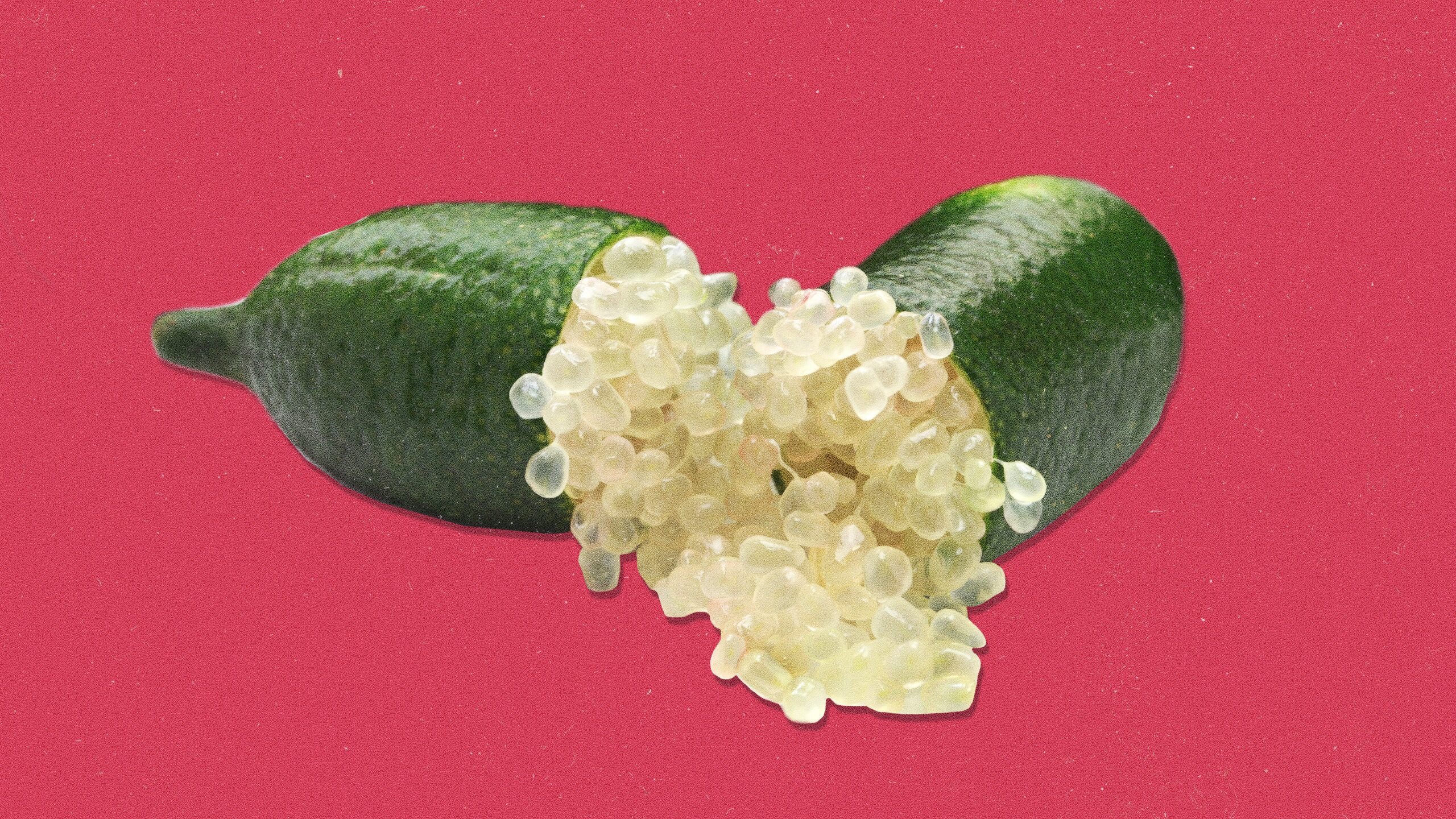

Working at a farm restaurant in Maui was an amazing experience. The tropical climate allowed us to grow a wide variety of fruits, including lilikoi (passionfruit), cacao pods, and many types of citrus. From bitter, orange-fleshed calamansi to bumpy Makrut limes, my favorite fruits to work with were the finger limes.
At first glance, you wouldn’t even think that this finger-shaped fruit is related to limes (it looks more like a tiny cucumber). However, when you open it up, you’ll discover an abundance of pale-green caviar-like pearls filled with tangy juice, perfect for garnishing fish tacos (which we often served) or any dish that benefits from a burst of acidity.
Curious to know more about finger limes? Let’s dive into it.
What are finger limes?
Mature finger limes are about the size and shape of a human thumb (hence the name). This fruit comes in several varieties, with skin colors ranging from green to red, yellow, and purple, each offering a slightly different flavor. But here’s the special part: Instead of the juicy wedges found in a standard Persian lime, the finger lime’s juices are stored in tiny globules that many people affectionately call “lime caviar” (although the technical term is “vesicles”).
When the fruit is ripe, the pearls are crisp and crunchy, bursting like Pop Rocks in your mouth. Chefs love using them because they add visual and textural interest to any dish. “Squeeze out the pulp onto a dish and instead of adding acid juice in liquid form, you’re going to get all these crunchy little pieces of citrus,” says chef Adrienne Cheatham.
How to shop for, cook with, and store finger limes:
Sourcing finger limes can be a bit challenging unless you have a finger lime tree in your backyard. Native to Australia, these limes grow best in warm climates, with California and Florida being the top choices within the contiguous US. While they’re not commonly found in grocery stores, you can purchase them online from Pearson Ranch or Miami Fruit. You can also buy a finger lime tree from online retailers like Williams Sonoma or Etsy—just remember, it can take up to two years to produce fruit.
So, how do you know if a finger lime is ripe? “Ripe ones will have a nice shiny skin, which means the fruit is still producing oil,” says Tristan Kwong, also known as the Fruit Somm. Look for plump finger limes that feel firm, not empty. If the lime has fully hardened, looks dull, and/or feels light for its size, the pearls inside may have dried out.