

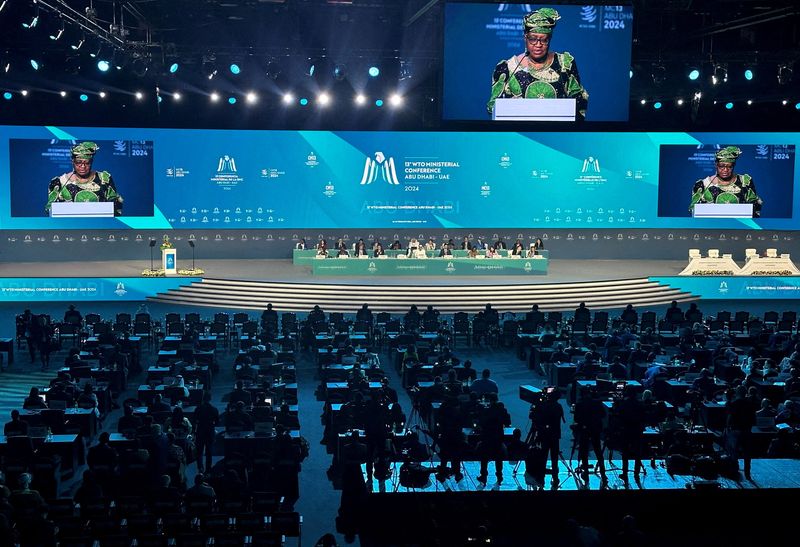

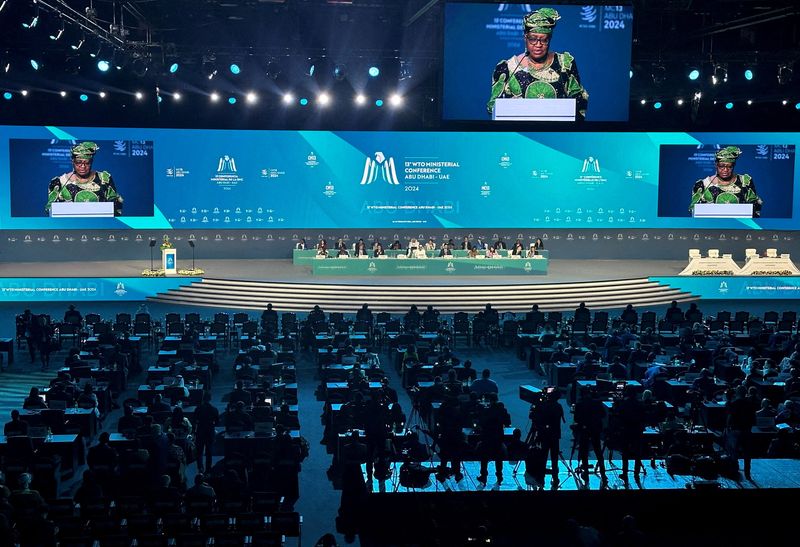
 © Reuters. FILE PHOTO: Director-General of the World Trade Organization Ngozi Okonjo-Iweala speaks during the opening ceremony of the WTO ministerial meeting in Abu Dhabi, United Arab Emirates, February 26, 2024. REUTERS/Abdel Hadi Ramahi/File Photo
Author: Jennifer Smith
ABU DHABI (Reuters) – The recent World Trade Organization meeting in Abu Dhabi was expected to set the stage for much-needed global trade reforms tailored to address modern challenges. These challenges range from climate change to the escalating subsidies in agriculture and industry.
However, right from the beginning of the biennial gathering, it was apparent that major trading nations were not inclined to compromise, hindering any significant progress on various fronts.
Director-General of the WTO, Ngozi Okonjo Iweala, managed expectations upon opening the conference, citing global economic fragmentation due to conflicts and the limited flexibility caused by elections, especially in the U.S.
Initial negotiations faced hurdles, notably with Indian Commerce Minister Piyush Goyal arriving late on Tuesday, after his Chinese counterpart had already left.
Most members at the meeting expressed the need to revive the WTO’s ability to settle trade disputes, a function impeded by the United States blocking appointments to the appeals body. This body serves as the supreme court for global trade.
Norwegian Foreign Minister Espen Barth Eide tried mediating a compromise to restore this system, but was met with resistance from U.S. Trade Representative Katherine Tai, leading to an abrupt end to their meeting.
Despite the setback, ongoing negotiations were viewed positively by Tai, with members agreeing to continue discussions in 2024.
A moment of levity came later as the WTO celebrated the memberships of East Timor and Comoros, with the East Timor delegation even leading a conga line around the venue. While deemed a success, these additions increased the WTO’s membership to 166 countries, each holding veto power under its consensus-based decision-making process.
Further challenges arose when a multi-nation agreement supporting investment in developing countries was blocked, even after 120 nations had previously agreed on the text in November.
The inclusion of language on climate change in the final WTO statement was deferred to an annex, noting “deep divergences” among members on the issue.
As talks continued behind closed doors until late Friday, the U.S. trade representative left early, leaving counterparts from the EU, India, and a few other nations to navigate discussions past midnight.
India’s reluctance to compromise was evident throughout the conference, adding to the complexity of reaching consensus on critical issues.