

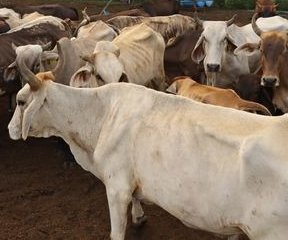

The U.S. Department of Agriculture in May suspended the transport of live cattle and other livestock from Mexico to stop the spread of the New World screwworm. The agency plans a phased-in reopening starting Monday. File Photo by Juan Manuel Blancy/EPA-EFE
June 30 (UPI) — Imports of livestock from Mexico will resume in phases starting next week after a ban in May at ports of entry because of fear of the spread of New World screwworm, the U.S. Department of Agriculture announced Monday.
Ports of entry will allow certain cattle, horses and bison to go into Arizona, New Mexico and Texas after they were banned on May 11, the agency said in a news release.
The screwworm has been eradicated from the United States for decades. But it has been detected in Mexico as far north as Oaxaca and Veracruz, about 700 miles away from the U.S. border.
When NWS maggots burrow into the flesh of a living animal, they cause serious and often deadly damage to the animal, USDA said. Mature screwworm larvae can grow up to two-thirds of an inch.
The USDA Animal and Plant Health Inspection Service experts and their counterparts in Mexico worked to increase New World Screwworm surveillance, detection and eradication.
A phased reopening of the southern ports will start Monday in Douglas, Ariz., based on the lowest risk because of the geography of Sonora and an effective collaboration between APHIS and Sonora.
The other openings are set for July 14 in Columbus, N.M.; July 21 in Santa Teresa, N.M.; Aug. 18 in Del Rio, Texas; and Sept. 15 in Laredo, Texas.
In the past eight weeks, there hasn’t been a notable increase in reported NWS cases in Mexico or any northward movement, the agency said.
USDA has been conducting sterile NWS fly dispersal seven days each week, including the dispersal of more than 100 million flies each week.
Five teams of APHIS staff were sent to observe and gain a deeper understanding of Mexico’s NWS response.
“At USDA we are focused on fighting the New World Screwworm’s advancement in Mexico,” USDA Secretary Brooke L. Rollins said. “We have made good progress with our counterparts in Mexico to increase vital pest surveillance efforts and have boosted sterile fly dispersal efforts. These quick actions by the Trump Administration have improved the conditions to allow the phased reopening of select ports on the Southern Border to livestock trade.
“We are continuing our posture of increased vigilance and will not rest until we are sure this devastating pest will not harm American ranchers.”
On June 18, she met with cattle fever tick riders along the Rio Grande River. If the NWS advances northward into the United States, these tick riders “will play a crucial role in spotting and combating this pest,” an agency news release said.
USDSA is building a fly-production center at Moore Air Base in Edinburg,