



What Are Key PR Metrics? They’re the scoreboards that show whether your public relations efforts are truly working. PR isn’t only about writing clever headlines or chasing media attention, it’s about proving results with measurable data.
Key metrics give clarity on reach, engagement, and impact, helping teams understand if their stories are landing where they should. Without them, it’s easy to waste time shouting into the void.
With them, you can refine strategy, secure leadership buy-in, and connect PR to business goals. Curious about which metrics really matter? Keep reading to see how they shape meaningful communication success.
Key Takeaways
- Raw numbers plus quality metrics paint the real story of PR success
- Tracking how far messages travel shows true market presence
- What people think about your brand matters more than how often they see it
Media Coverage Measurement and Quality Assessment
Getting mentioned in the news isn’t enough anymore. PR folks need to dig deeper than surface-level stats, because one front-page story beats a hundred buried mentions. Really.
We treat these mentions as part of broader press release success and measure how coverage reflects our goals. The basic stuff starts with counting mentions across different channels.
Pretty straightforward, right? Not quite. Each mention carries different weight, kind of like how a Times article means more than a tweet from someone’s cousin.
- Count every single mention
- Check if the coverage actually says what you wanted it to say
- Rate media outlets by how much punch they pack
- See if your main message made it through intact
Top publications carry more weight, that’s just how it works. A brief mention in the Wall Street Journal might do more for a brand than twenty blog posts, especially when the coverage nails the message and sits prominently in the story. Been there, seen that happen. [1]
Audience Reach and Sentiment Analytics
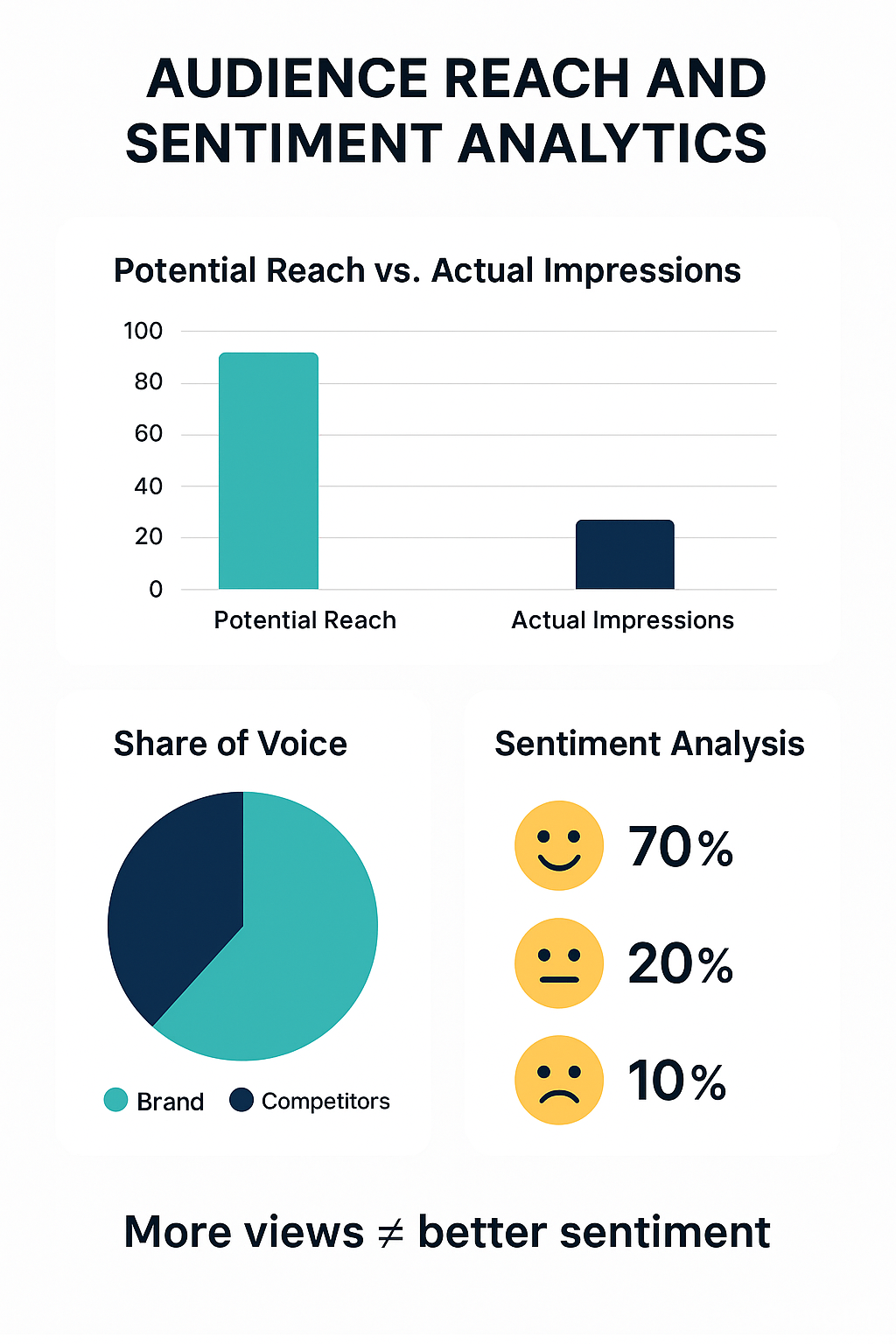
Raw numbers tell part of the story, but they don’t show whether people actually care about what they’re seeing. Think about it – would you rather reach a million people who scroll past your message, or ten thousand who stop to read it?
PR pros look at potential reach (that’s how many people could’ve seen the content) and actual impressions (how many times it was viewed). There’s a big difference between the two, and both matter. Tracking measurable PR goals like share of voice and sentiment gives us a better sense of true audience connection.
Share of voice shows how much of the conversation belongs to you versus competitors. If there’s talk about your industry, you want your brand in the mix. A lot.
Then there’s sentiment – are people saying nice things? Nothing at all? Running for the hills? This stuff matters because being talked about isn’t always good (just ask any politician).