

Blockchains keep changing, and Berachain is a new one trying something different. It looks like Ethereum, works like Ethereum, but has its own way of keeping the network secure. Instead of just staking tokens like other blockchains, Berachain uses Proof of Liquidity to make sure the network stays active and strong.
In this guide, we will learn what Berachain is, its key features like Proof of Liquidity, EVM identical, and the BeaconKit framework. We will also compare Ethereum vs. Berachain, explore the Berachain ecosystem, and look at its DeFi applications like BEX, Bend, and Berps. Plus, we will cover Berachain tokenomics, details about the Berachain airdrop, and how to get the airdrop.
What is Berachain?
Berachain is a high-performance Layer 1 blockchain designed to be identical to the Ethereum Virtual Machine (EVM). It introduces a unique consensus mechanism called Proof of Liquidity (PoL) to align liquidity and security within its network.
Key Features of Berachain
Proof of Liquidity
In many blockchains, to help keep the network safe, people lock up their tokens in a process called staking. These locked tokens can’t be used for anything else during this time. Berachain does things differently.
It uses a system called Proof of Liquidity, or PoL. In this system, instead of just locking up tokens, users are encouraged to actively use them within the network. This means that while the tokens are still helping to keep the network secure, they’re also being put to work in various applications and services. This approach not only maintains security but also keeps the network lively and efficient.
EVM Identical
Berachain is designed to work exactly like Ethereum’s system, known as the Ethereum Virtual Machine (EVM). This means that any application or smart contract that runs on Ethereum can also run on Berachain without any changes.
Developers can use the same tools and code they’re already familiar with. Additionally, whenever Ethereum gets an update or improvement, Berachain can adopt those changes right away. Also, it leverages Ethereum’s execution clients, such as Geth, Erigon, and Nethermind, to process smart contracts.
BeaconKit Framework
Berachain has its own modular framework called BeaconKit, which improves blockchain performance and flexibility. This toolkit allows developers to build and customize Layer 1 blockchains by adding different components like custom block builders, rollup layers, and data availability layers.
BeaconKit also brings CometBFT, a consensus engine designed for Byzantine fault-tolerant applications, into any EVM-compatible system. With this modular setup, Berachain can easily adapt to new technology needs and support various decentralized applications (dApps)
Ethereum vs. Berachain
Berachain
Ethereum
Consensus Mechanism
Proof of Liquidity (PoL)
Proof of Stake (PoS)
EVM Compatibility
Fully EVM-Identical
EVM-Compatible
Native Token
$BERA
ETH
Liquidity Incentives
Validators must provide liquidity to participate
Validators stake ETH, no liquidity requirement
Governance Model
Uses non-transferable BGT (Berachain Governance Token) for voting
ETH stakers vote on governance proposals
Modular Framework
Built with BeaconKit for flexibility and customization
Uses Ethereum’s core framework with optional Layer 2 solutions
Berachain Ecosystem
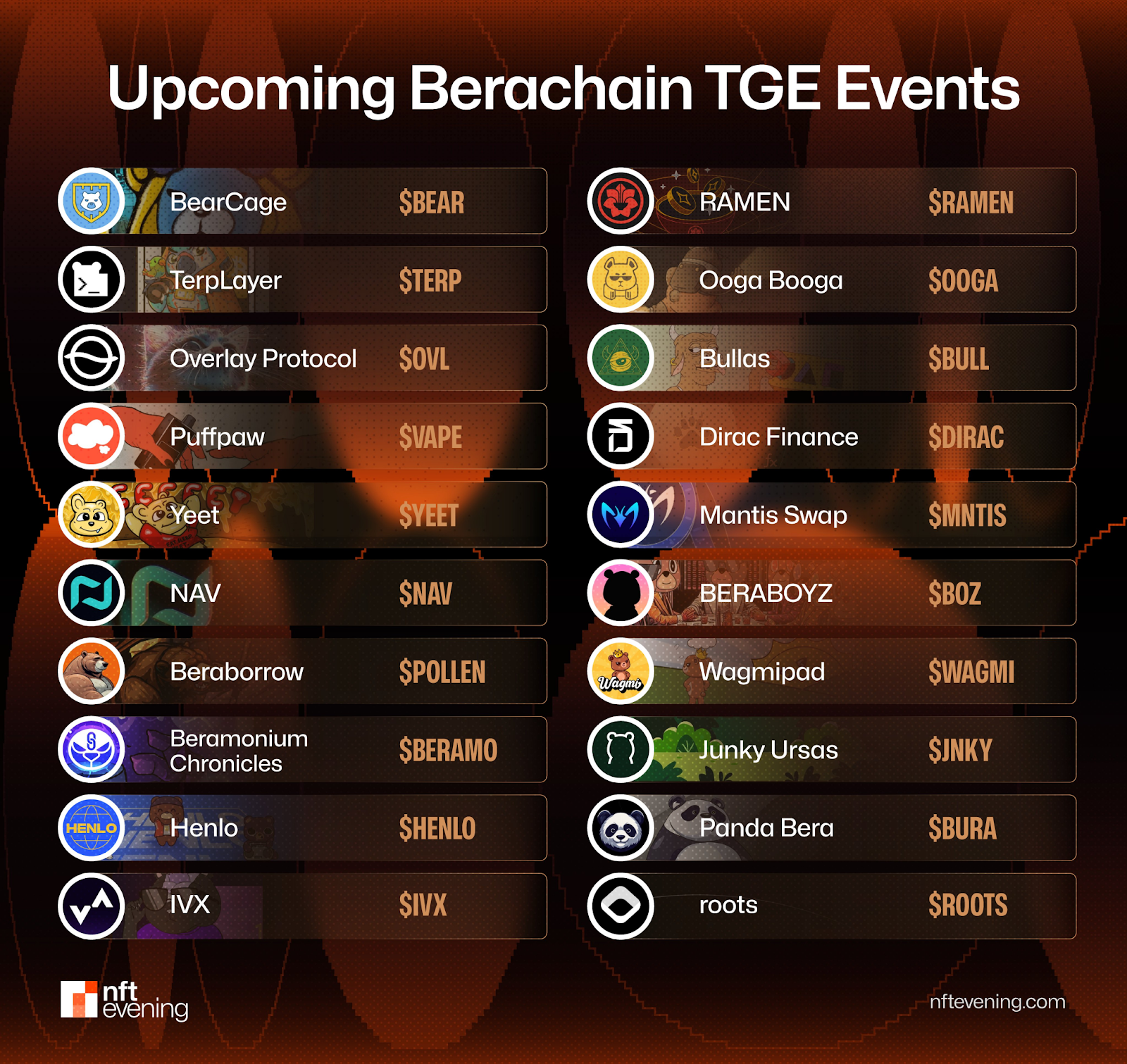
The Berachain ecosystem is expanding rapidly,