


Movies
Alex Garland’s studious “objectivity” isn’t enough.
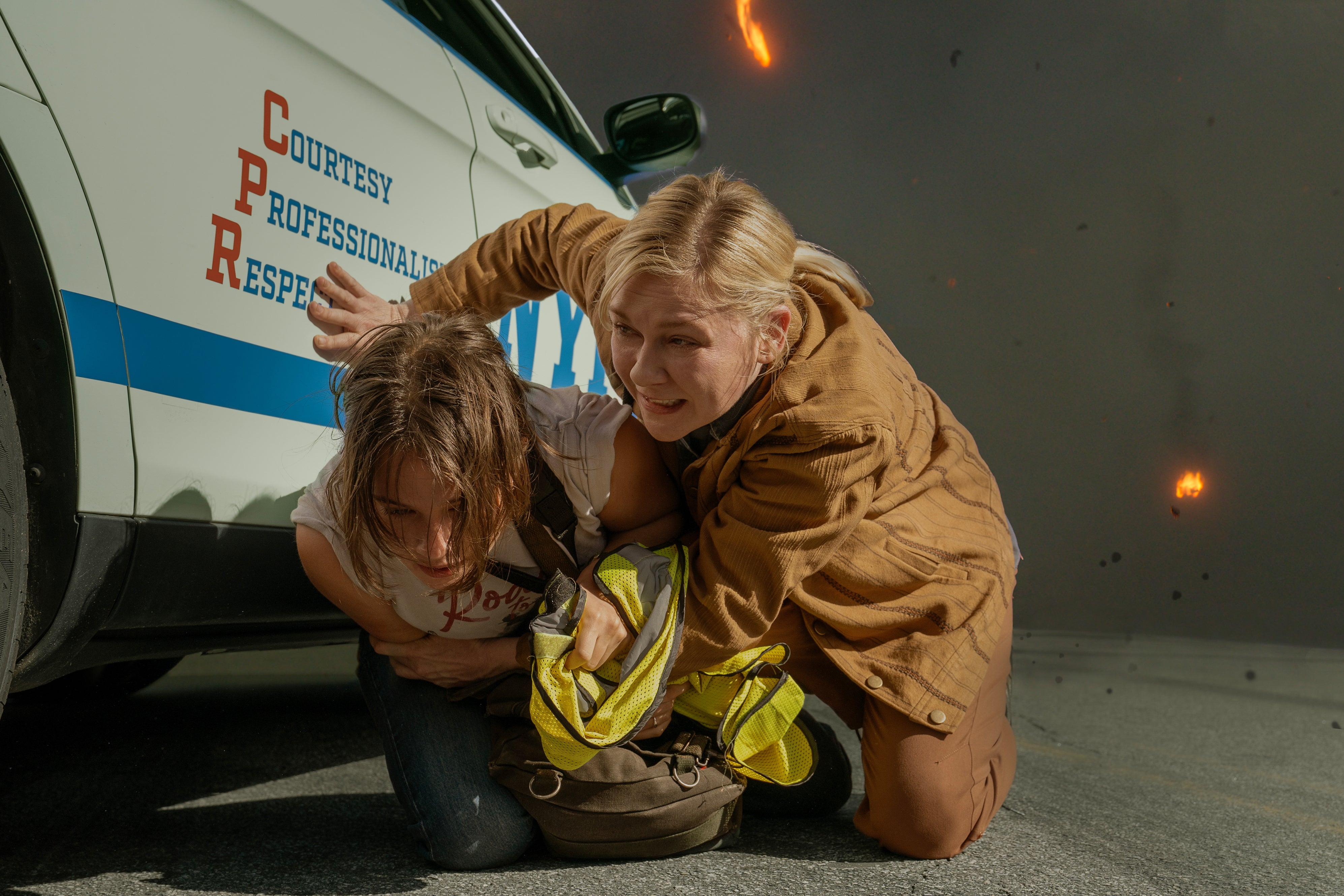
Murray Close/A24
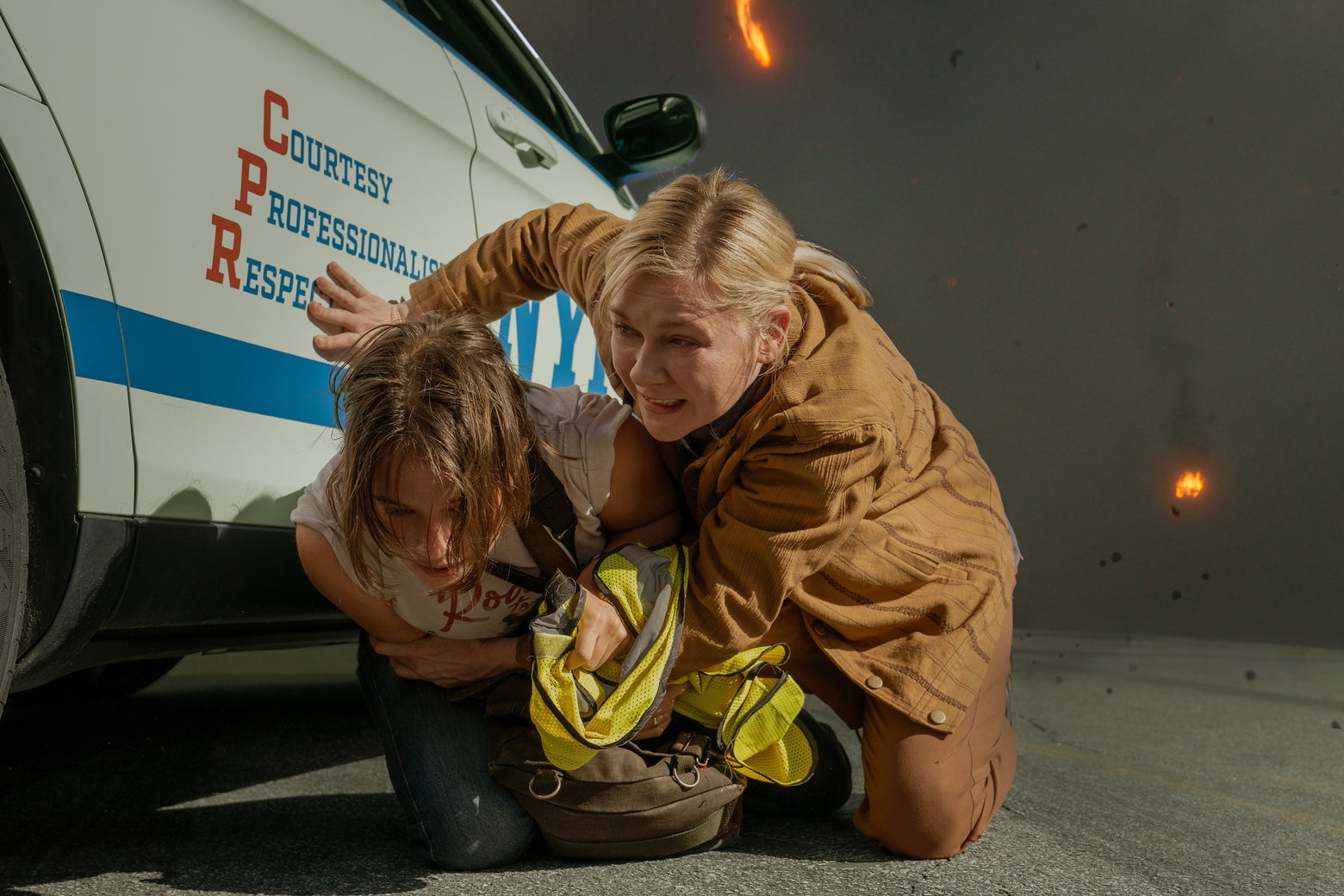
I’ve never heard gunshots like the ones in Civil War. Or, rather, I’ve never heard them in a movie. If you’ve ever been to a firing range, or just lived in a city for a while, you know the sound, a dry, brittle snap so unlike the seat-rattling boom when John Wick puts down a rival. You hear it a lot in Alex Garland’s movie, as the Reuters photojournalist Lee, played by Kirsten Dunst, makes her way through the combat zone that is now the eastern United States, along with her colleague Joel (Wagner Moura), the novice photographer Jessie (Cailee Spaeny), and Sammy (Stephen McKinley Henderson), a writer for “what’s left of the New York Times.” Movie gunfire usually hits you in the chest, emphasizing the power of the person doing the shooting. But Civil War’s trebly pops lodge in your shoulders, building up tension with no hope of release. “Cinema has this funny way of being reassuring, in subtle ways, whilst being very dramatic,” Garland told the Globe and Mail this week. “We took some of the reassuring subtleties out.”
Civil War is characterized as much by what’s not in it as what is. The movie, which Garland wrote and directed, opens with the president (Nick Offerman) rehearsing for a TV broadcast in which he claims to be on the cusp of victory over the Western Forces, an insurrectionist faction that includes the states of California and Texas. From the war correspondents’ chatter at their home base, a hotel in the loyalist stronghold of Manhattan, we learn that the president is currently serving his third term, that he’s disbanded the FBI, and that he treats journalists as “enemy combatants,” which makes Lee and Joel’s plan to make their way through the front lines for a White House interview something between a thrill ride and a suicide mission. But is the insurrection in response to that authoritarian power grab, or the other way around? What, beyond the desire to hold power, do any of the factions stand for, or even claim to? There’s more detail in the map tweeted out last week by the movie’s distributor, A24, than in the movie itself, including the existence of a “New People’s Army” occupying most of the northwestern states that doesn’t even rate a mention during the film’s 109-minute run time.
Garland is trying to avoid falling into a pat partisan allegory about The Times We Live In—or, in realizing paranoid fantasies about armed insurrection, to “accidentally make Triumph of the Will,” as he put it at a postscreening Q&A on Monday. Rather than feed the country’s polarization, he’s tried to stay above the fray. “Left and right are ideological arguments about how to run a state,” he said at South by Southwest in March. “That’s all they are. They are not a right or wrong,