


After centuries of near-extinction, Europe’s wolves have made a remarkable comeback. Over the past decade, wolf populations have surged, increasing by nearly 60%. In 2022, more than 21,500 wolves were recorded across the continent.
Countries that have long been wolf-free are now home to thriving packs. Germany, Italy, Poland, Spain and Romania each have more than 1,000 wolves. For scientists, this is a rare conservation success story: a large predator reclaiming landscapes dominated by human activity.
Where we live in Denmark, the comeback has been more modest. Wolves disappeared from Danish forests in 1813, when they were hunted to extinction – remembered only in stories and fairytales. Then, in 2012, a lone male wolf crossed the border from Germany into Jutland, Denmark’s peninsula bordering Germany. More followed. By 2017, Denmark celebrated its first confirmed breeding pack in more than 200 years.
Today, Denmark’s wolf population is estimated to be just over 40 wolves, with at least seven breeding pairs known to have produced cubs.
Yet even this small number has sparked fierce debates over livestock and public safety in one of Europe’s most intensively farmed countries, with views on wolves seeming to reflect wider political divides across Denmark.
The EU recently downgraded the protection status of wolves, moving them from “strictly protected” to simply “protected”. This change makes it easier for member states to authorise local culling.
Earlier this spring, the Danish government announced that “problem wolves” can be legally shot if they repeatedly stray into towns or attack livestock behind secure fencing. And the first legal licence to shoot a wolf guilty of several attacks was handed out in September.
Experts have already suggested that mysteriously high mortality rates and “disappearing” wolves are most likely the result of illegal hunting. And it’s feared by conservationists that quotas on wolf numbers could be introduced, as is the case in neighbouring Sweden.
As political scientists, we wanted to understand how Danes feel about the return of wolves. This summer, we included a question on wolves in a YouGov survey on climate and the environment. We asked: “Do you agree with the statement that breeding wolf packs are beneficial for Danish nature?”
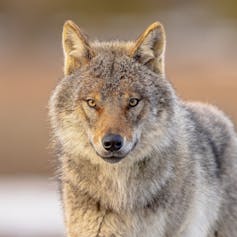
The European grey wolf (Canis lupus lupus).
Rudmer Zwerver/Shutterstock
Of the 2,172 respondents, 43% disagreed, 30% agreed and 27% were neutral or unsure. Breaking the results down by politics reveals clear patterns. Supporters of left-leaning and green parties were the most positive, with nearly 45% agreeing that wolves are good for nature. Right-leaning voters were far more sceptical, with almost half of the supporters of new rightwing parties fully disagreeing. Even many Social Democrats voters (generally considered centre-left) leant toward disagreement, showing how this issue has become integrated into traditional political divides.
People in Copenhagen and other large cities were slightly more positive about the return of wolves than those in smaller towns or rural areas,