


Earth is a complex puzzle, with its atmosphere, ocean, and land all interconnected and playing essential roles. As our climate changes, our understanding of this puzzle becomes even more crucial.
Credits: NASA / Ryan Fitzgibbons and Emme Watkins
Our planet’s oceans and atmosphere are undergoing significant changes due to global warming. As the temperature rises, ocean waters become greener due to the increased growth of microscopic organisms. Meanwhile, dust storms and smoke from wildfires are impacting air quality across regions and continents.
In February 2024, NASA will launch the PACE (Plankton, Aerosol, Cloud, ocean Ecosystem) satellite, which will provide valuable insights into these complex and evolving systems driven by climate change.
Jeremy Werdell, the project scientist for the PACE mission at NASA’s Goddard Space Flight Center in Greenbelt, Maryland, explains, “The ocean and atmosphere have intricate interactions that require ongoing research for a complete understanding. With PACE, we’ll gain new insights into climate change.”
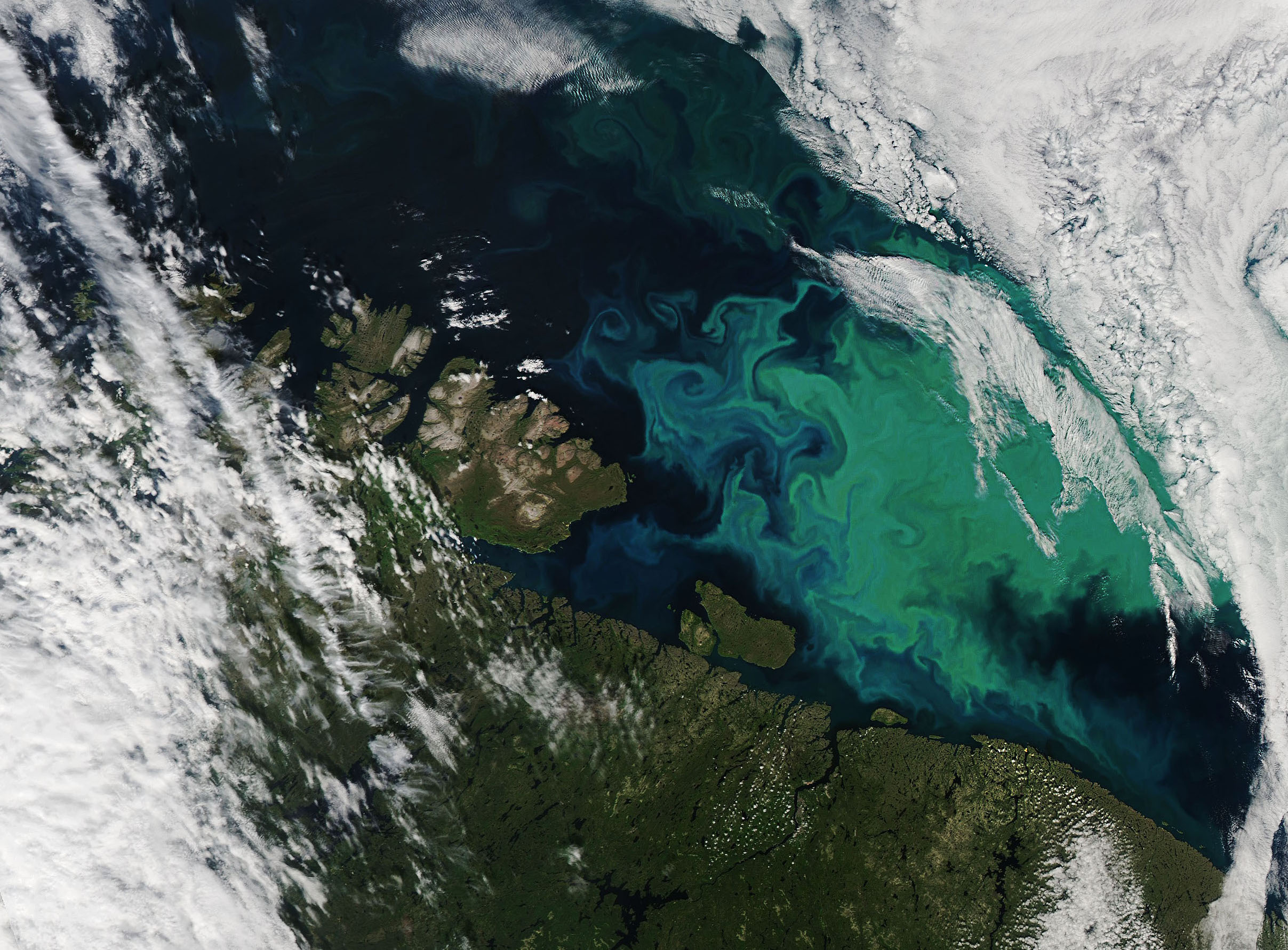
Phytoplankton are microscopic organisms that are essential to the aquatic food web, supporting a wide range of marine life. Despite being too small to see individually, the collective presence of trillions of phytoplankton, known as blooms, can be observed from space and will be studied by PACE’s Ocean Color Instrument (OCI).
Ivona Cetinić, an oceanographer at NASA Goddard, notes that phytoplankton are responding to changes in their environment, leading to variations in their abundance and diversity. These changes are visible from space and allow scientists to monitor and study these essential organisms on a global scale.
PACE’s Ocean Color Instrument (OCI) will enable scientists to identify different phytoplankton types from space, providing crucial information about their roles in aquatic ecosystems. This advanced technology will revolutionize our understanding of phytoplankton and their impact on our changing climate.